
JNIM and the Islamic State Gain Ground in Benin — 80% More Cross-Border Attacks
 Marie Dubois
JNIM and the Islamic State Gain Ground in Benin — 80% Increase in Border Attacks
In Malanville, Karimama, or Gaya, the border is no longer an administrative line. It is a narrow theater of operations, made up of smuggling trails, ferries on the Niger, clear forests, and villages that move faster than command posts. The latest ACLED report, as reported by the Associated Press, provides a cold measure of this shift: between 2024 and 2025, violent events involving jihadist groups in the border areas of Benin, Niger, and Nigeria increased by about 80%, while deaths more than tripled to exceed 1,000.
This is not just a statistical increase. It is a sign that Jama'at Nusrat al-Islam wal-Muslimin (JNIM) and the Islamic State's Sahel Province (ISSP) are no longer making demonstration incursions. They are establishing habits, relays, and routes. On the ground, this difference matters more than press releases.
The Border Becoming a Strategic Depth
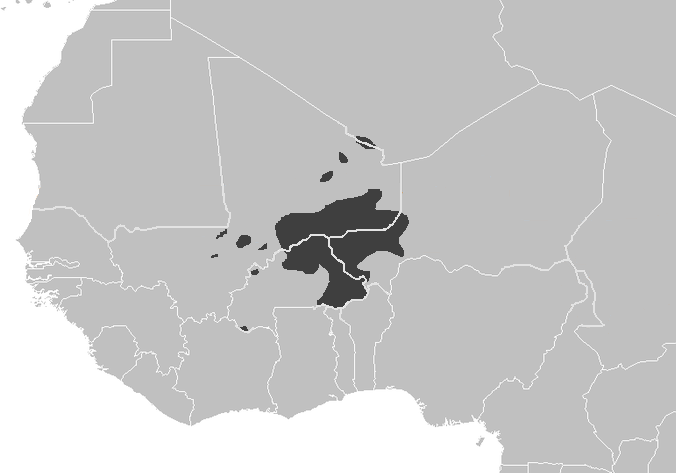
The important point is geographical. Northern Benin, western Niger, and northwestern Nigeria form an angle where regular forces rarely operate at the same tempo. The Niger River slows down mechanized columns but not small motorcycle groups. The W National Park, wooded areas, and secondary routes to Kandi, Dosso, and Sokoto offer escape, resupply, and recruitment corridors. An armored unit can hold a road; it cannot alone secure a transit economy.
ACLED notes that groups are increasingly claiming their attacks in these spaces. This is a political indicator. JNIM has an interest in showing that it is no longer confined to central Mali or eastern Burkina Faso. ISSP, on the other hand, seeks to prove that it can survive between Liptako-Gourma, the Lake Chad basin, and the Nigerian margins. Public claims are also a flag war: who taxes, who punishes, who protects, who can cross the border without asking for permission.
Benin, the Link That Was Overlooked
Benin has long been described as the coastal country that resisted better than its neighbors. This formula is becoming dangerous. Northern Benin is not an empty periphery; it is connected to Nigerian markets, Niger routes, and hunting or transhumance areas that jihadists know how to exploit. In 2025, according to the report cited by AP, deadly cross-border raids against Beninese forces made the year the deadliest for the country.
From experience, when a group begins to regularly strike military targets in a border area, it has already crossed a previous threshold: local intelligence gathering, knowledge of shift schedules, water points, isolated posts, vulnerable families, and passable trails after rain. An effective ambush cannot be prepared from a map. It requires time on the ground.
The question is therefore not just how many attacks will occur. It is necessary to see if the groups succeed in imposing taxes, arbitrating local conflicts, or enforcing traffic rules. If so, northern Benin will no longer be an infiltration zone but a zone of presence. This is new for Cotonou, and it requires a different type of response.
Niger Concentrates Shock and Blindness
In Niger, the situation is more brutal. The attack on the Niamey airbase last month, claimed by the Islamic State, reminded that the capital is not isolated from the front. An airbase is not just another symbolic target: it carries logistics, surveillance, medical evacuations, and rapid reaction capability. When it is hit, even without lasting strategic destruction, the entire system falls behind.
The Nigerien junta has built its legitimacy on the break with France and the United States. This break may be politically appealing, but it does not automatically replace lost capabilities. Aerial intelligence, maintenance, secure communications, and training of small units are slow processes. Russia and the Africa Corps offer a visible response, sometimes effective at times, but they do not create a territorial network between Tillabéri, Dosso, and the Nigerian border in just a few months.
The announced release of Russian and Ukrainian captives taken by JNIM in 2024 also shows another dimension of the issue: Moscow wants to prove that it protects its men and mining interests. But a hostage recovery operation does not solve the problem of villages changing loyalty out of fear, fatigue, or calculation.
Nigeria Is Not Just the Rear Base
For Abuja, the danger is treating this front as a secondary issue compared to Borno. Recent weeks have already seen the Nigerian army focused on ISWAP, Boko Haram, and criminal groups in the northwest. However, the push towards the borders of Benin and Niger creates a possible junction between several economies of violence: Sahelian jihadism, armed banditry, fuel trafficking, kidnappings, and cattle routes.
It would be excessive to claim that JNIM already sustainably controls northwestern Nigeria. Information remains fragmented, and claims should be taken with caution. But the operational logic is clear: if groups can force three armies to defend three borders with three different doctrines, they win without even holding a major city.
The Battalion of 5,000 Men Will Not Be Enough Alone
In Bamako, the leaders of Mali, Burkina Faso, and Niger have called for large joint operations following the launch of the Sahel States Alliance battalion, announced to be around 5,000 men. On paper, this is the right political scale: jihadist groups think regionally, so at least regional coordination is needed. But 5,000 men, in this space, is little when considering bases, escorts, logistics, rotations, injuries, and leaves.
A useful operation will need to choose modest objectives: secure certain routes, regain crossing points, prevent the taxation of specific markets, protect local intelligence relays. The temptation will be to announce a vast offensive. On the ground, large offensives often become predictable columns. JNIM and ISSP know how to wait for them to move out.
The immediate risk lies between Karimama, Gaya, and the routes leading up to Sokoto. If this area becomes a regular transit space, the coastal front will no longer be an alert. It will be an operational reality. The next battle may not be for a capital; it will be for the ferries, trails, and markets that allow an insurgency to breathe.
Jihadist groups JNIM and ISSP have significantly increased their operational presence in northern Benin, with attacks rising by 80% between 2024 and 2025, resulting in over 1,000 deaths. The region is becoming a strategic area for these groups, who are establishing bases and routes for operations. The Sahel Alliance Battalion, consisting of 5,000 troops, is deemed inadequate to counter this escalating threat effectively.
- Jihadist attacks in border areas of Benin, Niger, and Nigeria increased by 80% from 2024 to 2025.
- Over 1,000 deaths reported due to these attacks.
- JNIM and ISSP are establishing operational bases and routes in the region.
- The northern Benin region is becoming strategically significant for jihadist activities.
- The Sahel Alliance Battalion of 5,000 troops is insufficient to address the growing threat.