
Why 70 Rockets on Kyiv Expose Europe's Patriot Gap Before the G7 Summit 2026
 Dr. Klaus Weber
Why 70 Missiles on Kyiv Expose Europe's Patriot Gap Before the G7 Summit 2026
70 missiles and cruise missiles, along with 611 drones: The Russian wave of attacks against Kyiv and other Ukrainian cities on June 15 is not only a humanitarian catastrophe. It is a very precise test for Europe's defense policy. President Volodymyr Zelensky called on the G7 countries for additional air defense on the same day. EU foreign ministers discussed support for Ukraine and new sanctions in Luxembourg. The European Council plans to discuss Ukraine, Russian drone incidents in EU airspace, and the defense readiness of the eastern flank again on June 18 and 19. But is that enough?
The uncomfortable answer is: Sanctions can limit Russian revenues, but they do not intercept an Iskander-M. Credit programs can finance procurements, but they do not produce PAC-3 interceptors by June 2026. And political statements about European defense readiness remain incomplete as long as Europe continues to rely on American production lines in the crucial segment of ballistic missile defense.
The Attack as a Capacity Test
According to German agency reports, the wave of attacks also hit the UNESCO-protected Kyiv Pechersk Lavra; at least nine people were killed, dozens injured. Russia claimed it targeted military production facilities, not the monastery, and attributed damage to an allegedly misdirected Patriot missile. This explanation is politically transparent but strategically relevant: Moscow knows that any discussion of a hit immediately leads to questions about Ukrainian and Western air defense stocks.
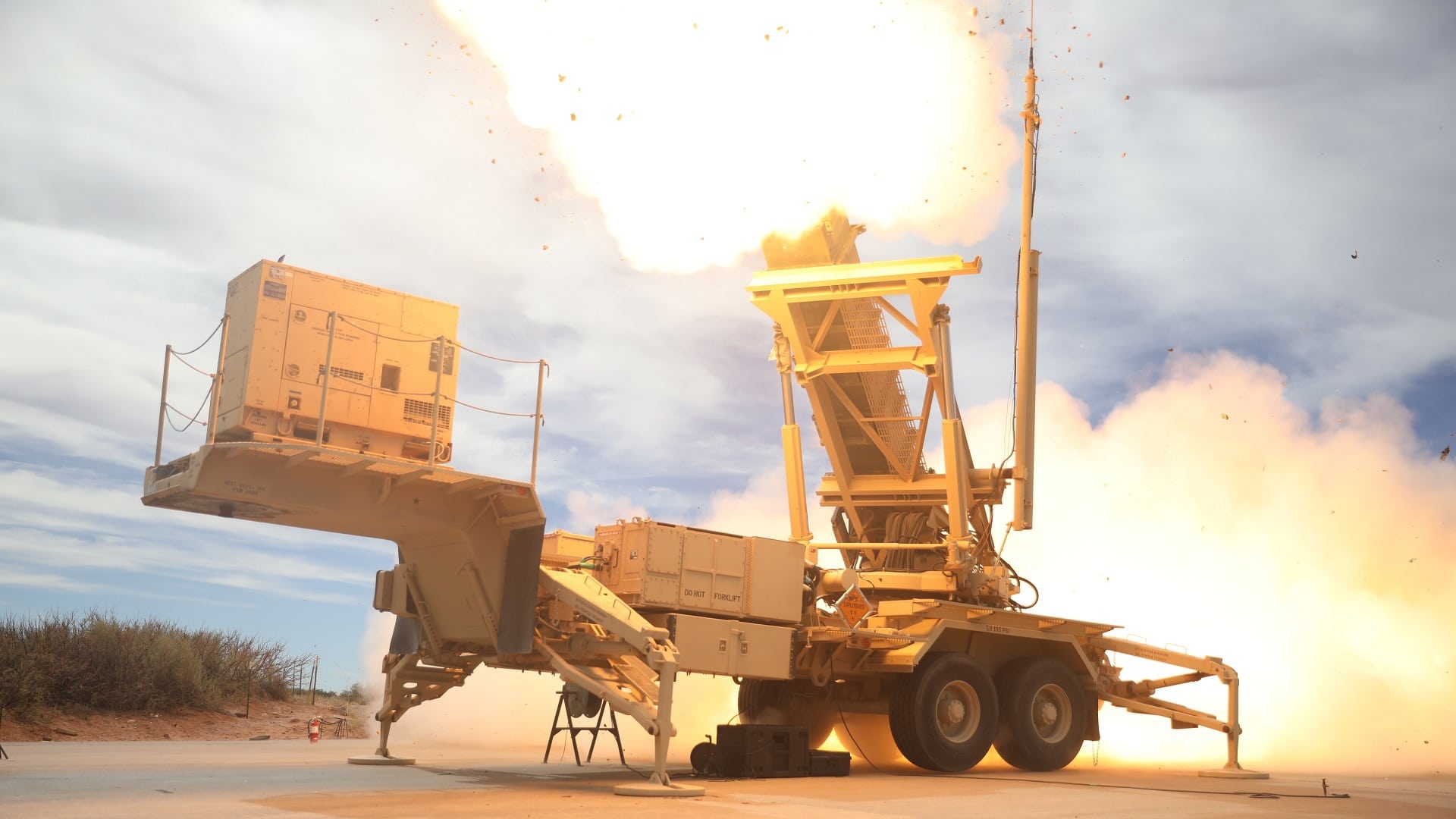
The numbers are crucial. A Russian salvo of ballistic missiles, cruise missiles, and drones forces Ukraine to deploy very different interceptors. Shahed drones can be countered by air defense guns, mobile teams, electronic warfare, or cheaper guided missiles. Cruise missiles can be handled by IRIS-T SLM, NASAMS, or other systems. However, against ballistic missiles, Patriot with PAC-3 MSE remains the most credible Western option. That is where Europe's structural weakness lies.
Patriot is Not a European Instrument
The Guardian reported in early June about a global Patriot shortage that Russia is exploiting in Ukraine. A single Patriot battery system costs about one billion dollars; a PAC-3 interceptor is around three to four million dollars. Lockheed Martin produces about 600 interceptors per year according to the mentioned figures and plans to significantly increase this number only in the medium term. The problem is not just the price. The problem is time.
Germany, the Netherlands, Greece, Spain, Poland, and Sweden use Patriot or have initiated corresponding procurements. These states must simultaneously address national NATO readiness, support for Ukraine, and their own stockpiling. If Gulf states fire more than 1,100 interceptors in the Iran conflict and Washington does not want to jeopardize its Pacific planning, the European order list will not automatically become available to Europe. Berlin can provide funding. Berlin can demand prioritization. Berlin can coordinate the PURL and JUMPSTART mechanisms. But Berlin cannot replace an American production decision.
This is the real lesson from the recent Fedorov-Pistorius coordination. The Ukrainian and German sides discussed PAC-3 deliveries for Patriot, IRIS-T ammunition, and the Prioritized Ukraine Requirements List. This is operationally important and politically sensible. However, it is not an institutional solution. It is crisis management within a supply chain that Europe does not control.
IRIS-T Solves the Wrong Problem
Germany can rightly point out that IRIS-T SLM plays an exceptionally important role in Ukraine. The system is mobile, comparatively efficient against cruise missiles and drones, and represents a European industrial success that the turning point urgently needed. However, IRIS-T is not Patriot. It is not a full-fledged substitute for high-altitude ballistic missile defense. Presenting IRIS-T as proof of European autonomy confuses air defense in the broad sense with missile defense in the narrowest and most challenging sense.
That is precisely why Zelensky's proposal from June 9 is politically interesting. After talks with the UK, France, and Germany, he called for a European-controlled alternative to Patriot. Ukraine offers combat experience and data from more than four years of large-scale war; European states should pool industrial and financial resources. On paper, this is plausible. In reality, it encounters three known European obstacles: national industrial policy, slow budget cycles, and lack of program leadership.
Europe already has a European solution against certain ballistic threats with SAMP/T and Aster 30. However, production volumes and availability are not sufficient to simultaneously meet Ukraine's needs, NATO's eastern flank, and national reserve building. A European Patriot alternative would therefore be less a technical project than a governance project. Who leads? Who pays? Who gets the first batteries? Who decides in a crisis about the rerouting of interceptors?
EU Money Does Not Replace a Production Line
The EU is now pointing to impressive sums. According to the Council, military support for the Ukrainian armed forces amounts to 75.2 billion euros; total support for Ukraine, including financial aid and refugee costs, is 204.8 billion euros. SAFE provides up to 150 billion euros in loans for joint procurement. The Ukraine loan of 90 billion euros, decided in April, indicates 60 billion euros for the defense industry and procurement. These figures are politically necessary. However, they are not the same as interception capacity.
A particularly small but telling example is AGILE. The Council mandated a new program of 115 million euros for rapid defense innovation in early June. It aims to support start-ups and smaller companies to bring products into the armed forces within one to three years and to close the gap between development and deployment. This makes sense for drones, software, sensors, and certain counter-UAS solutions. For the acute Patriot gap, it is nearly irrelevant. 115 million euros roughly correspond to less than 40 PAC-3 interceptors. A Russian large salvo can politically devalue this amount over a weekend.
NATO's new 5 percent target does not automatically solve the problem either. Since the Hague Summit in 2025, allies are to invest 5 percent of GDP annually in core defense and security-related expenditures by 2035; 3.5 percent of that for conventional defense, up to 1.5 percent for resilience, infrastructure, innovation, and industrial base. This is an important correction after years of underfunding. However, a percentage target is an input indicator. It says nothing about whether Europe will have enough interceptors for Kyiv, Warsaw, Bucharest, and Berlin simultaneously by 2027.
The Institutional Gap
The European Council writes in its invitation to the meeting on June 18 and 19 that Russian drone incidents in EU airspace, including an explosive-laden drone crash in Romania, underscore the urgency of joint defense readiness and the eastern flank. That is correct. But the sentence contains all of Europe's ambivalence. The threat is common, procurement remains national; the rhetoric is European, the decision-making rights remain fragmented; funding is increasing, industrial prioritization remains politically contested.
For Germany, this situation is particularly uncomfortable. Berlin wants to be the leading power of European support for Ukraine but continues to have an American bottleneck in crucial missile defense. The Federal Republic can deliver IRIS-T, support drone programs, and coordinate Ramstein. However, as soon as the question arises about PAC-3, production rights, and export priorities, Germany's ability to steer ends. This is not a moral indictment. It is a sober assessment of the turning point after four years of war.
The next European response must therefore not only be: more sanctions, more loans, more summit rhetoric. It must be: common European stockpiling goals for interceptors, binding multi-year purchase contracts, a clear division of labor between Patriot, SAMP/T, IRIS-T, and future Ukrainian-European systems, as well as a political decision on whether Europe's eastern flank will be served first from European stocks in case of doubt or will continue to wait for American prioritization.
The paradox is bitter. Europe is spending more money on defense today than it did ten years ago, and yet the most important protective capability for Ukrainian cities continues to be determined by the scarcity of a non-European production line. More money is necessary. But as long as Europe does not control what it must fire in an emergency, defense readiness remains a budgetary term rather than a military reality.
Sources
- Welt/dpa, Zelensky calls for G7 response to Russia's attack, June 15, 2026
- Council of the EU, Foreign Affairs Council agenda, June 15, 2026
- European Council, Invitation to the summit of June 18-19, 2026
- The Guardian, Patriot missile shortage has created window of vulnerability, June 2, 2026
- Defence Industry Europe, Ukraine and Germany coordinate PAC-3 and IRIS-T deliveries, June 11, 2026
- Consilium, EU military support for Ukraine, last reviewed June 9, 2026
- NATO, Defence expenditures and NATO 5 percent commitment
On June 15, 2026, Russian forces launched an attack wave comprising 70 missiles and 611 drones against Kyiv and other Ukrainian cities, resulting in at least nine deaths. President Zelensky urged G7 nations for enhanced air defense support, highlighting Europe's vulnerabilities in missile defense capabilities. The attack is viewed as a significant test of European defense policy amid ongoing discussions about military support for Ukraine.
- Russia launched 70 missiles and 611 drones against Kyiv and other cities on June 15, 2026.
- Ukrainian President Zelensky called for additional air defense support from G7 nations.
- The attack resulted in at least nine fatalities and numerous injuries.
- The attack is seen as a test of Europe's defense policy and capabilities.
- There is a reported shortage of Patriot missile systems in Europe.