
JNIM claims Daka in Burkina Faso on July 15 — Tougan becomes the fragile lock
 Marie Dubois
JNIM claims Daka in Burkina Faso on July 15 — Tougan becomes the fragile lock
On the morning of July 15, in Daka, a village in the Tougan region in northwestern Burkina Faso, the Group for the Support of Islam and Muslims (JNIM, or GSIM in French) claims to have taken control of a post of the Volunteers for the Defense of the Homeland (VDP). The claim, relayed by the crisis mapping service Sahel Liveuamap, remains to be confirmed by an independent Burkinabè source. However, it deserves attention because Daka is not just a point on a map. It is a small lock on the Tougan axis, within operational walking distance of several areas where the state only holds on through posts, checkpoints, and irregular patrols.
In this theater, a VDP post is never just an armed shelter. It is a human sensor, an alert relay, sometimes the last link between a prefecture and the surrounding villages. When JNIM captures it, even briefly, it does not just gain a few rifles or motorcycles. It cuts off an ear of the state.
The VDP post as a target of local warfare
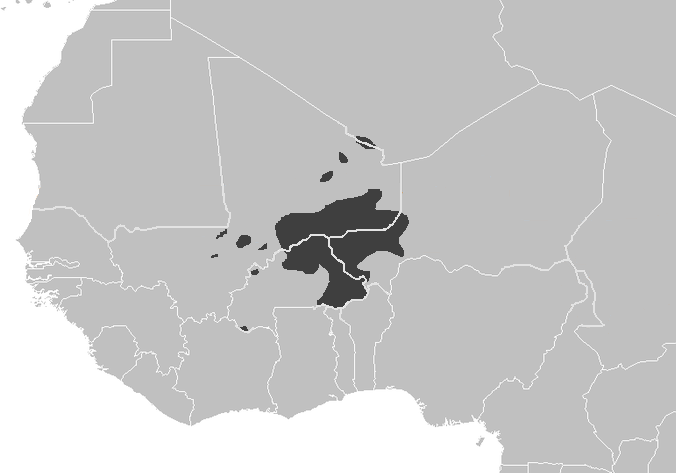
Since 2020, Ouagadougou has heavily relied on the VDP to compensate for the numerical insufficiency of the army. On paper, the calculation is understandable. A volunteer knows the paths, the families, the markets, and the water points. In an area like Tougan, this knowledge is sometimes worth more than a poorly utilized drone or an armored column that arrives too late. On the ground, the problem is more brutal: a fixed local post quickly becomes a predictable target.
Jihadist groups have understood this for a long time. They attack the VDP for three reasons. First, to recover weapons and means of communication. Second, to punish villages that collaborate with the state. Finally, to prove that the state cannot protect those it arms. It is this third function that matters most in Daka. A successful attack speaks to all neighboring villages without the need for a long speech.
One must remain cautious about the toll. The JNIM claim does not provide, in the available elements, a complete picture of the losses or the duration of control. But the psychological effect does not always depend on the number of dead. In northern Burkina Faso, a night of radio silence can be enough to make a weekly market flee.
Tougan, a hinge rather than a periphery
Tougan is often treated as a margin of the Burkinabè war. This is a misreading. The area connects pressure spaces that extend from Sourou to Yatenga, and then to the Malian corridors. It is also situated in a geography of secondary paths where a motorcycle loaded with fuel passes more easily than a logistical army vehicle. From experience, these routes are not measured only in kilometers. They are measured in passable fords, cut bridges, and villages where one can sleep without denunciation.
JNIM does not need to conquer Tougan as one would take a provincial capital. It is enough for it to make movement expensive, slow, and uncertain. A lost VDP post here, a destroyed telecom antenna further away, a mined road between two localities: together they end up producing a gray area. Administrative maps continue to show a state presence. The operational map, however, tells a different story.
This logic aligns with the warning issued this week before the Security Council by Leonardo Santos Simão, head of the United Nations Office for West Africa and the Sahel. According to him, terrorist groups and other non-state armed groups are no longer content to attack. They seek to control territories, local economies, and trade routes, while using drones, sophisticated communications, and criminal networks. This observation is general. Daka provides a local and very concrete version of it.
The trap of militarization without civil intelligence
Burkina Faso has militarized its response with considerable energy. The VDP, search operations, requisitions, and mobilization campaigns have given the government a simple narrative: the entire country is at war. But a counter-insurgency war is not won solely by displaying will. It is won through intelligence, discipline, civilian relays, and the ability to quickly repair what the enemy destroys.
This is precisely where the current model shows its limits. The Africa Center for Strategic Studies reminded on July 14 that the Sahelian juntas, as security deteriorates, have primarily tightened political control and reduced civil space. In Burkina Faso, the dissolution of parties, pressure on journalists, magistrates, and NGOs adds to an already tense military situation. However, on the ground, civilian voices are not an abstract democratic luxury. They are an alert system.
When a mayor, an imam, a women's association, or a merchant no longer dares to speak, the army loses hours. When information only comes through security channels, it often arrives too late and too filtered. JNIM exploits exactly this blindness. It does not need to be loved everywhere. It is enough that the inhabitants are more afraid to speak to the state than to remain silent in front of it.
A war of control, not just attacks
The claimed takeover of Daka is part of a broader series. In Mali, JNIM and its allies have multiplied coordinated attacks in April and July, including against axes and localities far from each other. In Niger, Niamey and Tahoua have been targeted in recent months. In Nigeria, the north and the Middle Belt remain caught between kidnappings, attacks, and armed rivalries. The novelty is not that violence exists. The novelty is its coordination across several countries and its ability to simultaneously target local posts, roads, infrastructures, and public trust.
In this context, Daka resembles less an isolated incident than a probe. JNIM is testing the reaction of Tougan, the speed of reinforcements, the solidarity of neighboring villages, and the state's ability to regain the initiative. If there is no rapid countermeasure, the next objective may not necessarily be more spectacular. It could be more useful: a telephone relay, a fuel depot, a bridge, or a local leader forced to negotiate.
The military response must therefore be very precise. Reinforcing a VDP post without restoring communications around it is pointless. Sending a column without nearby intelligence risks moving the problem ten kilometers away. And announcing a victory without securing the next market leaves the jihadists to define the tempo.
The next weak point
The immediate danger lies in the villages bordering the paths between Tougan and the already contested areas in the north. They will decide whether Daka remains a one-off claim or becomes a tipping signal. Three indicators must be monitored: closure of markets, silent departures of families linked to the VDP, and repeated communication cuts.
On the ground, it is rarely the grand statements that announce the loss of an area. It is the details: a truck of millet that no longer passes, a school that does not reopen, a patrol that avoids a path it was still using the previous week. If Ouagadougou does not treat Daka as a tactical alert, Tougan risks becoming not a declared frontline, but a gray depth where JNIM chooses when the state appears and when it disappears.
Sources: Sahel Liveuamap, July 15, 2026; United Nations, UNOWAS briefing to the Security Council, July 2026; AllAfrica / Africa Center for Strategic Studies, July 14, 2026.
JNIM claims to have taken control of a Volunteers for the Defense of the Homeland (VDP) post in Daka, Burkina Faso, on July 15. This action highlights the group's strategy to undermine state authority in the region. The capture of Daka is significant as it affects local security dynamics and the state's ability to maintain control. The situation in Tougan remains precarious, with potential implications for surrounding villages and state presence.
- JNIM claims control of a VDP post in Daka on July 15.
- Daka is strategically important for state control in the region.
- The attack on VDP posts is part of a broader strategy by jihadist groups.
- The situation in Tougan is critical for local security and state presence.
- Civilian communication breakdowns hinder military response.