
JNIM seizes gold mines in Burkina Faso — the Sahel transforms its deposits into operational bases in 2026
 S.W
S.WJNIM Takes Control of Gold Mines in Burkina Faso — the Sahel Transforms Its Deposits into Operational Bases in 2026
In Djibo, Kaya, or in the mining corridors of eastern Burkina Faso, the question is no longer just about who holds a mine. One must look at who controls the path leading to it, the fuel, the motorcycles, the explosives, and the men who can disappear there. The work of the Armed Conflict Location & Event Data Project (ACLED), reported by Africa Defense Forum in August 2026, shows that gold mining has become a theater of operations for armed groups in the Sahel.
Burkina Faso Remains the Breaking Point
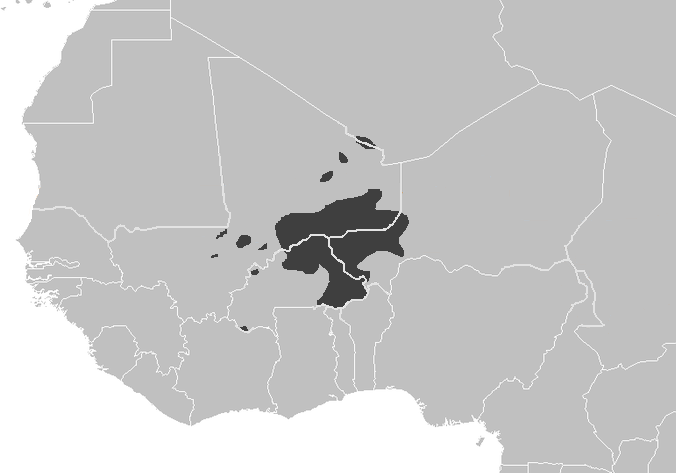
Between January 2015 and June 2026, 75 % of violent incidents related to mining activity recorded in the central Sahel occurred in Burkina Faso, compared to 15 % in Mali and 10 % in Niger, according to ACLED figures cited by Africa Defense Forum. The Burkinabè proportion decreased in 2025 to 54 %, but this decline does not indicate an improvement. It rather reflects the extension of the phenomenon towards Mali and Niger.
This geography is consistent with the military situation. The Group for Support of Islam and Muslims (JNIM), a coalition affiliated with al-Qaeda, does not need to conquer an industrial site. It is enough for them to tax miners, transporters, and traders, or impose protection on the routes. The mine then becomes a toll booth, a market, and a source of intelligence.
A Mine is Also a Depot, a Recruitment Center, and a Camouflage
Lucia Bird Ruiz-Benitez de Lugo from the West African Observatory of the Global Initiative Against Transnational Organized Crime describes a mechanism that is difficult to strike: groups can collect taxes in gold rather than cash. Gold can be stored, moved, and resold without banking infrastructure. Raids conducted against JNIM bases have sometimes led to the recovery of significant volumes of precious metal.
A gold mining area concentrates mobile populations, paths, fuel, motorcycle spare parts, chemicals, and commercial explosives. According to ACLED analysis, JNIM can transform certain artisanal sites into semi-permanent bases: fighters alternate between civilian appearance and armed posture, store equipment, and recruit from a workforce accustomed to living far from administration.
This is the difference between an attack on a mine and a territorial control campaign. Destroying a well is not enough. It would require monitoring several dozen kilometers of roads and paths, while Burkinabè forces are already struggling to hold urban centers and their supply routes.
JNIM and ISSP Compete for the Same Corridors
JNIM is not alone. The Islamic State in the Sahel (ISSP, formerly EIGS) is also seeking to tax local economies and control movement spaces. In Mali and Niger, this jihadist competition adds a layer of violence to the pressure exerted by governments and their Russian partners from the Africa Corps.
National maps give a misleading impression. A closed border in Niamey or Bamako does not close a mining path. Networks pass through rural areas, markets, and cross-border families. As JNIM advances towards the borders of Senegal, Guinea, Côte d'Ivoire, and Ghana, it seeks local economies to tax. The same risk concerns northern and central Nigeria, where networks linked to JNIM and ISSP already exist.
Russia Cannot Secure an Economy It Cannot See
The juntas of Burkina Faso, Mali, and Niger have replaced part of Western cooperation with the Alliance of Sahel States and support from the Africa Corps. This reorientation has real political value, but its results on mining paths remain difficult to measure. An armored convoy can retake a site for a few hours. It cannot simultaneously protect every well, every fuel depot, and every secondary route.
The weakness is primarily informational. Units that do not have reliable informants on the ground do not always distinguish between the miner, the transporter, and the fighter. A poorly conducted sweep operation pushes populations towards JNIM and further reduces the quality of intelligence. It is a vicious circle I have seen on the ground: the map indicates a secure area, but the last kilometer remains in the hands of whoever can return there at night.
The Next Front Will Be Economic Before It Is Urban
The available data do not allow us to assert that every mine is directly controlled by a jihadist group. Incident figures measure violence related to the sector, not a register of clandestine ownership. This limitation matters. But mines offer JNIM and ISSP a rare combination of revenue, mobility, and human cover.
The risk for 2026 is therefore not just a spectacular attack against Ouagadougou, Niamey, or Bamako. It is the silent erosion of the corridors that connect villages to markets and mines to borders. If Sahelian armies cannot hold these roads after their columns pass, armed groups will continue to win without needing to raise a flag over a mine. The next offensive will likely be announced by a fuel shortage, an abandoned road, or a market closing — long before the appearance of fighters.
Sources
JNIM has seized control of gold mines in Burkina Faso, transforming them into operational bases as of 2026. The group capitalizes on the mining activities to tax local miners and transporters, creating a revenue stream and intelligence network. This situation has led to increased violence in the region, particularly as JNIM competes with ISSP for control over these valuable resources.
- 75% of violent incidents related to mining in the central Sahel occurred in Burkina Faso between January 2015 and June 2026.
- JNIM can tax miners and transporters, turning mines into sources of revenue and intelligence.
- The competition between JNIM and ISSP for control of mining corridors adds to local violence.