
JNIM surpasses 3,000 incidents in the Sahel in 2026 — Mali becomes the decisive theater
 Marie Dubois
JNIM surpasses 3,000 incidents in the Sahel in 2026 — Mali becomes the decisive theater
In Kati, a few kilometers northwest of Bamako, distance no longer protects the Malian government. The April offensive, which killed the Minister of Defense and struck positions of the army as well as its Russian auxiliaries, was not an isolated episode. ACLED data cited by The Guardian already records 2,145 violent events involving jihadist groups in Mali, Burkina Faso, and Niger during the first eight months of 2026, compared to 2,845 for the entire year of 2025. At the current rate, the threshold of 3,000 incidents will be crossed before the end of the year.
The figure that describes a change in scale
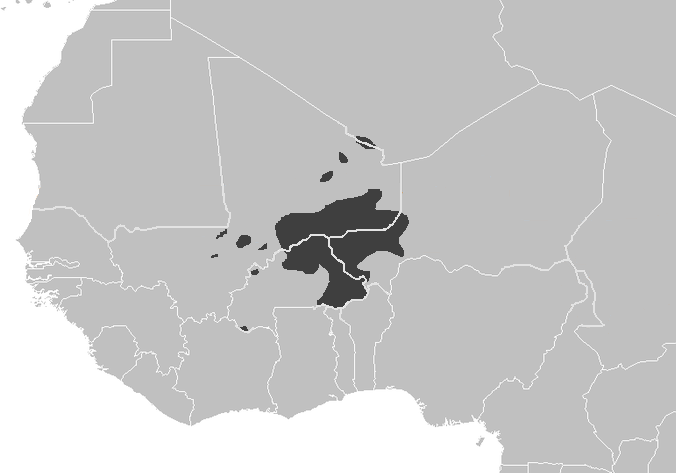
An incident count does not directly measure the number of deaths or the area controlled. However, it indicates the tempo imposed on regular forces. Events related to jihadist groups in these three countries have increased from 63 in 2016 to 2,845 in 2025. This is not merely a resurgence of the 2012 insurrection: armed organizations have learned to multiply friction points, attack convoys, isolated garrisons, logistical routes, and administrative relays.
The Jama’at Nusrat ul-Islam wa al-Muslimin, or JNIM, remains the most active movement in Burkina Faso and Mali. It does not necessarily seek to raise its flag over every capital. Its method is more economical: making the road impassable, taxing transporters, intimidating local elected officials, and forcing the army to defend fixed positions. A map filled with government bases can therefore mask a territory where the state no longer moves freely.
Kati and Kidal have shifted the center of gravity
The April offensive combined ambushes, improvised explosive devices, drones, and raids against several Malian targets. The death of the Minister of Defense in a suicide attack in Kati had a significance beyond its human toll: Kati is a garrison town, close to Bamako, and not a lost position in the north. The capture of Kidal by forces allied with JNIM and the Azawad Liberation Front has, in turn, nullified a symbolic victory achieved by the junta a few years earlier.
The presence of the Russian Africa Corps does not change this geography. Foreign instructors and fighters can reinforce a column or provide fire support, but they cannot simultaneously hold the routes between Timbuktu, Gao, Mopti, and the capital. The Malian problem is not just the lack of firepower: it is the distance between intelligence, decision-making, and the patrol that must arrive on site.
A different pressure in Burkina Faso and Niger
In Burkina Faso, JNIM has claimed more than 130 attacks in 2026 and has moved closer to Ouagadougou. This figure should be treated as a claim, not as an independent tally, but the geographical trend is consistent with field reports: garrisons are dispersed, auxiliary units are exposed, and civilians find themselves caught between army checkpoints and those of armed groups.
In Niger, JNIM is less active than the Islamic State in the Greater Sahara, according to UN elements reported by The Guardian. This difference does not mean that Niamey is safer. It rather shows that the three juntas of the Sahel States Alliance are facing two adversaries whose operational areas overlap without merging. The same column can be targeted by one faction, then stripped or prevented from moving by another.
The fortress does not replace area control
The Sahel teaches a lesson that European military staffs have long known but that capitals tend to forget: protecting a base is not the same as controlling a theater of operations. Fortification concentrates soldiers and reduces their immediate exposure. However, it leaves villages, water points, markets, and secondary routes to the adversary. JNIM does not need to defeat a garrison every week if it can prevent farmers from reaching their fields and traders from using the next road.
ACLED figures have limitations: areas without telecommunications underreport attacks, casualty figures are often contradictory, and events attributed to groups do not always prove their chain of command. But statistical uncertainty does not overturn the operational diagnosis. When the frequency of incidents increases while states reinforce their capitals and camps, the insurrection learns to bypass hard points.
The next indicator will be movement
The crucial question for Bamako will not be whether a base is retaken for a few hours. It will be necessary to measure whether a Malian convoy can connect Kati to Mopti, then reach Gao without permanent escort and without losing contact with its local intelligence. It is on this continuity, and not on victory statements, that the junta's strategy will be judged.
If the current trend continues, 2026 will be the year when JNIM transforms a series of attacks into a system of intermittent control. The most likely weak point is not the capital itself, but the corridor that supplies it. An army that holds Bamako while abandoning the roads between cities holds a flag, not the ground.
Sources
JNIM has conducted over 3,000 incidents in the Sahel in 2026, significantly increasing violent activities in Mali, Burkina Faso, and Niger. The April offensive resulted in the death of the Malian Defense Minister and highlighted the group's tactics of ambushes and control over logistics. JNIM's operations have forced the Malian military to defend fixed positions, indicating a shift in the operational landscape.
- JNIM has surpassed 3,000 incidents in the Sahel in 2026.
- Over 2,145 violent events involving jihadist groups reported in Mali, Burkina Faso, and Niger in the first eight months of 2026.
- The April offensive killed the Malian Defense Minister and targeted military positions.
- JNIM employs tactics to disrupt logistics and intimidate local officials.
- The situation in Mali reflects a broader trend of increasing jihadist activity in the region.