
June 3: 18 PLA Military Aircraft Circled Taiwan, 14 Crossed the Line Indicating Increased Pressure on the Northern Route
 Li Minghui
On June 3, 18 PLA aircraft circled Taiwan, with 14 crossing the median line indicating increased pressure in the northern corridor
The numbers from June 3 are not particularly alarming, but the change in rhythm is interesting. Taiwan's defense department announced that from 6 AM on June 2 to 6 AM on June 3, 18 PLA aircraft, 8 PLA vessels, and 6 government ships were detected around the Taiwan Strait, with 14 of those aircraft crossing the median line of the Strait and entering the northern and southwestern airspace of Taiwan. The day before, there were 7 aircraft, 8 vessels, and 5 government ships; and the day before that, no PLA aircraft were detected, only 7 vessels and 4 government ships. This means that aerial activity is not a linear escalation but rather a sudden increase in aerial pressure while maintaining a presence at sea.
The key point behind the numbers is not the 18 aircraft
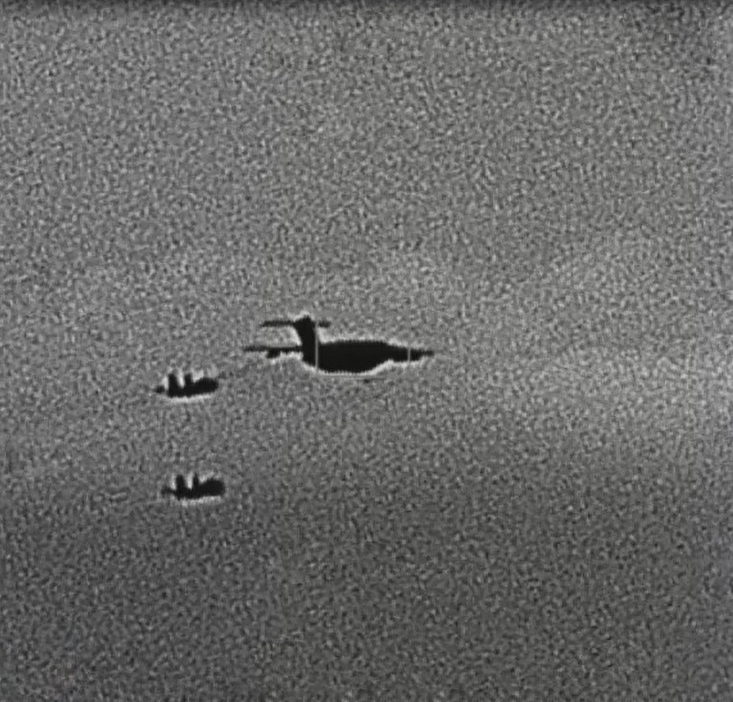
If we only look at the 18 aircraft, it is easy to misjudge the situation. In early May, Taiwan's defense department also reported activities involving more than 20 aircraft multiple times, so June 3 is not a peak. What is truly worth analyzing is the 14 aircraft that crossed the line, with their direction expanding from a single southwestern airspace to both the northern and southwestern ends. The southwestern airspace has long been responsible for training and patrol functions towards the Bashi Channel and the South China Sea; the northern direction is closer to the Taipei air defense zone, the waters off Keelung, and the air-sea corridor between the Japanese Senkaku Islands. The simultaneous appearance at both ends indicates that this is more like a small-scale multi-axis pressure test rather than just a routine flyby.
From the perspective of equipment utilization, the public report did not specify the types of aircraft, which limits the accuracy of the assessment. If the combination includes J-10s, J-16s, KJ-500s, or Y-8 series special aircraft, the nature leans towards air superiority patrol and intelligence reconnaissance; if H-6 bombers or tankers appear, the implications would be more significant. I tend to make a conservative judgment: the main value of this activity lies in the flight paths and rhythm, rather than showcasing a new model.
The continuous increase in the number of government ships indicates what
Another easily overlooked detail is the government ships. There were 4 on June 1, 5 on June 2, and 6 on June 3. Government ships are not naval vessels, but they can wrap military pressure into narratives of law enforcement, surveillance, accompaniment, and information warfare. In simple terms, PLA vessels maintain a hard presence of around 8, while government ships are responsible for fine-tuning the granularity of the gray area.
This does not exhaust Taiwan's resources in terms of how many aircraft are scrambled at once, but rather in that the duty system must be continuously activated. The Taiwanese side reported that task aircraft, vessels, and shore-based missile systems should be in place. The repeated inclusion of shore-based missile systems in the reports indicates that Taiwan views this activity as a joint maritime and aerial pressure, rather than just an air identification issue. For the PLA, this model also has lower costs: a small number of batches, fixed windows, and coordinated naval and air operations can force the other side to continuously consume radar, communication, readiness, and political attention.
More like a readiness calibration rather than a crisis escalation
My judgment is that the activities on June 3 cannot yet be termed a crisis escalation. There were no large-scale exercises with codenames, no public participation from the Rocket Force, and no official evidence of direct cooperation from aircraft carriers or amphibious groups. It resembles a readiness calibration: after low-intensity activities in the southwestern airspace the day before, the crossing direction was expanded to the north, testing Taiwan's air defense response and maritime surveillance links.
The military significance of such actions is not that today there are 18 aircraft, and tomorrow there might be 36. The key point is that the PLA is turning the routine pressure around the Taiwan Strait into an adjustable knob: military aircraft are responsible for compressing the psychological boundaries of airspace, naval vessels maintain the maritime framework, and government ships create a normalized presence. The real unanswered question is whether the next time the northern corridor appears, it will be accompanied by more clearly defined special aircraft or electronic warfare platforms.
Main data comes from the public reports of Taiwan's defense department from June 1 to June 3, and references Taiwan news reports on the June 2 activities. The public reports did not specify aircraft types, and related equipment assessments are based on past patterns of circling Taiwan.
Sources
On June 3, 2026, 18 Chinese military aircraft circled Taiwan, with 14 crossing the median line into Taiwan's northern and southwestern airspace. This activity, which included 8 naval vessels and 6 public ships, indicates a shift in operational pressure rather than a crisis escalation. The increase in public ships suggests a strategy to maintain a presence while applying military pressure.
- 18 PLA aircraft were detected circling Taiwan
- 14 aircraft crossed the median line into Taiwan's airspace
- The number of public ships increased from 4 to 6 over three days
- The activity is seen as a pressure test rather than a crisis escalation
- No large-scale exercises or direct naval support were reported