
June Taiwan Strait: 165 Military Aircraft Cross the Line, PLA Low-Intensity Patrol Tests Taiwan's Response Chain
 Li Minghui
In June, 165 Military Aircraft Crossed the Line in the Taiwan Strait, PLA's Low-Intensity Patrol Tests Taiwan's Response Chain
On the morning of June 23, Taiwan's defense department announced a set of numbers that are not exaggerated but quite interesting: within the past 24 hours, Taiwan detected 6 PLA military aircraft, 7 naval vessels, and 7 civilian ships in the surrounding air and sea areas, among which 3 military aircraft crossed the so-called median line of the strait, entering Taiwan's air defense identification zone in the north and southwest. Looking at just this one day, the numbers are not high; however, when the reports from June 19, 22, and 23 are viewed together, the context changes significantly.
What the Numbers Really Indicate
Taiwanese news cited data from the defense department stating that on June 19, Taiwan had cumulatively detected 129 PLA military aircraft and 203 vessels within the month; by June 22, these numbers had changed to 159 aircraft and 241 vessels; and on June 23, they rose again to 165 aircraft and 256 vessels. In other words, in just 4 days, Taiwan recorded an increase of 36 military aircraft and 53 vessels. Here, "vessels" does not entirely equate to warships; Taiwan's reports typically separate naval vessels from coast guard and civilian ships, but the cumulative figures are presented together, which is an important point to note when interpreting these numbers.
What I am more concerned about is the data from June 22: out of 23 military aircraft, 20 crossed the so-called median line, accompanied by 7 warships and 5 civilian ships. The scale of operations dropped to 6 military aircraft the following day, but the number of vessels and civilian ships remained at 14. In simple terms, this is not a case of a "peak display" immediately returning to zero; rather, aerial pressure can fluctuate while maintaining a presence at sea.
Low-Intensity Normalization is More Resource-Intensive than Large-Scale Exercises
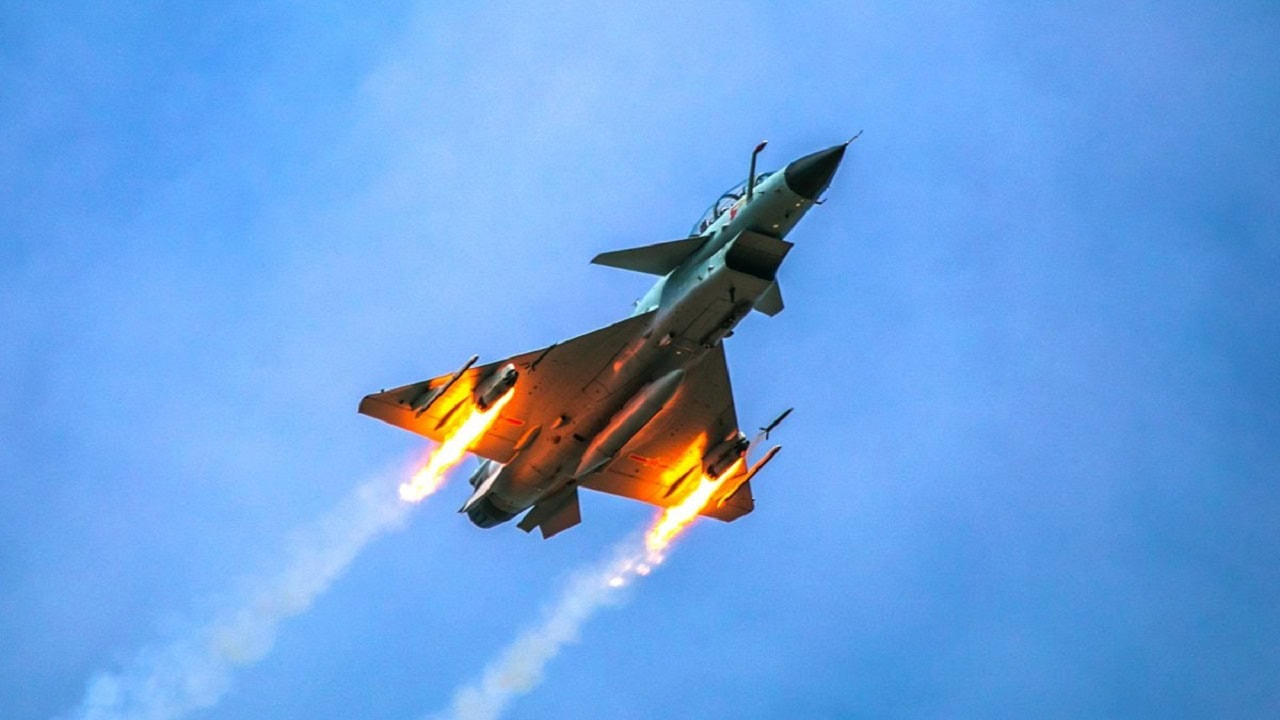
When discussing military pressure in the Taiwan Strait, outsiders tend to focus on a specific island encirclement exercise, a particular type of missile, or whether a J-20 has appeared. However, from the perspective of troop deployment, what truly tests the system is not a single day's peak but the ability to continuously dispatch aircraft, vessels, shore-based radar, and command chains every day. Single-engine multi-role fighters like the J-10 are suitable for low to medium intensity air presence missions, with lower operational costs than heavy twin-engine platforms; yet even so, the costs of pilot duty, maintenance support, fuel and ammunition, airport scheduling, and air traffic control coordination are real expenses.
The Taiwanese side is also being consumed in this process. The repeated mention of "dispatching task aircraft, vessels, and shore-based missile systems for monitoring" in the reports may seem templated, but it actually corresponds to radar activation, readiness duty, air interception or escort preparation, maritime surveillance, and command interpretation. The PLA does not necessarily need to create peaks every day; as long as it keeps Taiwan guessing about which day will feature low-intensity patrols and which day might suddenly escalate in scale, defense resources will be continuously drawn in.
The Combination of Air, Sea, and Civilian Ships is Worth Monitoring
Another easily overlooked detail in the recent reports is that the number of civilian ships is not low. On June 22, there were 5 civilian ships, and on June 23, there were 7. They may not undertake traditional naval combat missions, but they are very useful in law enforcement, identification, monitoring, and applying pressure in gray areas. If warships are likened to the skeleton, civilian ships are like muscles and nerve endings, extending military presence to a level closer to everyday law enforcement and maritime control.
From the perspective of PLA modernization, this combination is not just about the capabilities of a single military branch, but rather the interface issues between joint command in the theater, naval operations in distant seas, air force patrols, and the coast guard system. The smoother the interfaces, the easier it is to break down high-intensity training into many low-intensity segments; to the outside observer, it may just look like "a few more aircraft have come," but in reality, it is training a process that can be scaled up at any time.
Beijing May Be Testing the Response Threshold
I do not believe that the data from June 22 to 23 itself indicates an impending crisis. On the contrary, it resembles a low-noise threshold test: one day raising the number of crossings, and the next day lowering the aerial scale, while maintaining the number of vessels and civilian ships. The benefit of this approach is that the political risks are controllable, while militarily, it allows for observation of Taiwan's radar, air readiness, and public opinion response rhythms.
The real question should not be which types of aircraft were involved on June 23, but whether both sides of the Taiwan Strait have accepted this new baseline of "something happening every day, with adjustable intensity." If 165 military aircraft and 256 vessels are merely background noise within a month, then what kind of numbers would be considered abnormal next time?
Main references: Taiwan News reports on June 19, 22, and 23 regarding announcements from Taiwan's defense department; CSIS definitions of gray zone operations.
The People's Liberation Army (PLA) conducted low-intensity patrols in the Taiwan Strait from June 19 to 23, 2023, with 165 aircraft and 256 vessels detected. On June 22, 20 of 23 aircraft crossed the median line, while the presence of coast guard ships alongside military vessels indicates a strategy of sustained pressure on Taiwan's defense capabilities. This ongoing activity tests Taiwan's response systems and military readiness.
- Taiwan detected 165 PLA aircraft and 256 vessels in June 2023.
- On June 22, 20 out of 23 aircraft crossed the median line of the Taiwan Strait.
- The PLA's activities are characterized as low-intensity patrols.
- The presence of coast guard ships alongside military vessels indicates a strategy of sustained pressure.
- Taiwan's defense resources are being tested by the PLA's unpredictable operational tempo.