
Kadena's 36 F-15EXs Won't Close Taiwan's Air Gap by 2028
 Marcus Chen
Kadena's 36 F-15EXs Won't Close Taiwan's Air Gap by 2028
Thirty-six F-15EX Eagle IIs at Kadena Air Base sounds like a clean answer to a messy problem. At a minimum of a dozen air-to-air missiles per jet, that is 432 missiles on the rails if every aircraft is armed and available. For the American base closest to Taiwan, that is real combat mass. It is also not the number that matters most.
What matters is that the first Kadena-marked F-15EX has only now appeared in St. Louis, the first aircraft for Okinawa are not due until 2027, and the full complement is not expected until 2028, as 19FortyFive reported on Aug. 23. That is a one-year slip from the earlier schedule. In a theater where warning time is measured in hours and campaign timelines are measured in days, a force that arrives late is still a gap.
The Missile Count Is Real
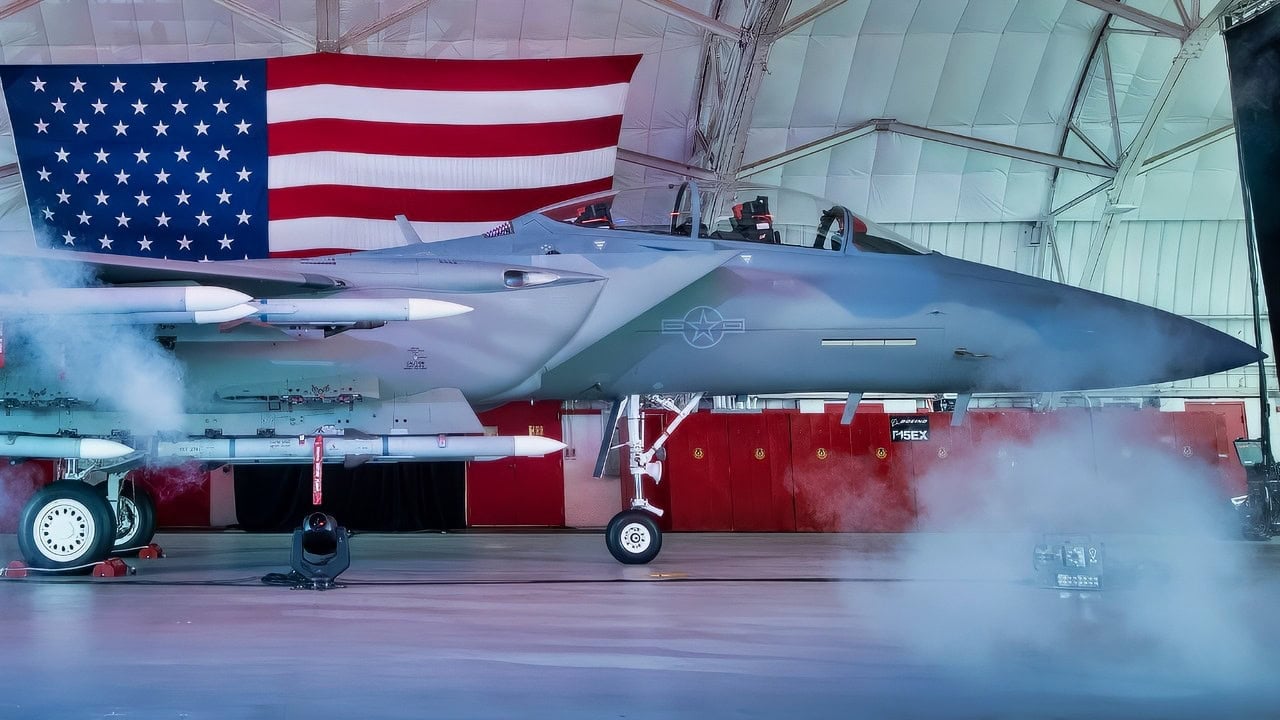
The F-15EX is not a cosmetic upgrade. It brings the AN/APG-82 AESA radar, the EPAWSS electronic warfare suite, newer F110 engines, and a larger weapons magazine than the legacy F-15C/Ds that defined Kadena for decades. That matters in the western Pacific, where the first problem is not simply seeing inbound aircraft or cruise missiles. It is killing enough of them, fast enough, before follow-on waves arrive.
Kadena is closer to Taiwan than any other major American air base. That geography is why the Eagle II matters. A heavily loaded F-15EX can stand alert, launch quickly, and carry enough missiles to make each sortie count. Any air defender in the first island chain wants more magazine depth, not less. On that narrow point, the Air Force is making the right choice.
But better aircraft do not erase the timeline problem. They only make the eventual force better than the force that is missing today.
Kadena Has Been Living on a Stopgap
The Aviationist's March reporting on Kadena's last operational F-15C flight is the key background here. The 18th Wing ended regular F-15C operations on Jan. 24, 2025 after 45 years. Since then, the base has been held together by rotating detachments of F-22s, F-35s, F-16s and other fighter units, typically in small packages. That keeps a U.S. flag on the line. It does not create the same continuity in maintenance, local knowledge, sortie rhythm, or command relationships as a permanently assigned wing.
That is why the June 2026 familiarization deployment of a single F-15EX to Kadena mattered more than the tail photo itself. The real work was not symbolic. It was maintenance integration, weapons loading, crew training and the activation of support organizations like the 67th Fighter Generation Squadron. In other words, the Air Force has been preparing the base to receive the jet because the base has been operating in transition for well over a year.
Transitions are tolerable in peacetime. They are dangerous if the theater turns hot before the receiving unit is fully built.
The Force Structure Is Still Thinner Than It Looks
There is another uncomfortable number in this story. Kadena used to host 48 F-15C/Ds. The replacement plan is 36 F-15EXs. The new jet is better than the old one in almost every category that matters, but this is still a trade of quantity for quality at the forward edge of the theater. Washington is betting that one Eagle II can do materially more than one legacy Eagle. That is probably true tactically. It is less reassuring operationally.
No commander should assume 36 tails means 36 launches. Some aircraft will be in maintenance. Some will be turning for the next sortie. Some will be dispersed, some damaged, some held back for later waves. And Kadena's very value also makes it a target. The base sits inside the missile envelope that would define the opening hours of any Taiwan contingency. Hardened shelters, runway repair, fuel resilience and munitions handling capacity matter just as much as radar range and missile load.
So the problem is not whether the F-15EX is good enough. It is whether 36 aircraft arriving by 2028 changes the first-week balance enough to matter. My answer is no. It improves the position. It does not solve the problem.
What Washington Actually Buys
What the Air Force is really buying at Kadena is a more stable floor under its regional air posture. Permanent Eagle II squadrons will be easier to sustain than an endless patchwork of rotations. Pilots and maintainers will know the base, the weather, the dispersal options and the local operating environment. The aircraft itself has already reached initial operational capability, and the training pipeline through Portland and Kadena is real. That should make the 18th Wing more coherent than the stopgap model now in place.
“Kadena-based F-15C/D Eagles have ensured air superiority for decades to uphold a free and open Indo-Pacific,” former Kadena commander and current ACC chief Gen. Ken Wilsbach said when the old Eagles ended active-duty service at the base.
The issue is that continuity is not the same thing as dominance. Thirty-six F-15EXs can help hold the line, defend tanker tracks, and thicken the air picture around Taiwan and the Ryukyus. They cannot by themselves close the gap created by delayed production, shrinking forward numbers and the growing scale of PLA air and missile power.
The strategic conclusion is straightforward. Kadena's F-15EX plan is necessary, but it is not sufficient. If Washington wants real combat margin in the western Pacific, it needs the jets earlier, the base harder, the missile stocks deeper, and the dispersal network wider. Otherwise the Eagle II will arrive as a strong answer to the wrong question. The question was never whether Kadena needed a better fighter. It was whether the United States could restore forward mass before the window closes.
Kadena Air Base will receive 36 F-15EX Eagle IIs by 2028, but delays in production mean they will not close the air gap around Taiwan. The F-15EXs, equipped with advanced systems, are intended to enhance U.S. air capabilities in the region. However, the report emphasizes that the delayed arrival of these aircraft will not significantly alter the strategic balance in the first week of a potential conflict.
- Kadena will receive 36 F-15EXs by 2028, delayed from an earlier schedule.
- Each F-15EX can carry a minimum of a dozen air-to-air missiles, totaling 432 if all are armed.
- The F-15EX features advanced technology such as AESA radar and electronic warfare systems.
- Kadena has been operating with a mix of other fighter jets since the retirement of the F-15C.
- The report concludes that the F-15EXs will not sufficiently close the air gap around Taiwan.