
KC-390 Cannot Solve America's 2026 Pacific Tanker Gap
 Marcus Chen
KC-390 Cannot Solve America's 2026 Pacific Tanker Gap
The useful number in the latest Pacific tanker debate is not the KC-390's 57,000-pound payload. It is the number of runways from which a tanker can actually survive long enough to pass fuel to fighters, bombers, and patrol aircraft during the first week of a Western Pacific fight.
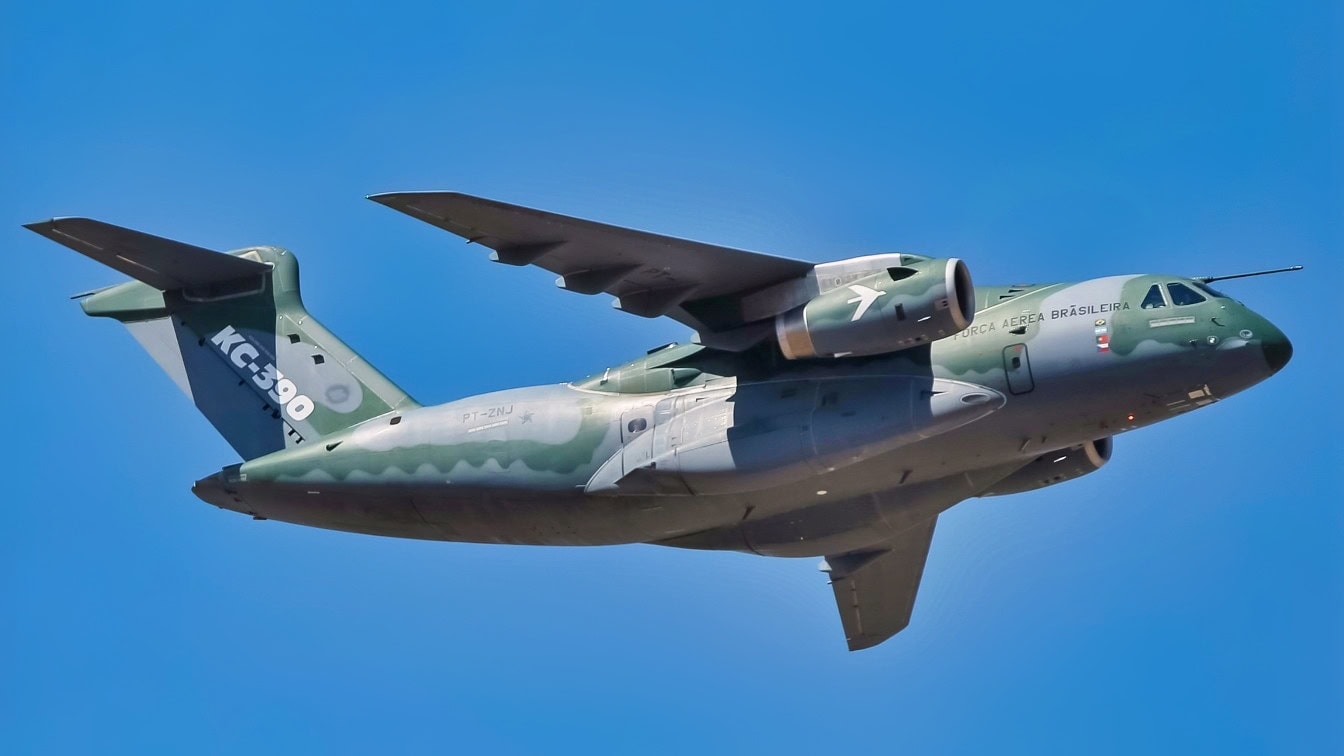
Breaking Defense reported on July 10 that U.S. planners are again looking at the same tanker problem that keeps appearing in Pacific wargames: large refueling aircraft, concentrated at a small number of major bases, create a fragile fuel architecture in a theater where every useful mile matters. Embraer is pushing the KC-390 Millennium as part of the answer, arguing that a medium jet tanker can use more airfields than the KC-135 or KC-46 and help disperse refueling operations across the island chains.
That is a serious proposal. It is not a complete solution.
The Fuel Problem Is Geography Before It Is Procurement
Anyone who has served on a destroyer in the Western Pacific learns the same lesson quickly: the map lies if you look at it on a conference room wall. Guam is roughly 1,700 nautical miles from Taiwan. Darwin is farther. Hawaii is not in the same operational universe. Okinawa and the Philippines are closer, but closeness also means they sit inside the missile threat envelope that matters.
Airpower makes that geometry harsher. A fighter with a combat radius measured in hundreds of nautical miles becomes a theater asset only when tankers can push it forward, recover it, and do it again the next day. Bombers, maritime patrol aircraft, and command-and-control aircraft need the same fuel chain. If the tankers are forced to operate from a handful of predictable hubs, the rest of the force inherits that vulnerability.
The U.S. Air Force's KC-46A Pegasus is built for heavy refueling and airlift. The service fact sheet lists a maximum takeoff weight of 415,000 pounds, fuel capacity of 212,299 pounds, and up to 65,000 pounds of cargo. The aircraft can refuel through boom, centerline drogue, and wing aerial refueling pods, and the Air Force plans an inventory of 179 KC-46As. Those are useful capabilities, but they do not erase the basic issue: a large aircraft needs large, supportable airfields, and those airfields are known.
What the KC-390 Actually Adds
The KC-390 is smaller. Embraer's public material describes it as a multi-mission transport and tanker with a payload up to 26 metric tons, or about 57,000 pounds, cruising around Mach 0.80. That puts it in a different category from the KC-46. It cannot replace a strategic tanker pound for pound. But it may be able to spread some refueling and logistics work across airfields that would be unsuitable or inefficient for larger tankers.
That matters because Pacific basing is not just about runway length. It is about ramp space, fuel storage, maintenance teams, munitions handling, air defense, repair crews, communications, host-nation permissions, and the ability to restore a damaged strip after missile attack. A KC-390 detachment still needs fuel bladders, spare parts, ground equipment, and protection. But it may need less concrete and less specialized infrastructure than a KC-46 package.
The best case for the KC-390 is therefore not that it becomes America's new front-line tanker. The best case is that it becomes a pressure relief valve. It could move fuel, crews, engines, and high-priority cargo among dispersed sites, keep smaller fighter packages alive during Agile Combat Employment operations, and reduce the number of missions that must originate from Guam, Kadena, or other obvious targets.
That is valuable. It is also limited by volume. One KC-46 can carry more fuel than several medium aircraft. If a squadron needs repeated refueling windows for long-range counter-air, anti-ship, or strike sorties, the math quickly favors big tankers. Medium aircraft can complicate the enemy's targeting problem, but they do not create fuel out of nothing.
The Guam Lesson Has Not Gone Away
Congressional Research Service work on Guam has repeatedly framed the island as a central U.S. defense infrastructure problem in the Indo-Pacific. Congress and the Pentagon face decisions on force posture, hardening, dispersal, and readiness because Guam is both indispensable and exposed. That is the entire tanker problem in miniature.
If U.S. planners assume Guam works, the sortie model looks clean. If Guam is degraded, the model becomes ugly. Tankers shift farther back. Fighters spend more time reaching gas and less time on station. Commanders burn through crew duty days and maintenance cycles. The sortie generation rate falls even before aircraft are lost.
This is where medium tankers are attractive. A distributed fleet can give commanders more options after the first missile salvo. But dispersal is not free. Every additional operating location demands pre-positioned fuel, security, repair capability, and political agreements. A tanker parked on a smaller airfield without fuel storage is just an expensive transport aircraft waiting for a logistics plan.
China does not need to destroy every tanker to make this painful. It only needs to force U.S. tankers farther east, suppress a few key fuel nodes, and keep commanders uncertain about which runways will be usable tomorrow. Sea denial has an air equivalent. Deny the fuel web, and the aircraft on the ramp become local assets rather than theater assets.
The Procurement Trap
The KC-390 discussion also exposes a familiar Pentagon habit: converting an operational problem into a platform debate. The question should not be whether the KC-390 is better than the KC-46. It is not. The question is whether the United States has enough layers in its refueling architecture to survive contact with Chinese missile forces.
A layered answer would include heavy tankers for volume, medium tankers for distribution, hardened fuel infrastructure, mobile ground refueling, rapid runway repair, deception, decoys, and agreements with allies before the crisis starts. It would also require boring spending on fuel farms, shelters, communications, and maintenance kits. That is less politically attractive than buying aircraft, but it is where the campaign may be won or lost.
The timing is uncomfortable. China is testing submarine-launched ballistic missiles, operating with Russia around the Yellow Sea and Pacific approaches, and continuing to build the missile forces that make fixed bases risky. USNI News reported this week that Russian and Chinese ships and submarines moved from Qingdao into the sea phase of Maritime Interaction 2026, while the wider Western Pacific is already crowded with RIMPAC activity, Japanese island defense exercises, and Chinese patrol patterns.
That is the operating environment into which any U.S. tanker plan has to fit. The KC-390 can help only if Washington treats it as one piece of a dispersed fuel system rather than a procurement slogan.
The Bottom Line
A Pacific air campaign is not limited first by fighter count. It is limited by fuel delivered at the right place, at the right time, under missile threat. The KC-46 brings volume. The KC-390 may bring runway options. Neither solves the problem if the fuel network remains thin.
The math is blunt. If the United States wants aircraft to fight west of Guam in 2026 and beyond, it needs more than tankers. It needs a survivable fuel web. Without that, the Pacific air plan is a range chart pretending to be a campaign plan.
U.S. planners are addressing the limitations of current tanker aircraft, particularly the KC-390, in meeting the refueling needs of military operations in the Pacific by 2026. The report emphasizes the logistical challenges posed by geography and the vulnerability of concentrated tanker bases, particularly in relation to Guam. It suggests that while the KC-390 may offer some operational advantages, a comprehensive refueling architecture is necessary to ensure effective air operations under missile threats.
- The KC-390 has a payload of 57,000 pounds and is proposed to enhance refueling operations in the Pacific.
- U.S. planners are concerned about the vulnerability of large tankers concentrated at major bases.
- Guam is identified as a critical U.S. defense infrastructure problem in the Indo-Pacific.
- The KC-46A Pegasus is designed for heavy refueling but requires large, supportable airfields.
- A distributed fleet of medium tankers could provide more operational flexibility after missile attacks.