
Kebbe Under Fire from Lakurawa — 300 Islamic State Fighters in the Sahel Challenge the Nigerian Army
 Marie Dubois
Kebbe Under Fire from Lakurawa — 300 Islamic State Fighters in the Sahel Challenge the Nigerian Army
On August 14, in Kebbe, a town in eastern Sokoto, about a hundred kilometers from the Nigerien border, more than 300 armed men stormed the military post on the outskirts of the town before sweeping into the Sabon Gari market and the general hospital. Four soldiers were killed, according to witnesses and a local security expert. The assault then moved towards Ungushi, a neighboring village in the same local government area (LGA), where at least 28 civilians were killed overnight and the following day. This is no longer banditry. It is the signature of the Islamic State in the Sahel.
A Military Post Overwhelmed in Broad Daylight
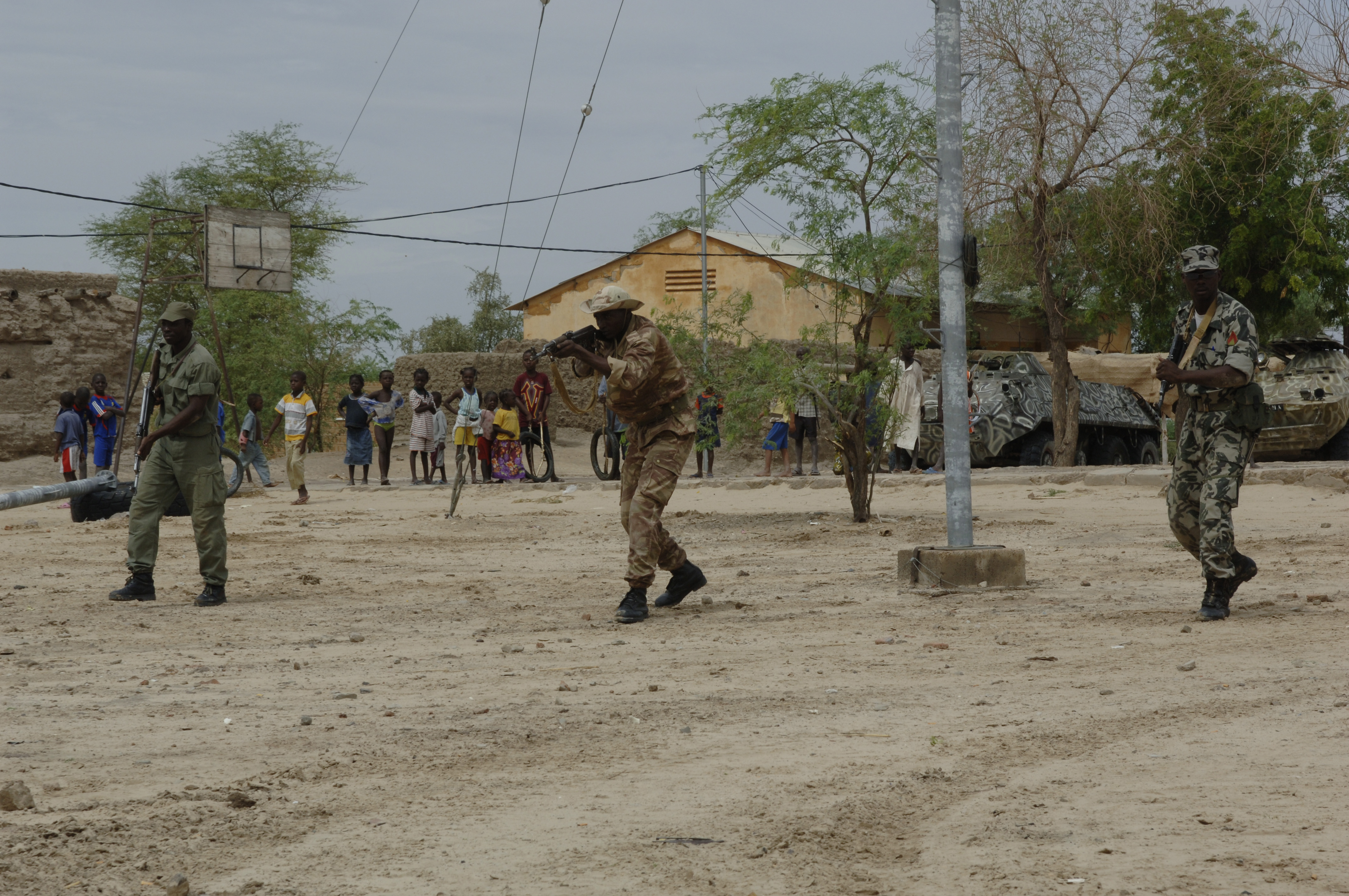
The events are reported by several Nigerian media based on converging testimonies: the assailants arrived by motorcycle, in waves, starting at 10 a.m., exchanged heavy gunfire with the garrison, and then stormed the town center. According to Bashar Altine, a security expert quoted by Punch, the fighters opened fire on a military vehicle equipped with a rocket launcher before looting the shops — mobile phones, bread — and then vandalizing the vehicles parked at the general hospital, including an ambulance. Patients were stripped of their phones at gunpoint.
The Sokoto State police initially did not confirm the death toll of four soldiers, which remained consistent in testimonies. One striking detail: no bodies of Lakurawa fighters were reported by the army after the engagement. "We did not see the body of any of their men," noted the local expert. On the ground, the exchange remains one-sided.
Ungushi, the Friday Massacre
The attack on Kebbe was just the prelude. On Friday around 2:15 p.m., during the Jumu'a prayer, the same group surrounded Ungushi. Witnesses describe an initial burst of gunfire that killed five worshippers, a retreat, and then a return: the assailants ordered the killing of "all the men," sparing women and children, before shooting at residents who had taken refuge on a nearby hill. Seven houses, two shops, and three vehicles were set on fire — the rain limited the damage. The community leader reported 32 bodies buried on Sunday, including the imam of the Izala mosque in Ungushi. The police confirmed 28 deaths; thirteen assailants were reportedly killed by the residents.
The same group then struck Umbutu, Maikurhuna, Gwandi, Girkau, and Zugu, villages in the same LGA, where they stole cattle without killing. Thousands of residents fled to Kebbe, Jega, Koko, Tambuwal, and Aleiro. Communication is cut off in several areas.
Lakurawa, from "the Recruits" to Nigeria's Showcase of the Islamic State in the Sahel
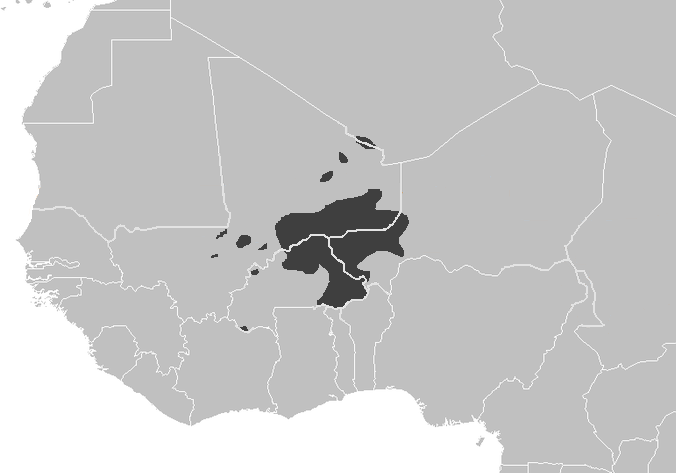
Lakurawa is the Hausa pronunciation of "the recruits." The group emerged from the movement of fighters and ideologues across porous borders between Nigeria and the Sahel, coming from Mali and Niger. Initially tolerated by communities that saw it as protection against cattle thieves, it imposed zakat, kidnapped schoolchildren, and, according to the Nigerian army, cooperates with Boko Haram. Abuja classified it as a terrorist organization in January 2025.
The strategic turning point is its claimed affiliation with the Islamic State Province in the Sahel (ISSP/EIGS). Security sources cited by Sahara Reporters describe it as affiliated with the ISSP, active in Mali, Niger, and the Nigerian states of Kebbi, Niger, Sokoto, and Kwara. The Africa File of the Critical Threats Project (August 20, 2026) notes that Lakurawa fighters "linked to the ISSP" have increased attacks against civilians in northwestern Nigeria throughout 2026. In May, the ISSP claimed a deadly attack near Illela, in Sokoto, killing seven soldiers. Kebbe fits into this trajectory: the group is no longer content with extortion — it overwhelms garrisons and massacres entire villages.
The Response of the Nigerian Army
On Sunday, August 16, General Bemgha Paul Koughna, commander of the 8th division, visited Kebbe with more than 200 soldiers. He inspected the forward operating base (FOB), met with local leaders, and announced a reconfiguration of the security apparatus along the Sokoto-Kebbi axis. The message from the high command (operation FANSAN YAMMA) is unequivocal: "no refuge" for terrorists. On Thursday, August 20, troops from the 8th garrison battalion repelled a new attack attempt against Bachaka, a border community in the Gudu LGA, driving the assailants back towards Makera, on the Niger border, and recovering stolen cattle.
Thus, a response exists, but it remains reactive. The Nigerian army concentrates its forces in the northeast against Boko Haram and ISWAP; the northwest, a historical theater of major banditry, was not designed for an enemy capable of fielding 300 fighters in broad daylight. Colonel Bukar Hamisu (retired), former commander of the 32nd artillery brigade in Sokoto, summarizes the shift: "This is no longer banditry. When 300 fighters arrive by motorcycle in broad daylight, overwhelm a military base, and then attack a hospital and a market, it is terrorism. They move like the groups in the Sahel."
"When 300 fighters arrive by motorcycle in broad daylight, overwhelm a military base, and then attack a hospital and a market, it is terrorism." — Colonel Bukar Hamisu (retired), former commander of the 32nd artillery brigade.
What Northwestern Nigeria is Becoming
The significance of Kebbe extends beyond Sokoto. It confirms the junction, repeatedly announced but never as visible, between the Sahel front and northwestern Nigeria: the ISSP uses Lakurawa as a foothold, with personnel, motorcycles, and a modus operandi — coordinated assault, targeting of infrastructure, massacre of civilians — identical to those in Liptako-Gourma. The northwest was already weakened by years of banditry; it is becoming a second front of asymmetric warfare, just a few hundred kilometers from the areas of American operations launched in late 2025 against the same networks.
The killed imam, the stripped patients, the bodies buried in the rain: all of this also questions the credibility of the official narrative. Former Vice President Atiku Abubakar has made it clear: "Condolences are no longer enough." Operationally, the question is elsewhere: how many posts like Kebbe can the army defend when the enemy chooses the time, place, and number of fighters?
The Next Signal Will Be Read at the Border
The most vulnerable sector is now identified: the Gudu-Bachaka-Makera axis, along the Niger border, where columns of motorcycles retreat and resupply. If the Lakurawa manage to establish a permanent transit zone there — as the ISSP has done in Burkina Faso's Gourma — Sokoto will no longer be an incursion zone but a sanctuary. The window to secure this border is measured in weeks, not months. The tolls remain provisional: the police have not confirmed the four soldiers, and the bodies of 32 victims were buried without forensic identification. On the ground, the only certainty is this: what happened in Kebbe on August 14 was not an accident; it was a test.
On August 14, 2026, over 300 fighters from the Islamic State in the Sahel launched an assault on a military post in Kebbe, Nigeria, resulting in the deaths of four soldiers. The attackers then targeted civilians in Ungushi, killing at least 28. The Nigerian military has since deployed additional forces to the region in response to the escalating violence.
- Over 300 armed fighters attacked a military post in Kebbe.
- Four soldiers were reported killed during the assault.
- At least 28 civilians were killed in Ungushi during subsequent attacks.
- The attackers are linked to the Islamic State in the Sahel.
- The Nigerian military responded with over 200 soldiers to the area.