
Kidnapping in Nigeria in 2026 — the Kainji corridor becomes the new front for abductions
 Marie Dubois
Kpenya in Nigeria in 2026 — the Kainji corridor becomes the new front for kidnappings
On August 21, in Kpenya, in the Dekara district of Niger State, armed men interrupted Friday prayers and took an undetermined number of worshippers. This is a significant detail: the attack did not target a convoy on a secondary road or an isolated village at dawn, but a place of worship during a religious sequence. When a group can strike in this way and then withdraw with hostages without being immediately engaged, it indicates something more serious than just the brutality of the attack. It indicates that an operational space is consolidating.
The exact number of those kidnapped remains uncertain. Amnesty International mentions local reports of more than 80 people, while the Niger State government confirms the kidnapping without providing a definitive toll. This caution is wise. In this theater, numbers circulate faster than patrols, and exaggeration is part of the fog of war. But the essential is already confirmed: the Borgu-Kainji corridor is no longer a neglected periphery. It is becoming a front.
A corridor more important than it seems
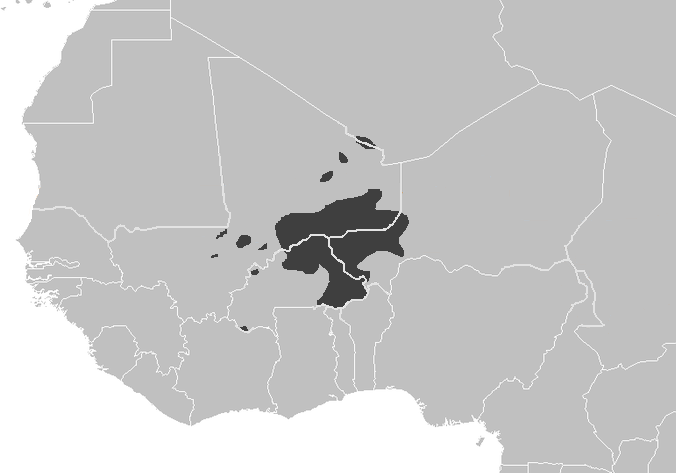
From Lagos or even Abuja, Borgu seems far away. On the ground, it is the opposite. This strip connects forested areas, poorly held rural routes, and the outskirts of Kainji National Park. It opens up traffic routes to Niger State, Kebbi, and more broadly to central-northern Nigeria. For a regular force, it is a costly projection area. For mobile armed groups, it is an ideal area for dispersion, resupply, and retreat.
Marie Dubois has often emphasized a simple point: in West Africa, one must think in terms of control zones rather than administrative borders. Kpenya confirms this logic. The problem is not just the attack on a mosque. The problem is the existence of a corridor where the state intervenes through sporadic raids, while armed men live there for the long term. They choose the time, the route, and the target. The army arrives afterward.
A Sahelian method descends southward
The exact identity of the assailants is not confirmed at this time, and it is important to maintain this discipline of language. However, the method observed strongly resembles what has been seen for years in the Sahel: striking civilians at a symbolic site, capturing en masse, creating psychological shock, and then using the hostage as currency, as a means of forced recruitment, or as an instrument of terror. This is not just opportunistic banditry. It is a technique of social control.
What makes Kpenya particularly concerning is the convergence of mass kidnapping, forest sanctuary, and the weakening of local intelligence. In a village that has already seen the state lose the initiative, residents hesitate to speak, suspicious movements become normal, and the presence of armed men eventually becomes part of the landscape. This is exactly how a criminal corridor transforms into a semi-insurrectional theater.
When worshippers can be kidnapped during Friday prayers, the message sent to neighboring villages is clear: the state no longer protects the ordinary time of civil life.
Why Kainji weighs more heavily than its discreet name
Nigerian authorities have already faced warning signals in this area. The previous months have seen repeated attacks around Borgu, civilian deaths, village burnings, kidnappings, and even armed intrusions into communities near Kainji Park. Taken separately, these incidents may seem local. Put together, they outline something else: a methodical test of the state's limits over a geographical depth sufficient to support a sustained harassment campaign.
Kainji Park is not just a reserve. It is a space of masks, paths, and terrain cuts. From experience, this type of environment quickly wears down conventional units if they lack solid human intelligence, air mobility, and continuous ground presence. A few days of sweeping produce photos. It does not necessarily produce a recapture. Armed groups know this, and they exploit this asymmetry.
Nigeria has long treated its security crises in silos: ISWAP and Boko Haram around Lake Chad, armed gangs in the Northwest, community violence further inland. Kpenya suggests that these compartments are becoming less useful. What is seen in Borgu may not yet be a complete doctrinal shift, but it is already a mix of practices: guerrilla mobility, mass capture, religious intimidation, and exploitation of a wooded area that is difficult to lock down.
The real risk is political before it is statistical
The Nigerian public debate will naturally focus on the final number of people kidnapped. This figure will matter to families, of course. But at the strategic level, the most important question lies elsewhere: how many villages around Kainji will now adapt their behavior to the fear of the next raid? As soon as a corridor imposes its own psychological timetable, it acquires a form of negative sovereignty.
The danger for Abuja is therefore twofold. On one hand, a multiplication of kidnappings further undermines the legitimacy of the state in the central-north. On the other hand, a purely spectacular response risks displacing the assailants without breaking their logistical depth. This theater demands less martial communication and more permanence: intelligence village by village, control of paths, continuous pressure on refuge areas, and the ability to prevent the return of kidnappers after the rescue operation.
The likely next steps are unfortunately clear. If the Borgu-Kainji corridor is not reclaimed over time, the next targets will be those that produce the most effect for the least effort: markets, inter-village roads, places of worship, and small communities located between forest and secondary routes. This is where the next fault line of northern Nigeria is now being drawn.
On August 21, 2026, armed men kidnapped worshippers during Friday prayers in Kpenya, Niger State, Nigeria, with local reports suggesting over 80 individuals were taken. This incident highlights a concerning trend of mass kidnappings and the consolidation of operational space for armed groups in the Borgu-Kainji corridor, indicating a significant loss of state control in the region.
- Armed men kidnapped worshippers during Friday prayers in Kpenya.
- Local reports suggest over 80 individuals were taken.
- The incident indicates a consolidation of operational space for armed groups in the region.
- The corridor Borgu-Kainji is becoming a significant area for armed activity.
- The Nigerian state is losing control over the area, leading to increased fear among local populations.