
Kim Jong-un Visits China via the New Yalu River Bridge and Activates the US Military's Guam Air Defense Battalion to Reshape Northeast Asia's Deterrence by 2026
 Tanaka Takashi
Kim Jong-un Visits China via the New Yalu River Bridge as the U.S. Army Activates Air Defense Battalion in Guam to Reshape Northeast Asia Deterrence by 2026
On October 24, Kim Jong-un entered China’s Dandong via a special train across the newly opened Yalu River Bridge. Shortly after the bridge was put into use, it became a channel for the supreme leader; this specific scene illustrates the situation better than general border trade figures: infrastructure comes first, followed by political usage. For Pyongyang, this is not an ordinary transit; for the U.S., Japan, and South Korea, it marks a moment when the land connection between China and North Korea is imbued with strategic signals.
Confirmed Facts
Confirmed: Reports from Reuters, Yonhap, the South Korean Ministry of Unification, and on-site coverage by SCMP all point to the same fact: Kim Jong-un arrived in Dandong on the 24th and used this new bridge. Reports from PBS, The New York Times, and others mark this as his first visit to China in over a year. As of the time of publication, neither side has fully disclosed the agenda, level of visit, or specific outcomes of the talks, so terms like “trade arrangements,” “sanctions evasion,” or “military aid in exchange for technology” cannot be considered announced agreements.
Confirmed: KCNA reported on the same day that Kim Jong-un attended a meeting of company commanders, demanding that the units be built into elite and self-sufficient combat units, and proposed the direction of building “the world’s strongest army.” Such statements emphasize grassroots mobilization, support, and command capabilities, and do not equate to new nuclear policies or missile deployment decisions.
Confirmed: The U.S. Army has activated an air defense battalion in Guam, with UPI and The Korea Herald placing the North Korean and Chinese missile threats in the context of their reports. The military implications should be cautiously defined: the activation at the battalion level strengthens the manpower, command, and continuous duty foundation of Guam’s layered defense, but does not mean that the air defense system in Guam has eliminated the risk of saturation attacks.
Two High-Sensitivity Leads Awaiting Verification from a Single Source
Awaiting Verification: The Daily Mirror reported that Kim Jong-un demanded nuclear weapons to be “ready for use at any time.” The available KCNA meeting reports do not contain verifiable original wording of this statement, nor has it been confirmed whether it is a paraphrase of the existing “nuclear force’s regular combat readiness posture.” Therefore, this article does not categorize it as a new policy, nuclear test directive, or launch readiness signal from the 24th.
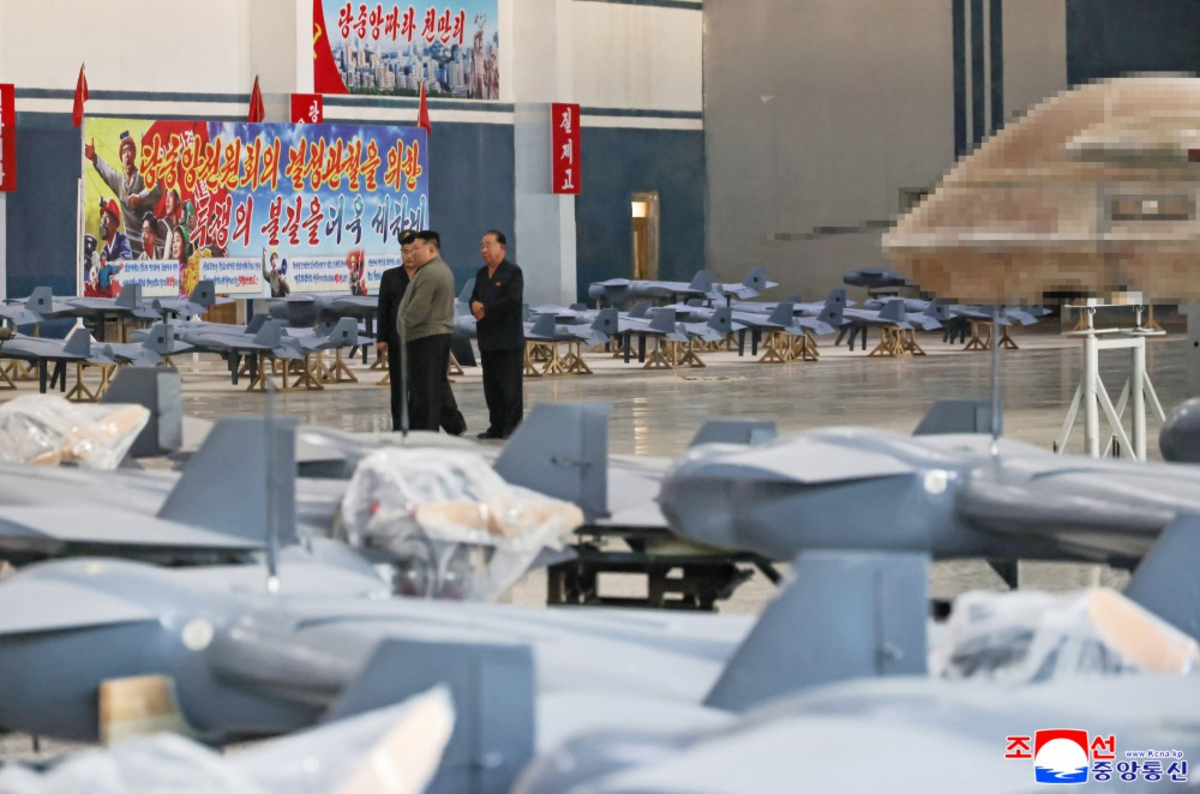
Awaiting Further Cross-Verification: The New York Times and Ukrainska Pravda reported on the 24th that North Korea is improving ballistic missiles and expanding drone mass production with Russian support. There is substantial independent evidence of military trade and technical contacts between Russia and North Korea, but the specifics of “Russian support,” including the technology, scale of production lines, delivery timelines, and whether it directly alters North Korea’s missile accuracy, still require corroboration through satellite imagery, component tracking, or official assessments.
Strategic Interpretation Between the Bridge and Guam
Inference: The value of the new bridge lies primarily in logistical redundancy, and secondarily in symbolism. The supreme leader’s choice of this bridge over the old route effectively showcases the “available land interface” as a political asset. In an environment where the ongoing consumption of Russian military industry is exacerbated by the Russia-Ukraine conflict and the U.S. is adjusting its military focus due to Middle Eastern conflicts, Pyongyang’s leverage comes not only from missile range but also from its ability to exchange goods, labor, and military production capacity on both the Chinese and Russian sides. There is no evidence yet of a new deal being reached; however, the negotiation space has indeed expanded.
Inference: The activation of the air defense battalion in Guam is not an immediate response to this visit, but rather another end of the same deterrence competition. Guam serves as a rear hub of the second island chain and a node for U.S. military power projection towards the Korean Peninsula, the Taiwan Strait, and the East China Sea. China’s medium- and long-range conventional missiles, along with North Korea’s evolving ballistic and cruise missiles, can pressure this node from different directions; if the mass production of drones by Russia and North Korea is confirmed, it would also add low-cost saturation targets to the defender’s ammunition calculations. What Japan should truly focus on is not the news effects of a bridge or a battalion, but whether intelligence sharing, early warning links, and interceptor replenishment can keep pace with this multi-axis pressure.
Limited but Noteworthy Sidebar
On the 24th, a U.S. court ruled that North Korea must pay approximately $400 million for the “Pueblo” incident. This represents judicial and symbolic pressure, but does not equate to an immediately executable economic lever; it will not change the short-term agenda of this visit. Seoul’s proposal for inter-Korean military talks, North Korea’s threat to restart border loudspeakers, and the South Korean intelligence agency’s denial of health rumors all constitute background, but are insufficient to replace the main narrative of “the leader crossing the bridge after the road opens.”
The more challenging risk lies in the fact that infrastructure often lasts longer than diplomatic statements. If the new bridge becomes a regular service for China-North Korea logistics, while Guam’s defenses are only planned around single missiles, the former’s flexibility will gradually accumulate, while the latter’s interception stockpile may become a bottleneck first.
Sources
- Reuters, October 24, 2026, report on Kim Jong-un entering China via the new bridge
- Yonhap, South Korean Ministry of Unification, SCMP, October 24, 2026, reports on arrival in Dandong and route cross-references
- KCNA, October 24, 2026, report on the company commanders meeting
- UPI, The Korea Herald, October 24, 2026, report on the activation of the air defense battalion in Guam
- The New York Times, Ukrainska Pravda, October 24, 2026, clues on North Korea-Russia missile and drone production
- Daily Mirror, October 24, 2026, statement on nuclear weapons being “ready for use,” awaiting verification from a single source
Kim Jong-un visited Dandong, China on October 24, 2026, using a newly opened bridge, marking his first visit to China in over a year. Concurrently, the US Army activated an air defense battalion in Guam, enhancing its defensive posture amid rising tensions. The visit and military developments signal strategic shifts in Northeast Asia, with implications for regional security dynamics.
- Kim Jong-un visited Dandong, China on October 24, 2026.
- The US Army activated an air defense battalion in Guam.
- The new bridge symbolizes political and logistical connections between North Korea and China.
- Kim Jong-un emphasized building a strong military during a commanders' meeting.
- Reports indicate North Korea is improving missile capabilities with Russian support.