
KNDS reports a backlog of 33.1 billion euros in 2026, and the Leopard 2A8 does not solve Europe's capacity problem.
 Dr. Klaus Weber
KNDS reports €33.1 billion order backlog in 2026, and Leopard 2A8 does not solve Europe's capacity problem
€33.1 billion in order backlog initially looks like the long-awaited answer to Europe's defense deficit. At KNDS, the German-French manufacturer of Leopard 2 tanks, CAESAR howitzers, Boxer variants, and ammunition, the backlog increased from €23.5 billion to €33.1 billion by the end of 2025. Revenue grew by 15.9 percent to €4.4 billion, and order intake reached €13.5 billion. This is industrially significant. Strategically, it is less reassuring than many in Berlin and Paris will now claim.
For an order backlog is not yet a brigade, an order is not yet a deployable unit, and an IPO is not yet European defense capability. This is precisely where the core of the European problem lies: Demand is exploding faster than the ability to translate it into standardized, interoperable, and timely delivered equipment. Europe is once again ordering tanks. But is that enough?
Leopard 2A8 as a symbol of return and bottleneck
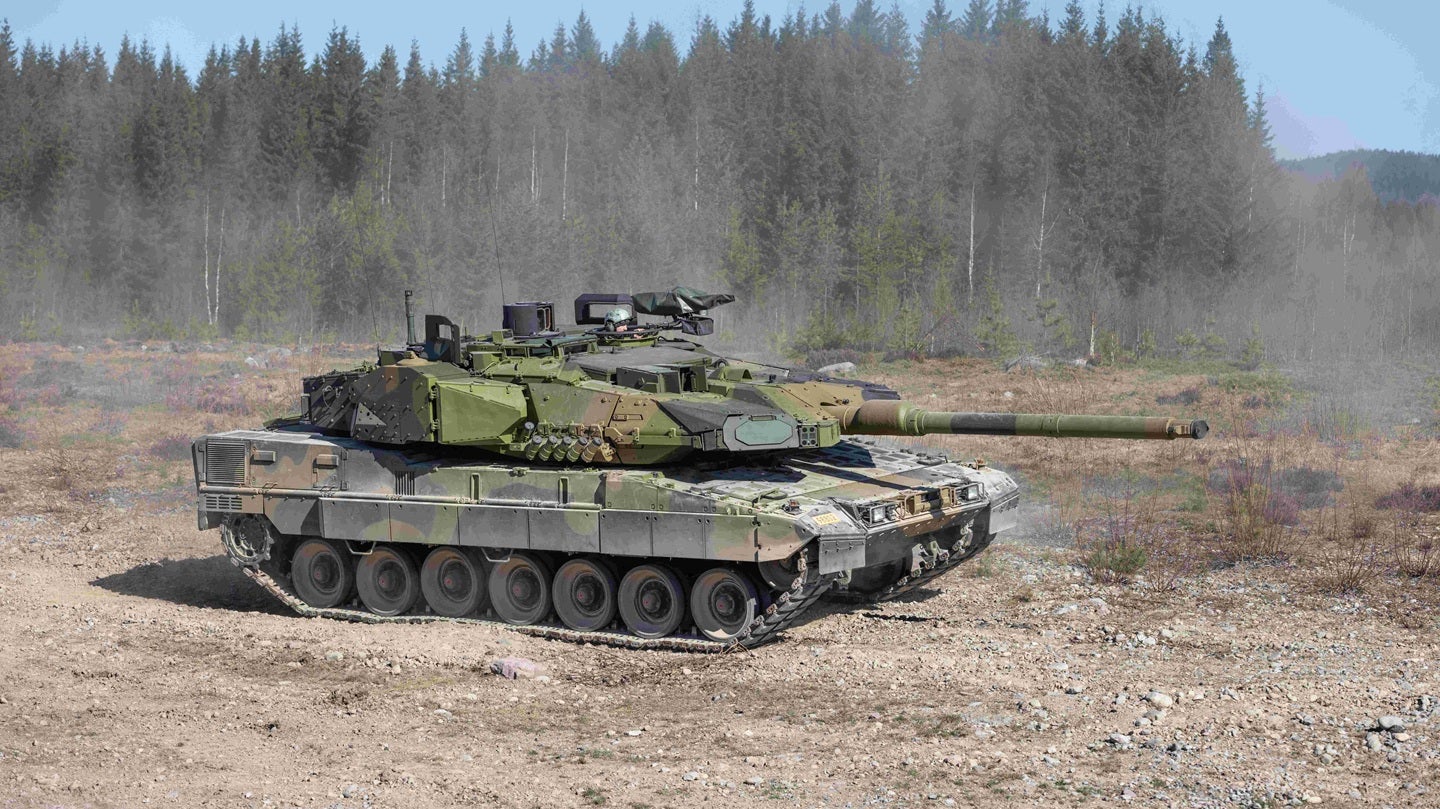
The Leopard 2A8 is the most striking political marker in the KNDS announcement. More than 300 firm orders in Europe are mentioned, including from the Czech Republic, the Netherlands, and Croatia. Technically, the 2A8 represents what European land forces have needed to catch up on for years: improved protection against anti-tank weapons, modernized sensors, digital command integration, and the incorporation of active protection systems into future configurations. It is not a revolutionary tank, but the conservative yet necessary modernization of a platform that already forms the logistical basis in many European armies.
This is precisely why the 2A8 is politically so important. It allows for standardization without jumping into a future system that is not yet available. The German-French MGCS remains a project with high symbolic weight and limited short-term impact. The Leopard 2A8, on the other hand, is purchasable, trainable, and integrable into existing maintenance structures. For armies that need to rebuild heavy units after decades of shrinkage, this is crucial.
However, standardization does not automatically arise from several countries ordering the same type. It only occurs when spare parts, ammunition, training, software versions, and maintenance are politically organized together. Europe does not only have too few combat tanks. It has too many national procurement logics surrounding the same platform.
The production ramp-up remains the real weak point
KNDS reports increasing capacities in almost all segments. Land Systems Germany achieved €2.5 billion in revenue, up 17.4 percent. Land Systems France reached €1.3 billion, up 9.6 percent. The ammunition division grew by 24.7 percent to €612 million. Additionally, the company points to a new automated 155mm production line in Belgium, the conversion of the Görlitz site, and additional hires. This sounds like an industrial turnaround.
But the operational question is not whether the curve is pointing upwards. It is whether the slope is sufficient. Reuters reported on May 26 that KNDS is seeking additional production capacities outside the traditional defense sector. CEO Jean-Paul Alary stated that capacity in Europe, particularly in Germany, needs to be significantly increased; discussions with the automotive industry are ongoing. Mercedes-Benz Ludwigsfelde and Volkswagen Osnabrück are mentioned in this context.
This is the sober part behind the success announcement. When a tank manufacturer with record orders has to look at unused car factories, Europe may have capital and industrial remnants, but it does not yet have a defense economy in the true sense. The civilian industry can help, especially in metal processing, logistics, quality management, and series processes. However, it does not overnight replace protected supply chains, military approvals, special steel, optics, electronics, drive integration, and trained skilled personnel.
SAFE finances demand, not automatically industrial order
The EU framework exacerbates this contradiction. SAFE provides up to €150 billion in loans for joint procurement. The eligible categories fit directly with KNDS: ammunition, artillery systems, ground combat capabilities, drone defense, air and missile defense, and maritime systems. Additionally, outside the EU, Ukraine, and EEA/EFTA states, generally no more than 35 percent of component values may come from outside. On paper, this is industrial policy with a strategic purpose.
The problem is the sequence. First, national capability gaps were allowed to persist for decades, then budgets were increased, and now joint procurement is supposed to retroactively discipline industrial fragmentation. SAFE can provide loans. However, it cannot prevent member states from submitting their national wish lists under a European label. This is precisely why strengthening the European Defence Agency is relevant. On May 12, EDA ministers decided on a three-tier strengthening of the agency, including a collaborative procurement center and a larger role in capability development and innovation.
This is institutionally correct, but politically limited. EDA chief André Denk explicitly emphasized that member states remain in the driver's seat. For Brussels, this sounds diplomatically wise. For European defense capability, it is the old weakness in new language. As long as each state remains a driver, but no one leads the convoy, what is meant to be joint procurement too often becomes synchronized national procurement.
KNDS shows progress and dependence at the same time
The KNDS figures demonstrate that Europe's defense industry is no longer stuck in the peace dividend logic of the 2000s. More than 500 additional combat and support vehicles were ordered in 2025, including 222 Boxer RCT 30, 84 RCH 155 wheeled howitzers, and 200 Puma vehicles. CAESAR production in Roanne is being expanded. The SCORPION vehicle family continues to grow. Counter-drone capabilities such as SERVAL Counter-UAV and the land version of RAPIDFire also show that the experience from Ukraine is feeding back into product development.
This is important because modern land warfare capability no longer consists solely of armor and caliber. The Leopard 2A8 needs drone defense, electronic countermeasures, secured data connections, and ammunition supply. A tank battalion without air defense and without artillery ammunition is not a strategic effect in Ukraine, but a target. Therefore, KNDS rightly speaks of system-of-systems capabilities. However, it remains open whether European procurement apparatuses think in the same system logic.
The planned dual listing in Frankfurt and Paris intensifies this question. According to Reuters, Germany and France are negotiating future state shares; Berlin could acquire around 40 percent, while France could hold a similar position. This can secure strategic control. However, it can also reinforce the old German-French temptation to treat industrial policy as a substitute for capability planning. Ownership is not a concept for readiness.
Europe's tank question is an institutional question
KNDS is not proof that Europe's defense problem is solved. It is proof that Europe's demand is finally serious enough to force industrial adjustment. The difference is crucial. An order backlog of €33.1 billion shows confidence in the product range. It says little about whether European armies will have more deployable heavy brigades, sufficient spare parts stocks, and compatible ammunition chains by 2028.
The real lesson from the KNDS announcement is therefore: Europe has begun to order heavy weapons again before it has built the institutions that will turn these orders into common combat power. This is understandable because the threat does not wait. But it remains costly. More money without industrial order produces full order books. Only common standards, common maintenance, and binding priorities produce defense capability.
The Leopard 2A8 can modernize Europe's tank fleets. KNDS can strengthen Europe's industrial base. SAFE can facilitate financing. Yet as long as national procurement policy is faster than European capability planning, the paradoxical statement remains valid: Europe is finally ordering enough, but it is not yet organizing enough.
Sources
KNDS reported a backlog of 33.1 billion euros in military orders by the end of 2025, including over 300 Leopard 2A8 tanks ordered by European nations such as the Czech Republic, Netherlands, and Croatia. The report emphasizes the need for standardized military equipment in Europe and highlights the challenges of integrating production capacities across nations. Additionally, the EU's SAFE initiative aims to support joint procurement efforts.
- KNDS reported a backlog of 33.1 billion euros in orders by the end of 2025.
- The Leopard 2A8 is seen as a key solution to Europe's military capacity issues.
- KNDS is seeking additional production capacities outside the traditional defense sector.
- The EU's SAFE initiative aims to provide loans for joint procurement of military equipment.
- Over 500 additional combat and support vehicles were ordered in 2025.