
Kratos finishes $50M hypersonic test facility ahead of schedule
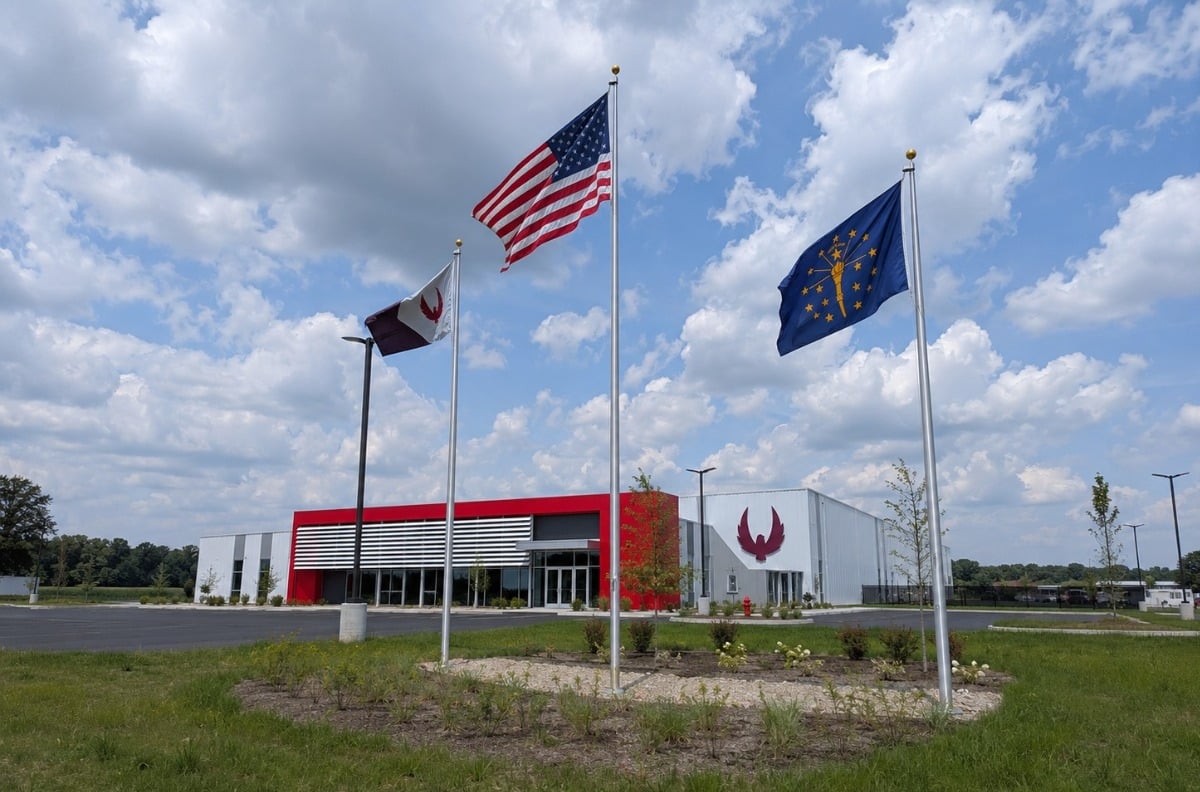
Kratos Defense & Security Solutions announced on July 28, 2026, that construction of its Indiana Payload Integration Facility for Hypersonic Systems in Crane, Indiana, has been completed ahead of schedule.
The $50 million facility, spanning 68,000 square feet (6,317 sq m), is purpose-built for rapid, affordable preparation of experimental payloads, the sensors, guidance systems, and other equipment packed inside a hypersonic test vehicle, with the explicit goal of increasing how often the U.S. military can actually fly hypersonic flight tests rather than waiting years between each attempt.
Hypersonic weapons, generally defined as anything capable of sustained flight beyond Mach 5, roughly 3,836 miles per hour (6,174 km/h), have become one of the most closely watched categories of modern weapons development, prized for their ability to strike targets faster and with less warning time than conventional cruise missiles or ballistic missiles typically allow.
Testing hypersonic technology has historically been one of the slowest, most expensive corners of American defense research, constrained by limited wind tunnel access, scarce flight test ranges, and the sheer engineering difficulty of building hardware that can survive the extreme heat and stress generated at those speeds. Kratos designed the Indiana facility specifically to attack that bottleneck from the payload side of the equation, giving engineers a dedicated space to simultaneously integrate, test, and prepare up to six experimental payloads at once for hypersonic vehicles supporting programs including the Multi-Service Advanced Capability Hypersonic Test Bed, known as MACH-TB, a Pentagon initiative built to dramatically increase the pace and affordability of hypersonic flight testing across multiple military branches rather than each service running its own separate, slower testing program.
Kratos holds a particularly central role in that broader testing ecosystem, having been selected as the prime contractor for the MACH-TB 2.0 program under Task Area 1, putting the company in charge of implementing efficiency and affordability initiatives meant to boost both the tempo and effectiveness of hypersonic flight testing nationwide. The company has positioned itself as the only contractor currently delivering both propulsion systems and complete flyer vehicles for hypersonic programs, a combination that includes its low-cost Erinyes Hypersonic Flyer, the Dark Fury test vehicle, and the Zeus and Oriole solid rocket motors that provide the raw propulsion needed to accelerate a test article to hypersonic speeds in the first place. That dual capability lets Kratos offer customers a more complete testing package than competitors who specialize in only one half of the hardware a hypersonic test flight actually requires.
Mike Johns, Vice President of Kratos SRE, tied the new Indiana facility directly to the broader national effort to scale up hypersonic testing capacity.
“The IPIF investment in southern Indiana brings online a national asset and critically needed infrastructure to rapidly scale the cadence of hypersonic testing in the United States. The facility will be a gathering place for the most advanced technologies and companies in hypersonics,” Johns said.
Dave Carter, President of Kratos Defense & Rocket Support Services, connected the facility to the company’s broader geographic strategy, framing the Indiana investment as part of a deliberate push to build out defense manufacturing infrastructure in the region surrounding Naval Surface Warfare Center Crane Division, a major Navy research and testing installation.
“Kratos’ infrastructure expansion near the Naval Surface Warfare Center Crane Division is part of our strategy to establish an advanced defense hub in Southern Indiana. We are building strategic, purpose-built facilities that enhance U.S. defense and aerospace capabilities,” Carter said.
Kratos broke ground on the Indiana Payload Integration Facility in March 2025, and the company has described the project as one of several new investments it is bringing to the area surrounding Crane, part of a broader pattern of defense contractors clustering infrastructure near major government research installations to take advantage of existing technical expertise, security clearances, and specialized testing ranges already established in the region. Completing construction ahead of the original 2026 target timeline suggests the project avoided the kind of delays that have historically plagued complex defense infrastructure builds, a detail that matters given how urgently the Pentagon has signaled it wants hypersonic testing capacity online.
The facility is expected to create more than 100 high-tech jobs once fully staffed, with an estimated average annual wage exceeding $80,000, and Kratos said significant hiring is already underway to fill those positions. That job creation figure places the facility among a broader wave of defense manufacturing investment flowing into Indiana and similar states as contractors race to build out physical infrastructure fast enough to match the pace of political and military urgency surrounding hypersonic weapons development, driven in large part by concerns that China and Russia have already fielded operational hypersonic weapons systems while American programs remain further along in testing than deployment.
Content preview only. Full article available at source. View Full Article
Kratos Defense & Security Solutions completed the Indiana Payload Integration Facility for hypersonic systems in Crane, Indiana, on July 28, 2026, ahead of schedule. The $50 million facility is designed to enhance the U.S. military's hypersonic testing capabilities by allowing rapid preparation of experimental payloads. It is expected to create over 100 high-tech jobs and is part of a broader strategy to build defense manufacturing infrastructure in the region.
- Kratos completed the Indiana Payload Integration Facility ahead of schedule.
- The facility cost $50 million and spans 68,000 square feet.
- It is designed to prepare experimental payloads for hypersonic systems.
- The facility will create over 100 high-tech jobs with an average wage exceeding $80,000.
- Kratos is the prime contractor for the MACH-TB 2.0 program.