
Kuwait Brings Ukraine Into Gulf Air Defence Fight
 Alexandra Reeves
Kuwait Brings Ukraine Into Gulf Air Defence Fight
Kuwait did not suddenly become a Ukrainian ally because of sentiment. It moved because Iranian missiles and drones have made an old paper agreement useful.
On June 28, Ukrainian Foreign Minister Andrii Sybiha said Kuwait had completed the domestic legal steps needed for a Ukraine-Kuwait defence cooperation agreement to enter into force. The agreement itself was signed in Kuwait City in March 2018. That seven-year delay matters. A document that could sit quietly in a ministry drawer during peacetime has become a live instrument after Iran struck Kuwait and Bahrain in the latest round of the Gulf crisis.
According to the Kyiv Independent, Sybiha framed the Kuwaiti decision as the start of a new stage in military-technical, defence and security cooperation. The deal covers procurement, training, research and defence-industrial cooperation. It follows Ukrainian agreements with Saudi Arabia, Qatar and the United Arab Emirates, with Bahrain and Oman also reportedly under discussion.
That is the news. The more interesting part is the signal. Ukraine is no longer just a recipient of air-defence help. It is becoming an exporter of battlefield knowledge to states that can afford hardware but have not lived under daily missile and drone attack.
The Gulf Has Hardware But Needs Wartime Lessons

Al Jazeera reported that the Islamic Revolutionary Guard Corps launched ballistic missiles and drones at Ali Al Salem airbase in Kuwait and the U.S. Fifth Fleet facility at Port Salman in Bahrain. Bahrain called the strikes a violation of its sovereignty. Kuwait described them as repeated Iranian aggressions. Qatar, the UAE, Jordan and Oman all condemned the escalation in varying terms.
The details are still politically contested, as they always are in the Gulf after the first explosions. But the military pattern is familiar enough: drones and ballistic missiles are being used not only to damage military infrastructure, but to stress alliances. Iran does not need to defeat the U.S. military in the Gulf to create political pressure. It only has to make the local hosts ask whether the American shield is still thick enough.
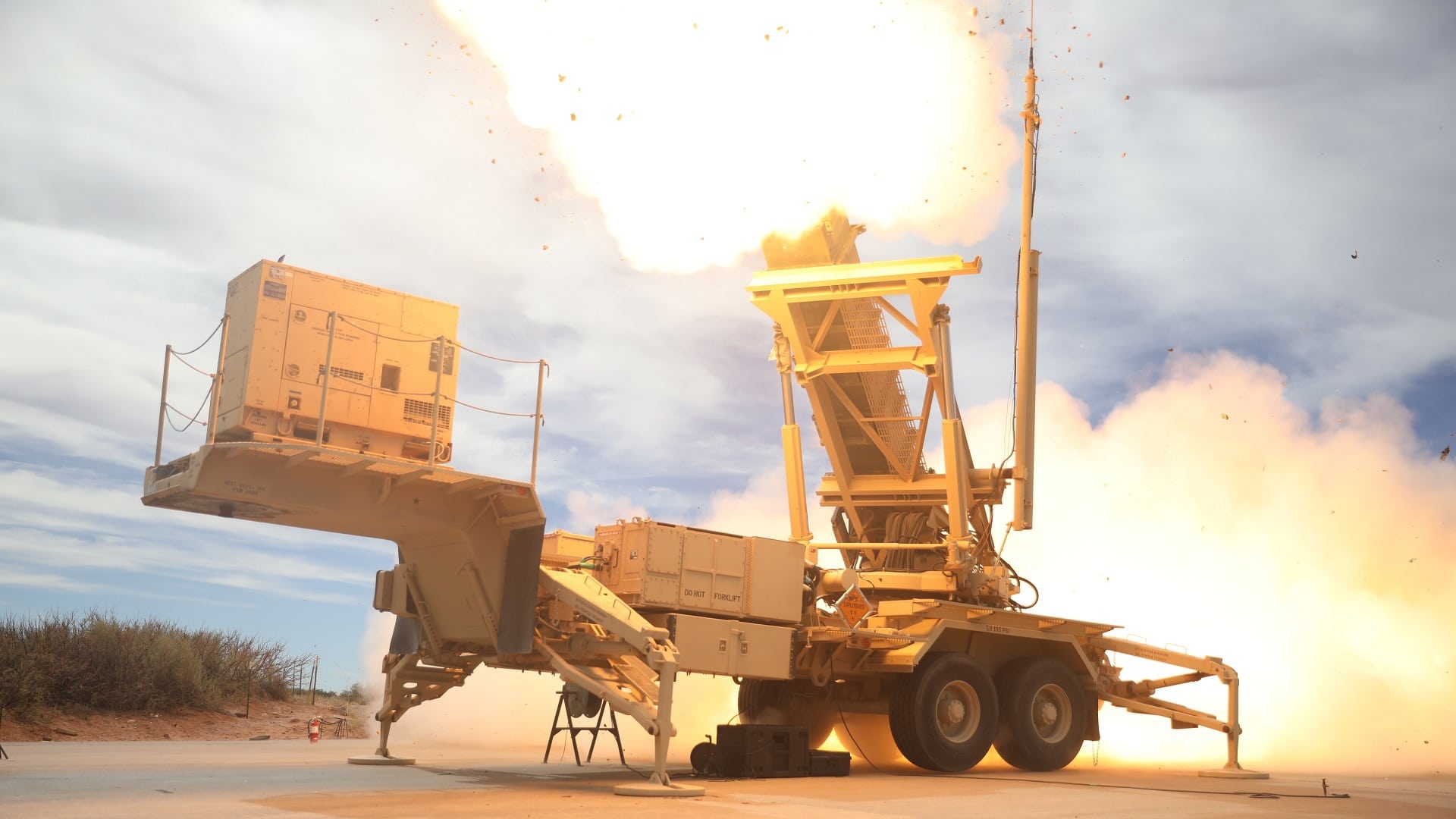
That is where Ukraine becomes interesting. Gulf states already buy serious air-defence equipment. Kuwait has relied on U.S.-supplied Patriot systems. Other Gulf partners operate or have sought Patriot, THAAD, NASAMS and layered radar networks. These are expensive systems, and some of them are excellent. But hardware is not the same thing as a defence architecture.
Ukraine has learned that lesson the hard way. Its air defence works because operators fuse Soviet-era systems, Western interceptors, mobile fire teams, electronic warfare, civil warning networks and improvised command chains into one battered but adaptive system. A single Patriot battery can be decisive against ballistic missiles, but only if it is protected, cued and conserved. A cheap drone can be harmless if detected early, or dangerous if it arrives at a refinery, airbase or power node while expensive interceptors are being rationed.
The Gulf problem is not that it lacks money. The Gulf problem is that money buys equipment faster than it buys wartime judgement.
Ukraine Is Selling Credibility, Not Just Technology
Sybiha said the agreement opens the door to joint projects, exchange of experience, modern technologies and deeper strategic dialogue. That phrasing sounds diplomatic, but there is a real market behind it.
Ukraine has spent more than four years adapting to Russian Shahed-type drones, cruise missiles, ballistic missiles and glide bombs. It has learned which targets need Patriot-class protection and which can be covered by cheaper guns, missiles, electronic warfare or decoys. It has also learned that air-defence planning is not just a military function. It is industrial policy, energy policy and public resilience rolled into one.
For Kuwait, that experience is attractive because Iranian pressure looks increasingly like the Russian playbook in miniature: test the seams, saturate sensors, force expensive interceptions, then watch for political fatigue. The Gulf version has different geography and different escalation risks, but the tactical problem is similar enough for Ukrainian experience to travel.
There is a second layer. Ukraine is trying to build a defence-industrial export base while still fighting Russia. That sounds ambitious, maybe even odd. But Kyiv has a reason. Western aid is uncertain, U.S. production is stretched and European procurement moves at the speed of committee minutes. If Ukraine can turn battlefield experience into exportable training, software, counter-drone systems or joint production, it gains money, influence and partners beyond the NATO map.
This is not charity from Kuwait. It is a transaction. Kuwait gets access to a country that has been stress-testing air defence every week. Ukraine gets a Gulf partner with resources, procurement capacity and a direct incentive to pay attention.
Washington Should Read The Fine Print
The United States should not panic about Ukraine entering Gulf defence networks. It should notice why it is happening.
Defense News reported on June 25 that President Donald Trump met munitions manufacturers at the White House as Washington pushes to replenish depleted stocks. The same report said tentative agreements aim to triple Patriot interceptor production and quadruple THAAD interceptor output, but industry executives warned that companies need appropriated funding before investing heavily in components and capacity.
That is the uncomfortable triangle: Ukraine needs interceptors, the Gulf needs interceptors, and the United States is using interceptors. Everyone wants more air defence at the same time. The production base is not keeping up with the political promises.
So Gulf states are hedging in a very practical way. They will still buy American systems. They will still host American forces. But they are also looking for partners who have recent experience against Iranian and Iranian-derived weapons. Ukraine fits that requirement better than many NATO members do.
Here is the part that will annoy some people in Washington: this is what a more multipolar security market looks like. Not anti-American, exactly. More impatient than that. If the U.S. cannot guarantee enough interceptors, training cycles and integrated planning, regional partners will add other relationships around the American core.
The Real Test Comes After The Signing Ceremony
The Kuwait-Ukraine agreement will matter only if it moves from diplomatic language into concrete projects. The first things to watch are not grand announcements. They are smaller signs: Ukrainian advisory visits, counter-drone training, joint work on electronic warfare, procurement pilots, or Kuwaiti funding for Ukrainian production lines.
There are limits. Ukraine cannot spare every expert. Kuwait will not redesign its air-defence system overnight. American export controls and contractor politics will shape what can actually be integrated with U.S.-origin systems. And Iran will study any new defence pattern in the Gulf as quickly as Russia studies new Ukrainian adaptations.
Still, this is a real shift. Ukraine is turning survival under Russian attack into strategic capital. Kuwait is admitting, quietly but clearly, that Gulf air defence needs more than American kit and hopeful diplomacy.
The old assumption was that Ukraine needed the Middle East only as a diplomatic arena. The new reality is sharper: some Gulf states now need Ukraine as a teacher. That says a lot about Ukraine. It says even more about how thin the American umbrella has started to look.
Kuwait completed the legal steps for a defense cooperation agreement with Ukraine on June 28, 2023, enhancing military-technical cooperation in response to Iranian missile threats. This agreement, originally signed in 2018, allows for procurement, training, and joint projects. The move reflects a shift in Gulf states' defense strategies, as they seek to bolster their air defense capabilities with Ukrainian expertise amid increasing regional tensions.
- Kuwait completed legal steps for a defense cooperation agreement with Ukraine on June 28, 2023.
- The agreement covers procurement, training, and defense-industrial cooperation.
- Iranian missile strikes prompted Kuwait to activate the agreement signed in 2018.
- Ukraine is becoming an exporter of military knowledge to Gulf states.
- Gulf states are seeking to enhance their air defense capabilities in light of Iranian threats.