
China's 2026 Pacific Naval Forays Expose New Zealand's Surveillance Gap
 Marcus Chen
China's 2026 Pacific Naval Forays Expose New Zealand's Surveillance Gap
A 15-page New Zealand report is the kind of document that usually disappears into Wellington's bureaucracy. This one should not. According to reporting by Agence France-Presse republished by the Taipei Times, New Zealand's Defence Force and Ministry of Foreign Affairs warned ministers that Chinese ballistic missile tests and naval forays would become a "persistent" feature of the Pacific.
That word matters. Persistent does not mean a one-off transit, a diplomatic irritant, or a single intelligence collection problem. It means New Zealand is starting to treat People's Liberation Army Navy (PLAN) activity as a recurring operating condition across waters where Wellington has very little margin for surveillance, escort, or sustained presence.
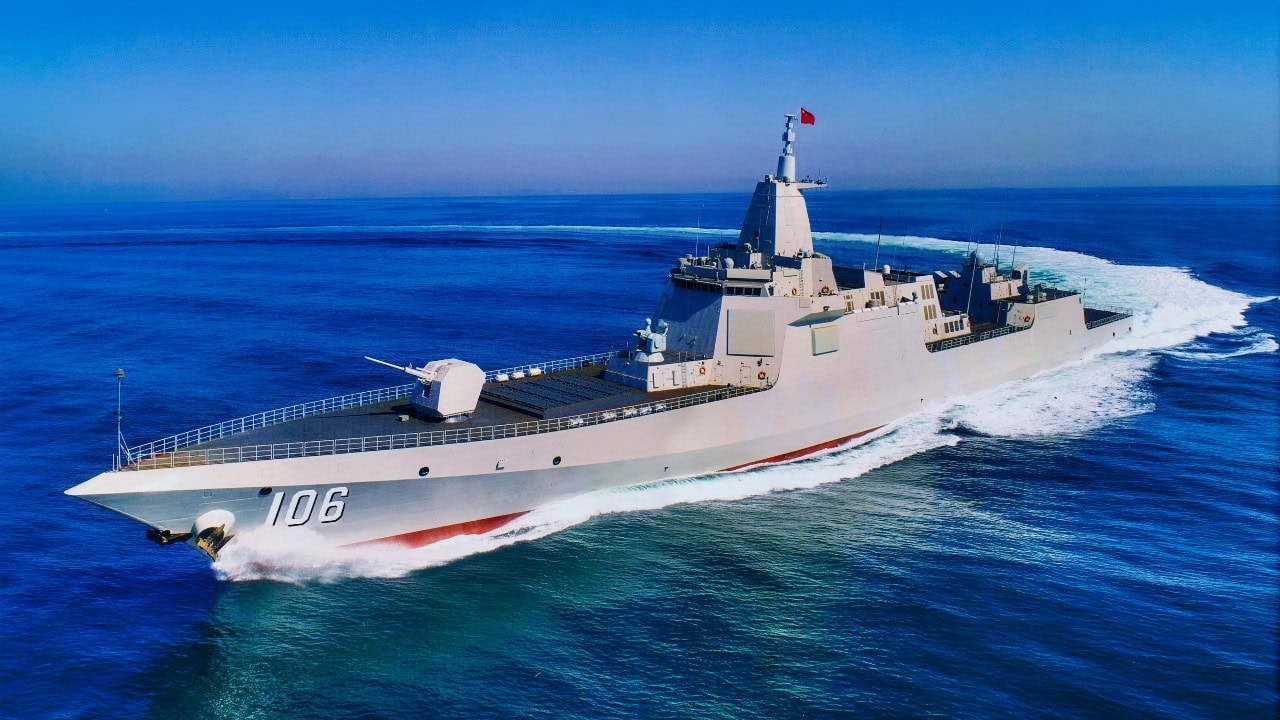
The report was written in December 2025 while New Zealand officials were monitoring a PLAN flotilla in the Philippine Sea. It also pointed to two reference points: the PLAN task group that crossed the Tasman Sea in February and China's September 2024 intercontinental ballistic missile launch into the Pacific. Put those together and the picture is not a Chinese fleet permanently based in the South Pacific. It is something more practical and harder to dismiss: Beijing is rehearsing how to make the Pacific a normal operating area.
The Pacific Is Too Big for Symbolic Awareness
New Zealand's military problem starts with geography. Auckland to Guam is roughly 3,500 nautical miles. Auckland to the Philippine Sea is farther. Even the Tasman Sea, which looks nearby on a school map, is big enough to hide a task group unless someone is already looking in the right box. Anyone who has stood watch on a destroyer knows the ocean is not empty because the chart is blue. It is empty because your sensors have limits.
New Zealand operates four P-8A Poseidon maritime patrol aircraft and two Anzac-class frigates. The P-8A gives Wellington a modern sensor platform, but four aircraft are not four aircraft in the air. Maintenance, crew rest, training, weather, and distance reduce that number quickly. A P-8A can cover a great deal of water on a sortie. It cannot provide continuous coverage across the South Pacific, Tasman approaches, and western Pacific lanes at the same time.
The frigate math is even tighter. Two frigates do not create a standing naval screen. One may be in maintenance, one in training, or both committed to alliance activity elsewhere. A surface combatant can shadow a Chinese ship if it is available and close enough. It cannot be the primary answer to a region-wide pattern of Chinese naval movement.
That is why the New Zealand report's language is more important than its classification. If Chinese activity is persistent, then Wellington needs a persistent collection architecture. A press release after a transit is not surveillance. A single P-8 flight after a sighting is not sea control. The requirement is cueing, tracking, sharing, and response options before the ships are already in politically sensitive waters.
China Is Normalizing Distance
Beijing's response was predictable. China's Foreign Ministry said its military development is for safeguarding sovereignty, security, and development interests, and is not aimed at any country. China Daily carried that line, while Global Times described the New Zealand document as a so-called internal report and stressed that China remains committed to peaceful development.
The official answer is less useful than the operating pattern. The New Zealand document reportedly said Beijing has deployed a broad range of naval vessels to the region, including hospital ships, large amphibious vessels for humanitarian assistance and disaster relief, and space event support ships. That mix is not random. Hospital ships build access. Amphibious ships move volume. Space support ships track launches, satellites, and missile activity. Each deployment makes the next one less surprising.
The South Pacific is not the first island chain. That is exactly why it matters. Chinese planners do not need to contest the Pacific in the same way the U.S. Navy contests the Philippine Sea. They need to learn routes, ports, signals, weather patterns, diplomatic reaction times, and the habits of small regional militaries. Repetition builds that knowledge.
The September 2024 ICBM launch into the Pacific fits the same logic. A missile test is not a naval patrol, but it forces regional governments to think about notification, tracking, impact zones, and escalation management. For a country like New Zealand, the test is less about whether an ICBM is aimed at Auckland and more about whether the Pacific is becoming a routine operating range for Chinese high-end military activity.
New Zealand Cannot Solve This Alone
The easy answer is to say Wellington should spend more. It should. But that answer skips the operational bottleneck. New Zealand can buy more patrol aircraft or ships only slowly, and every new platform still needs trained people, maintenance pipelines, and secure data links. The near-term answer is not a solo New Zealand buildup. It is tighter integration with Australia, the United States, Japan, and France's Pacific presence.
The report itself said New Zealand officials were in close contact with Australian counterparts while monitoring Chinese vessels. That is the right instinct. Australia has the geography and the growing force structure. The United States has the undersea, space, and signals architecture. Japan has a direct stake in the Philippine Sea. France has territories and forces in the Pacific. New Zealand has access, local legitimacy, and a reputation that is less politically radioactive in some Pacific capitals than Washington's.
The question is whether those pieces can be connected before the operating tempo rises. If every Chinese movement requires an ad hoc scramble, Beijing wins time. If every tracking problem has to be solved through a new political consultation, Beijing learns the seams. The better model is boring: common maritime pictures, pre-agreed information release rules, allied P-8 scheduling, and exercises that practice tracking a task group from the Philippine Sea through the Coral Sea into the Tasman.
That kind of work does not produce a dramatic headline. It is also the difference between knowing a PLAN group is coming and discovering that it has already made the transit.
The Real Signal Is Endurance
The New Zealand report should not be read as evidence that China is about to dominate the South Pacific militarily. It is not. The PLAN still has distance problems, logistics problems, and political constraints. A task group can visit; sustaining pressure is harder. Beijing does not yet have the same Pacific basing network that Washington has spent decades building.
But Marcus-style math cuts both ways. China does not need to match the U.S. base network to change the region's behavior. It only needs to show up often enough that small militaries must plan around it. A hospital ship this year, a space support ship next year, a destroyer group after that, and another missile-related Pacific notice later on: over time, these stop looking exceptional.
For New Zealand, the uncomfortable conclusion is simple. The country has enough capability to notice a Chinese naval foray. It does not yet have enough capacity to treat those forays as routine while also covering its normal patrol, fisheries, disaster-response, and alliance commitments.
That is the gap. China is making distance feel normal. New Zealand and its partners still treat distance as an explanation for why response will be difficult. In the Pacific, the side that normalizes distance first gets to set the tempo.
New Zealand's Defence Force reported persistent Chinese naval forays and ballistic missile tests in the Pacific, highlighting a surveillance gap. The report indicates that New Zealand's current military capabilities are insufficient to monitor and respond to these activities effectively. It calls for closer integration with allies to enhance regional security and address the growing Chinese military presence.
- New Zealand's Defence Force warns of persistent Chinese naval forays in the Pacific.
- China's military activities include ballistic missile tests and naval deployments.
- New Zealand lacks sufficient surveillance and response capabilities to monitor Chinese movements effectively.
- The report emphasizes the need for closer military cooperation with allies like Australia and the U.S.
- China is normalizing its military presence in the Pacific, making it a routine operating area.