
L3Harris warns lasers will push U.S. Navy power limits
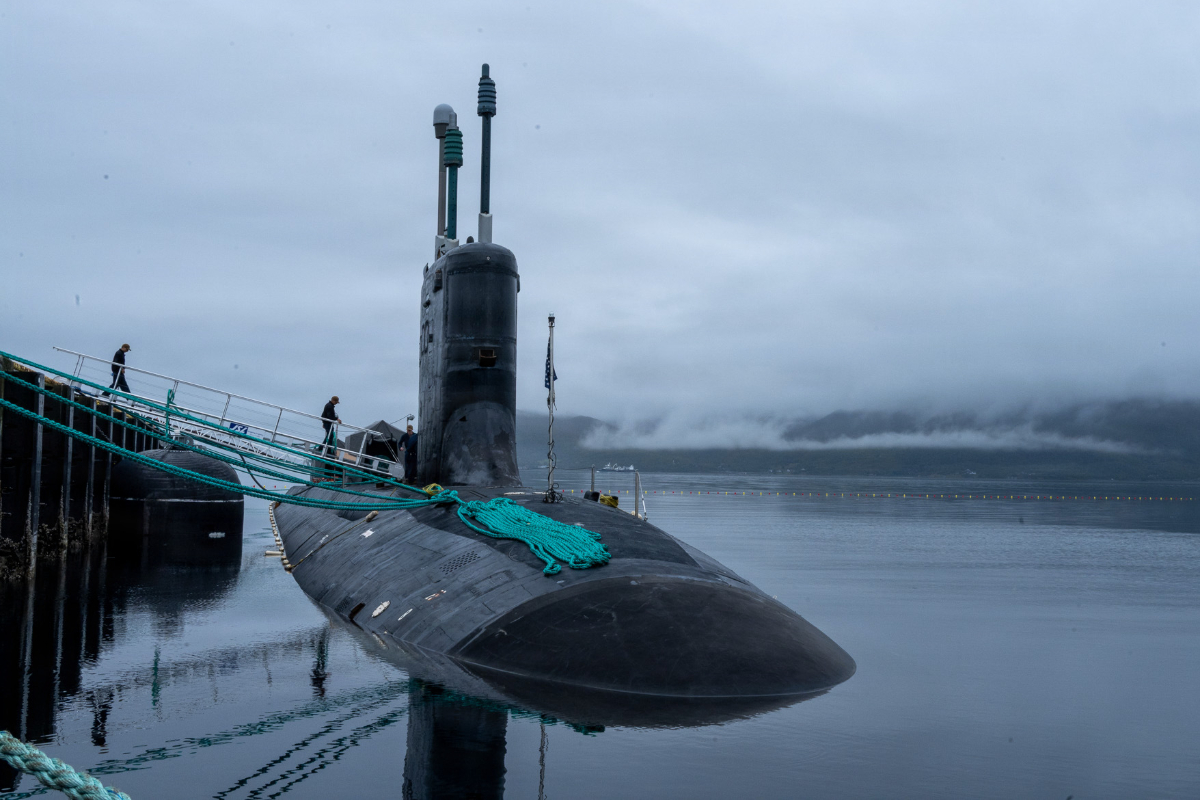
L3Harris Technologies says it supplies the power distribution systems and universal modular masts on every Virginia-class submarine in the U.S. Navy fleet, and the company is now carrying that work into the Columbia-class ballistic missile submarine program while preparing for the heavier electrical loads expected from directed energy weapons and other new naval systems.
The company laid out its submarine power role in an editorial published Oct. 22, 2026, describing decades of work on rugged, high-density power conversion and distribution equipment for the U.S. Navy’s undersea fleet.
Near the end of the piece, in a passage Laser Wars highlighted when sharing the editorial on X, L3Harris said naval platforms are growing more electrically complex with every generation and named advanced radar systems, directed energy weapons and next-generation propulsion as the technologies that will place extraordinary demands on shipboard power infrastructure.
“The Navy trusts us with the most critical systems on its most advanced platforms, and that is not something we take lightly,” said Nino DiCosmo, president of L3Harris Maritime. “Every power system we deliver has to work the first time and every time after that, whether a submarine is on its first patrol or its fiftieth.”
Directed energy weapons, such as high-energy lasers, fire beams of energy instead of physical rounds and draw their “ammunition” directly from a ship’s electrical system, which is why they demand far more power generation, storage and distribution than conventional weapons. The U.S. Navy has already fielded lasers on surface ships, including the HELIOS system installed on the destroyer USS Preble (DDG 88) in 2022. L3Harris said it is investing in power technologies to meet those growing demands across the Navy’s most advanced platforms, without tying the directed energy reference to any specific submarine program.
On the Virginia-class attack submarines, every sensor, weapon, propulsion component and crew system draws from a single power architecture that must keep working for months at a time at every depth. L3Harris described its submarine portfolio as running from switchgear and power protection systems to advanced power conversion equipment, all designed to meet strict requirements for shock resistance, electromagnetic compatibility, heat management and long-term reliability.
The universal modular mast is the other half of the company’s Virginia-class role. The two-stage, telescoping mast raises sensors above the waterline without penetrating the pressure hull, lifting photonics imaging masts, communications antennas and electronic warfare sensors, and each Virginia-class boat carries a bank of eight. In April 2026, Naval Sea Systems Command awarded L3Harris a contract worth up to $129.9 million for universal modular mast production and engineering support for both the Virginia and Columbia classes.
The Columbia class will replace the Ohio-class ballistic missile submarines as the sea-based leg of the U.S. nuclear deterrent, and the Navy plans to build 12 of the boats. The lead submarine, the future USS District of Columbia (SSBN 826), was about 65% complete in February 2026, and shipbuilders General Dynamics Electric Boat and HII Newport News Shipbuilding are working toward a 2028 delivery ahead of a first patrol planned for 2030.
L3Harris said its power systems for the Columbia class are being built to the same standards as those already serving across the Virginia-class fleet, with the first boat on track to begin patrols after its planned 2028 delivery.
Content preview only. Full article available at source. View Full Article
L3Harris Technologies is enhancing power systems for U.S. Navy submarines to accommodate advanced technologies like directed energy weapons. The company is involved in the Columbia-class ballistic missile submarine program, which will replace the Ohio-class submarines. L3Harris has received a contract worth up to $129.9 million for modular mast production and is investing in power technologies to meet the growing demands of the Navy's advanced platforms.
- L3Harris supplies power systems for every Virginia-class submarine in the U.S. Navy fleet.
- The company is preparing for increased electrical loads from directed energy weapons.
- The Columbia-class submarines will replace the Ohio-class ballistic missile submarines.
- L3Harris received a contract worth up to $129.9 million for modular mast production.
- The first Columbia-class submarine is expected to begin patrols after its planned 2028 delivery.