
U.S. F-22s Begin Commanding Drones, PLA Faces New Collaborative Challenges in Taiwan Strait Air Superiority
 Li Minghui
The US Military's F-22 Begins Commanding Drones, Facing New Collaborative Challenges for PLA Air Superiority in the Taiwan Strait
On October 22, the South China Morning Post reported that the US military is testing a new method of commanding drones through a combination of F-22 stealth fighters and carrier platforms. The most easily overlooked aspect of the news is not the performance of a particular drone, but rather that command authority is shifting from rear ground stations to forward manned platforms. For air combat in the Taiwan Strait, this could be more challenging than simply adding another long-range missile.
The Change Is Not in the Drones Themselves
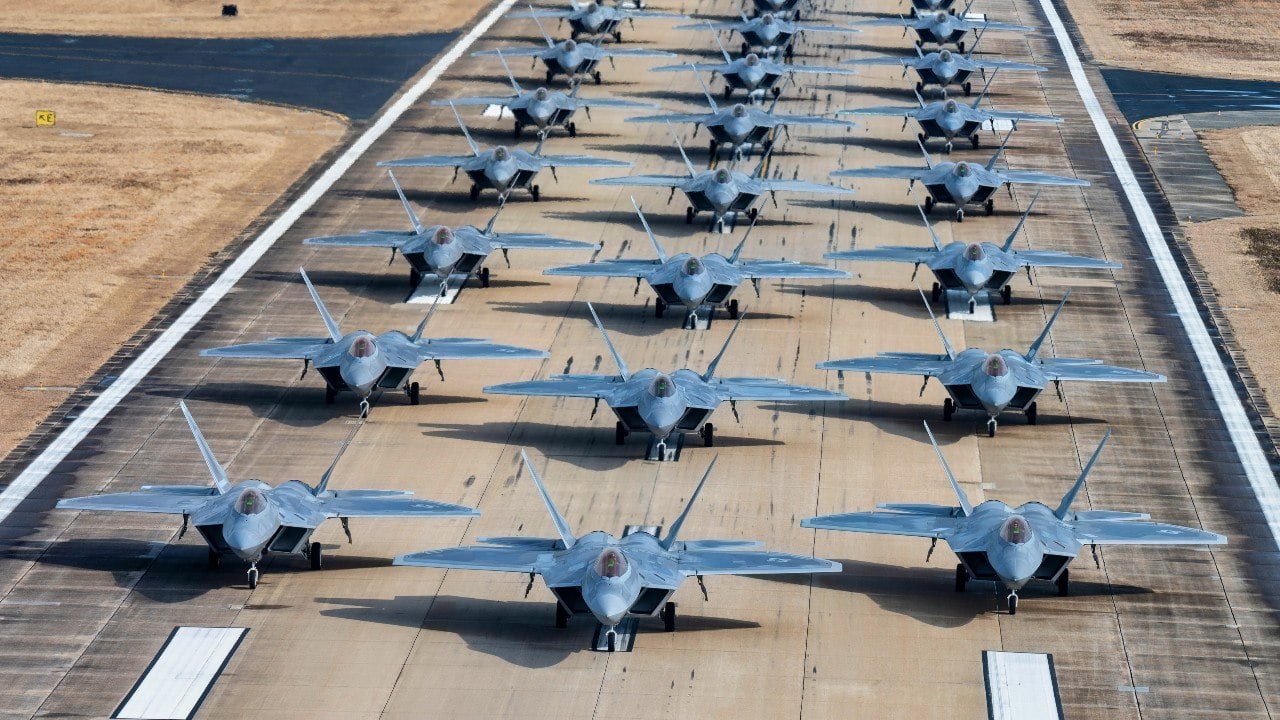
Traditional drone operations rely on ground control links, where link distance, bandwidth, and anti-jamming capabilities determine what they can do. Assigning "forward node" responsibilities to low-detectability platforms like the F-22 means that drones can receive target allocation, course corrections, and mission re-planning closer to the threat area. Manned aircraft do not need to personally launch every weapon but can convert their detection advantages into operational efficiency for a group of low-cost platforms.
This is not simply "manned aircraft controlling drones." The real challenge lies in multi-aircraft collaboration: who is responsible for reconnaissance, who for decoys, who retains electronic warfare payloads, and who continues to execute missions after communication is interrupted. As long as algorithms and data links mature, the expensive F-22 will no longer just be an air superiority fighter but will become a stealthy airborne command vehicle.
What This Means for the PLA's Air Defense System
The core change in the Taiwan Strait direction is the simultaneous increase in the number and types of targets faced by air defense systems. In the past, the focus could be on high-value targets like the J-20, F-35, or cruise missiles; in the future, there may first be a large number of low, slow, small decoys, electronic warfare drones, and passive sensors, followed by manned fighter jets or long-range munitions. The fact that radar sees "more targets" does not equate to a real strike direction, and the interception window may actually be compressed.
This will test the PLA's existing layered air defense and air force collaboration. The HQ-9, Hongqi-16, and short-range anti-drone systems need to share more refined target quality assessments and cannot scatter expensive interceptors evenly across every small target. I believe what the PLA truly needs to supplement is not individual anti-drone equipment but a closed loop between low-cost sensors, passive detection, electronic suppression, and firepower units. Otherwise, it would be like chasing low-cost decoys with high-priced munitions.
The Second Layer of Meaning for Aircraft Carriers
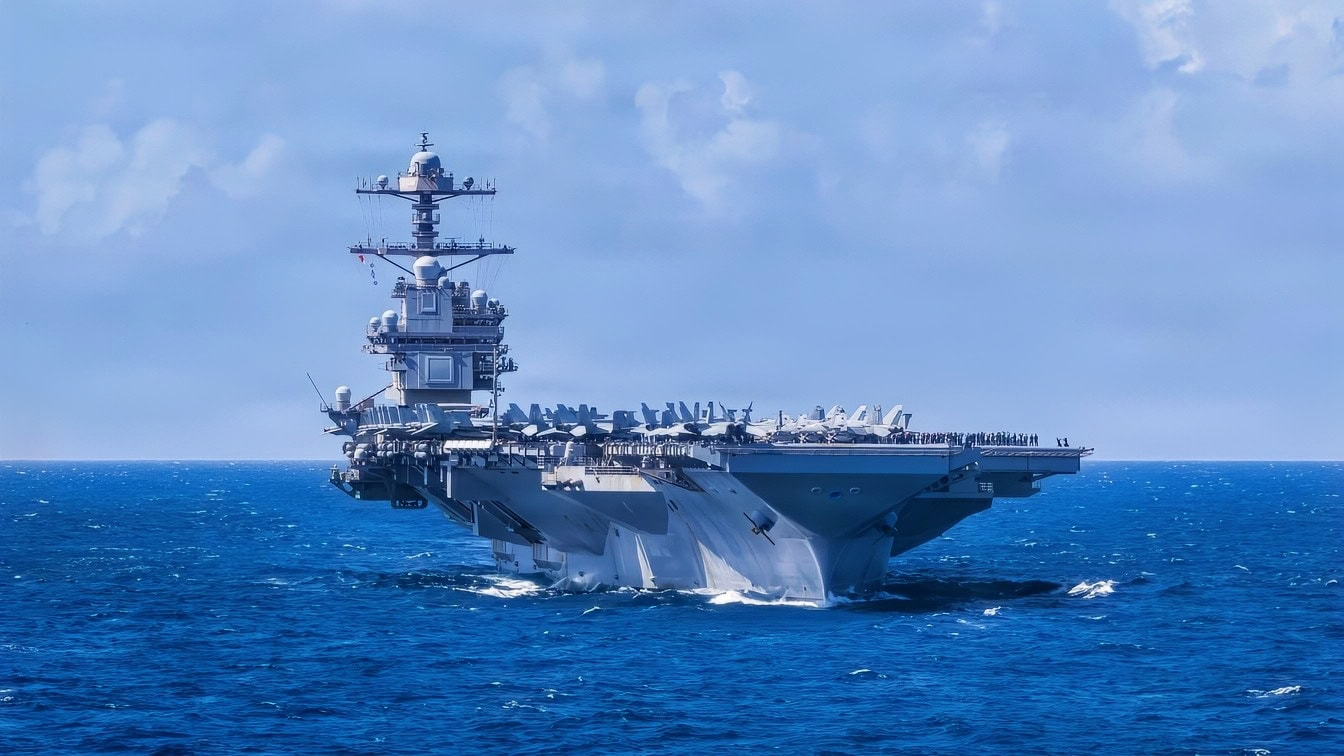
The addition of carrier platforms expands this issue from air combat to naval maneuver warfare. Carriers do not need to turn all drones into attack platforms; by first using them to extend reconnaissance and communication coverage for carrier-based aircraft, they may force opponents to expose their radar and command nodes prematurely. The simultaneous emergence of US carrier testing and the F-22 program indicates that the US military is exploring a "manned node plus unmanned swarm" system across services and platforms, rather than an isolated piece of equipment.
Of course, public reports have not provided details on the scale of testing, communication distances, and autonomy permissions, indicating that there is still a long way to go before operationalization. The maritime electromagnetic environment, software reliability, and rule authorization will all limit its performance. Equating demonstrations directly with combat capability is not rigorous; however, dismissing it as mere propaganda would also lead to misjudgment.
The Real Competition Lies in Production and Software
The South China Morning Post recently reported that Taiwan is concerned about low-cost attack drones forming a numerical advantage and is paying attention to the saturation pressure on the PLA's air defense system; reports about the PLA's Y-20B tanker transport aircraft indicate that its long-range air support capabilities are still expanding. Viewed together, the competition in air combat in the Taiwan Strait is shifting from "whose fighter jet parameters are higher" to "who can connect more platforms to the same network."
China's military industry does not lack scale advantages in drone production and munitions manufacturing; the shortfall is more likely to appear in software iteration, cross-service interfaces, and reliability in complex electromagnetic environments. My judgment is that in the coming years, the PLA will accelerate the training of unmanned wingmen, anti-drone systems, and manned-unmanned collaborative training, but public demonstrations may not necessarily increase in tandem. The real question worth asking is: when the US military turns the F-22 into a forward network node, do the PLA's J-20 and J-35 already possess equally mature drone mission management capabilities?
References
- South China Morning Post, October 22, 2026, Could US advances in drone command give it an edge over the PLA in a Taiwan war?
- South China Morning Post, October 21, 2026, Taiwan’s Iran-style attack drone could swamp PLA air defenses
- South China Morning Post, October 20, 2026, PLA Air Force reveals Y-20B tanker-transport variant
The U.S. Air Force is testing new command methods for drones using F-22 stealth fighters and carrier platforms in the Taiwan Strait. This shift in command authority from ground stations to manned platforms poses new challenges for the PLA's air defense systems, which will face a greater variety of targets. The integration of drones into naval operations is also being explored, indicating a significant evolution in military tactics.
- U.S. Air Force is testing new drone command methods using F-22s and carrier platforms.
- Command authority is shifting from ground stations to manned platforms.
- The increase in target types for PLA air defense systems is noted.
- The integration of drones into naval operations is being explored.
- Concerns are raised about the PLA's ability to manage increased drone threats.