
Texas startup aims to field gene-edited military dogs by 2028
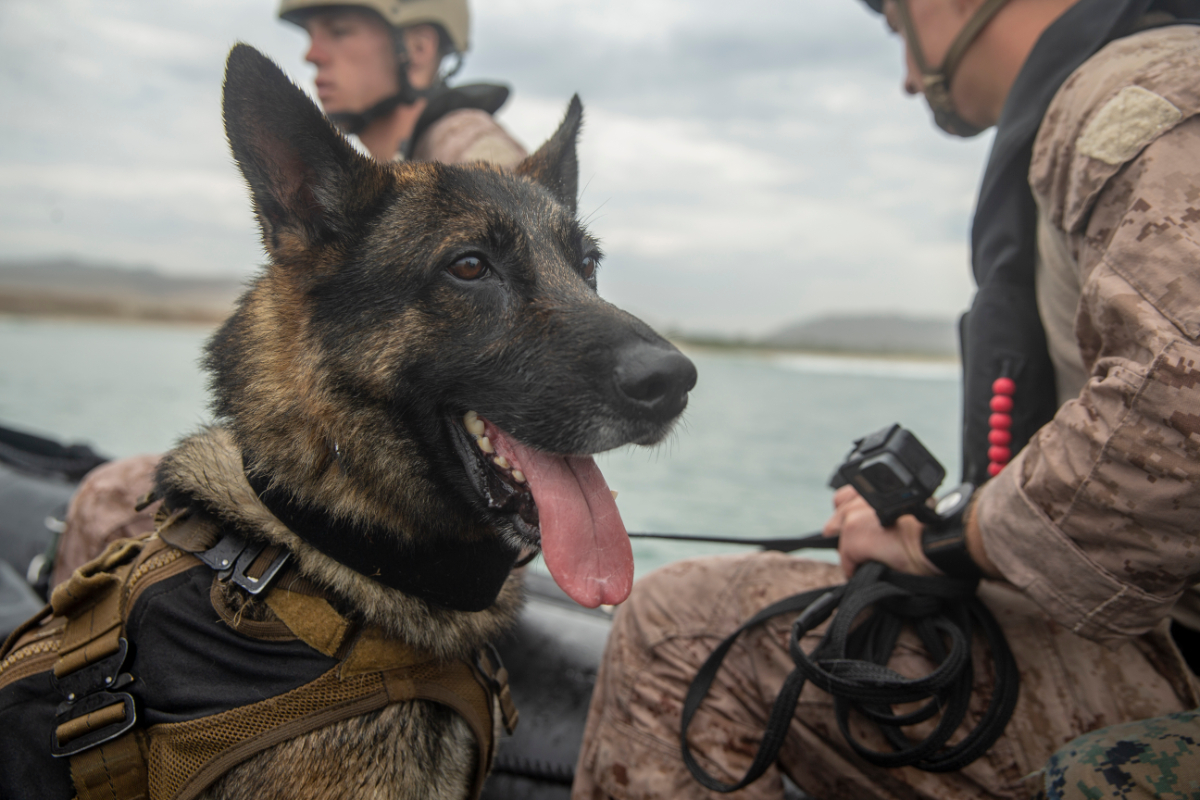
Anduril founder Palmer Luckey has pushed back against critics of Warhound, a new Texas startup he conceived with Colossal Biosciences CEO Ben Lamm that plans to clone and gene-edit working dogs for the U.S. military, law enforcement and emergency responders.
Warhound emerged from stealth on Oct. 22, 2026, with a $200 million seed round, which values the company at $1.2 billion. As the announcement drew criticism online, Luckey defended the project in a post on X, pointing to the protective gear and health-focused gene edits at the center of the plan.
“Which part of this do you object to? The hearing protection? The eye protection? The body armor? Or gene edits that makes them less likely to develop cancer and joint problems? There is a reason the American Humane Society is supporting this,” wrote Luckey.
The company is built around a supply problem in the U.S. military’s working dog program. The Army created the K-9 Corps in 1942, and the Department of War’s Military Working Dog Program now has more than 2,200 dog teams, according to Warhound. More than 80% of U.S. military working dogs are bought from Europe, and fewer than half of the dogs purchased are judged fit for service after a roughly three-year acquisition and training pipeline, which means the military has to buy and train about 200 dogs to field 100. Lamm told Fortune that the United States is competing with other governments, including China and Russia, for the same animals.
Warhound plans to work in stages. It will identify top-performing dogs that have completed training, biobank their genetic material and clone those proven animals, while also pursuing targeted gene edits. The company’s starting point is the two breeds most used in military service, the Belgian Malinois and the German Shepherd, and it says it will screen out known harmful variants tied to muscle degeneration and other inherited diseases so that no dog enters service carrying genetic markers for common career-ending conditions such as hip dysplasia.
Lamm said the company is still working out which other traits can be edited responsibly, and he has pointed to possible future improvements in speed, agility and sense of smell for tasks such as bomb detection. The first group of dogs has already been biobanked and is being edited, with Colossal-owned cloning company Viagen helping produce the animals. Lamm expects the first dogs to be born early next year and to enter service in about two years.
Anduril’s role sits “on top of the dog, not in the dog,” as Lamm described it. The defense company is supplying eye and ear protection, body armor and integration with its Eagle Eye system, so that dogs, handlers and autonomous systems can operate as a single team, with sensor-equipped vests that send information back to handlers.
The American Humane Society will certify Warhound’s training programs and help reunite retired dogs with their former handlers through its Military Working Dog Reunification Program. Luckey and Lamm developed the concept after a discussion at Peter Diamandis’ Moonshots Summit, but Luckey holds no equity in Warhound and Anduril has no ownership stake, while Colossal licenses its technology to the company and holds an economic interest.
Warhound is led by CEO David Spirk, a former Marine who served as the first chief data officer of U.S. Special Operations Command and later of the Department of War. Its backers include In-Q-Tel, Sequoia Capital, ARK Invest, Franklin Templeton, 8VC and Lux Capital.
The company has briefed government groups but has no signed customers yet and has not set a price per dog. It is discussing a “Canine-as-a-Service” model in which the government would buy a steady supply of trained dogs, and plans to build national-scale kennel and training infrastructure starting with private capital.
Content preview only. Full article available at source. View Full Article
Texas startup Warhound plans to clone and gene-edit military dogs for the U.S. military, law enforcement, and emergency responders. The initiative, backed by a $200 million seed round, aims to address supply issues in the military's working dog program. The first group of gene-edited dogs is expected to be born early next year, with service entry anticipated in about two years. Warhound's approach includes protective gear and health-focused gene edits to enhance the dogs' capabilities.
- Warhound aims to clone and gene-edit military dogs by 2028.
- The company has a $200 million seed round and is valued at $1.2 billion.
- More than 80% of U.S. military working dogs are currently sourced from Europe.
- The first group of dogs has already been biobanked and is being edited.
- Warhound plans to build national-scale kennel and training infrastructure.