
Latvia arms its new combat vehicle against drone threats
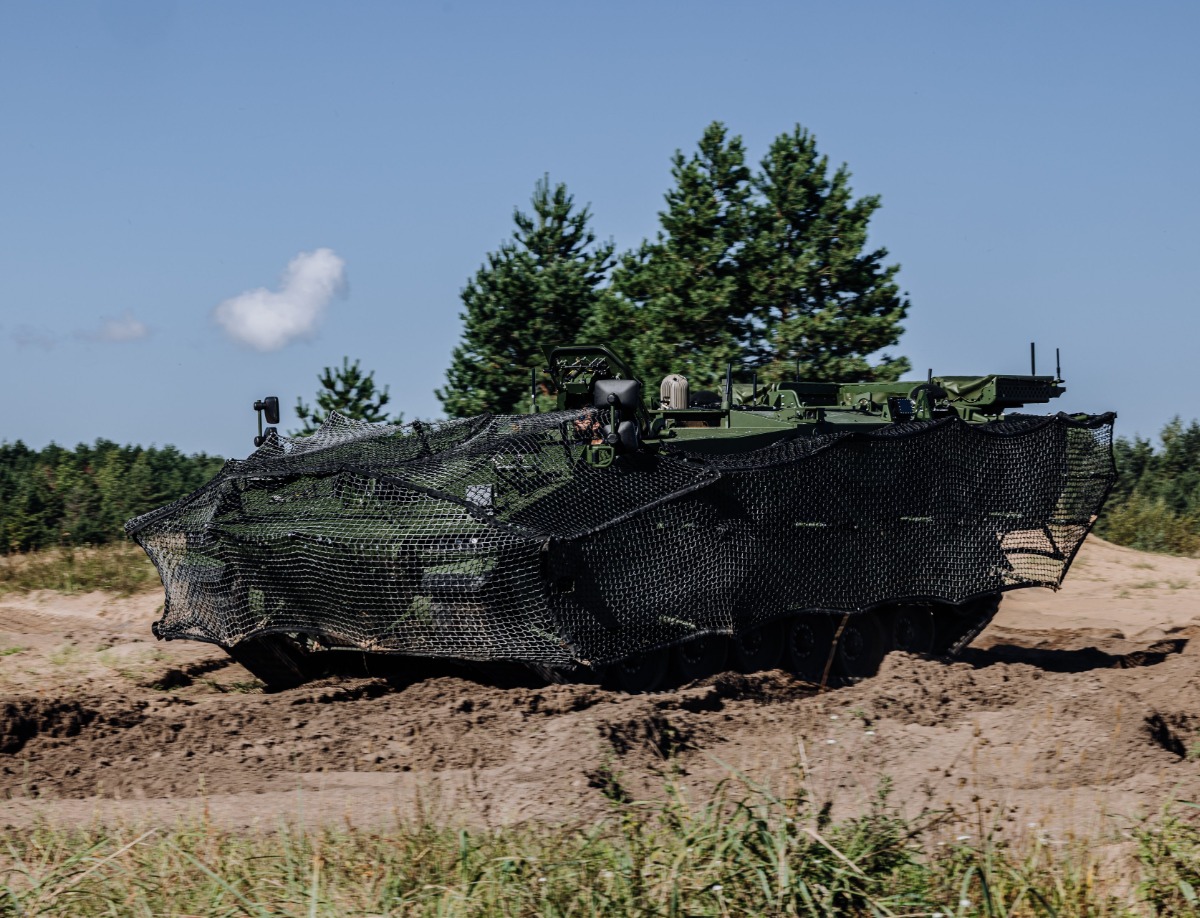
Latvia tested a new way to protect its infantry vehicles from one of the biggest threats on today’s battlefield: cheap, swarming drones.
The country’s Ministry of Defence held a demonstration Thursday at the Ādaži military base, mounting counter-drone systems onto its new Hunter infantry fighting vehicle to see how well they work. The systems came from Spanish defense company GDELS-Santa Bárbara Sistemas.
The concept is similar to tests the U.S. Army has run on its own vehicles: bolting on hardware meant to shoot down or jam small drones before they can drop a grenade or crash into an armored vehicle from above. Both active systems, which actively engage incoming drones, and passive systems, which detect and warn crews, were tested. So were ground-based drones of Latvia’s own, meant to work alongside the vehicle rather than against it.
The Hunter, called “Mednieks” in Latvian, is built on the ASCOD platform, a tracked armored vehicle design used by several NATO countries and localized for Latvia’s own requirements. The vehicle has been modified for modern mechanized infantry operations, with an emphasis on firepower, modular armor, and the ability to work alongside equipment used by other NATO militaries. Soldiers from Latvia’s Mechanized Infantry Brigade, who will actually crew the vehicle, picked the “Hunter” name themselves.
This test matters because of timing. Latvia’s military signed its first contract for 42 Hunter vehicles with GDELS-Santa Bárbara Sistemas in January 2025, then doubled the order to 84 vehicles that June. The first Hunters are due to arrive with Latvia’s National Armed Forces this October, just weeks away. Thursday’s demonstration was Latvia’s chance to figure out which drone defenses to install before that happens, rather than bolting them on later.
The threat driving all this is well understood in the region. Russia’s war in Ukraine has shown how cheap first-person-view drones can knock out armored vehicles worth millions of dollars, and Latvia sits directly on NATO’s eastern border with Russia.
Content preview only. Full article available at source. View Full Article
Latvia tested counter-drone systems on its new Hunter infantry fighting vehicles at the Ādaži military base. The demonstration involved both active and passive systems to protect against drone threats. Latvia's National Armed Forces ordered 84 Hunter vehicles, with the first expected to arrive in October 2025, highlighting the urgency to finalize defense systems against drone attacks.
- Latvia tested counter-drone systems on Hunter vehicles at Ādaži military base.
- The Hunter vehicle is built on the ASCOD platform and modified for NATO operations.
- Latvia ordered 42 Hunter vehicles in January 2025, doubling the order to 84 in June.
- The first vehicles are expected to arrive in October 2025.
- The demonstration aimed to finalize drone defenses before vehicle delivery.