
Ukraine reports first strike using new Iskander-1000 missile
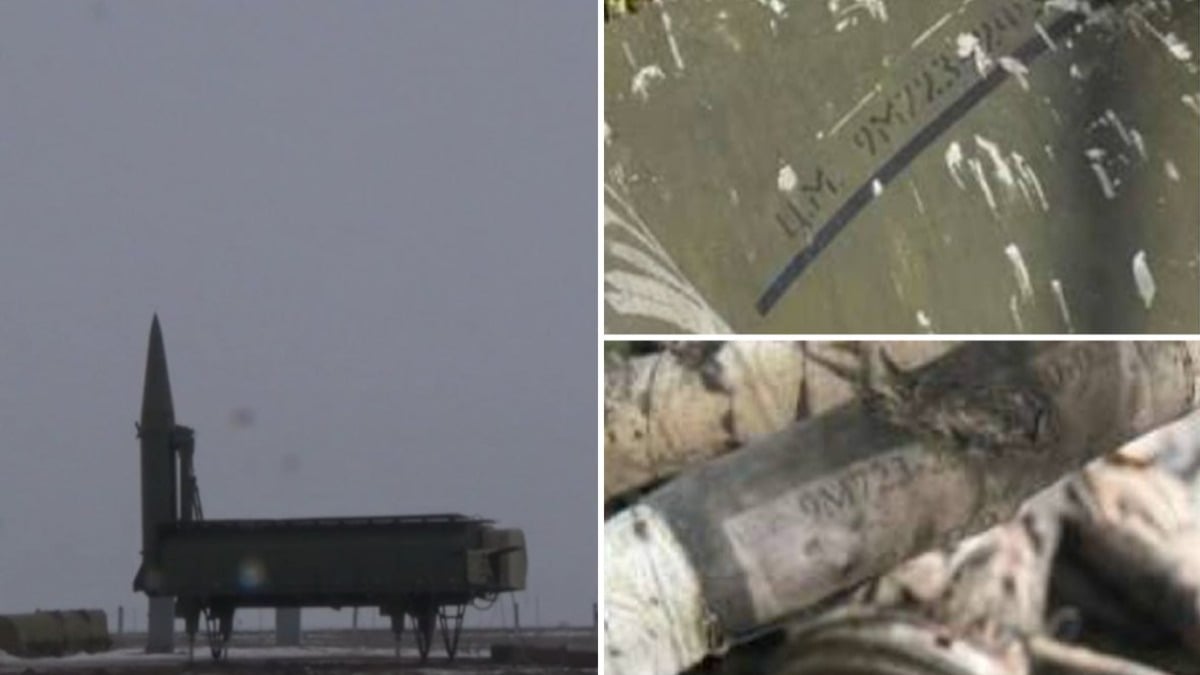
Russia fired an upgraded ballistic missile at Kyiv for the first time this summer, one with roughly 40 percent more range than the version Moscow has used against Ukraine for years, Ukraine’s military intelligence agency said this week.
The agency, known as HUR, said the missile is called the 9M723-2. It’s an upgraded version of the missile Russia fires from its Iskander-M system, a mobile launcher that’s become one of the most feared weapons in the war because of how hard it is to shoot down. Some Ukrainian sources have nicknamed the upgraded missile “Iskander-1000,” a reference to reports that it could eventually reach ranges as long as 1,000 kilometers, or about 620 miles.
For American readers unfamiliar with the weapon, it helps to understand why Iskander missiles are considered such a serious threat. Unlike an old-fashioned ballistic missile that arcs up and comes straight back down in a predictable path, the Iskander’s missile can maneuver in flight, weaving and changing altitude as it approaches its target. That makes it much harder for missile defense systems, including the U.S.-made Patriot batteries Ukraine relies on, to intercept.
According to HUR, the new version’s extra range comes from a bigger engine, which in turn required a larger launch tube on the vehicle that fires it. The upgrade pushes the missile’s range out to as much as 550 kilometers, or about 342 miles. The older version Russia has used throughout the war tops out around 390 kilometers, or roughly 242 miles.
To put that in perspective: a 550-kilometer range means Russian forces can launch this missile from deep inside Russian territory, or from occupied Crimea, and still strike targets almost anywhere in Ukraine, all without having to move launchers closer to the front line where they’d be easier for Ukraine to find and destroy.
This isn’t the first time the upgraded missile has come up. Ukrainian monitoring channels first reported on its existence back in July 2024, when it was said to have a maximum range of up to 1,000 kilometers. Then, in December 2025, there were unofficial reports that Russia had already used it at a range of up to 800 kilometers, or about 497 miles.
There’s also a paper trail. In October 2025, Ukrainian sources published what they described as leaked Russian government purchasing documents. Those documents reportedly showed an order for 18 of the new missiles, labeled with the designation 9M723-2, giving outside analysts one of the first concrete signs the weapon had moved from development into actual production.
Kyiv has weathered repeated waves of combined attacks this summer, with Russia typically mixing ballistic missiles like the Iskander with cruise missiles and cheap exploding drones in the same barrage, a tactic meant to overwhelm the layered air defense network that Ukraine, with Western help, has built to protect the capital.
HUR has not said exactly when this summer’s strike using the upgraded missile took place, how many were fired, or what damage resulted. The agency also hasn’t clarified whether the 550-kilometer figure is the missile’s absolute maximum range or simply the distance it flew during the strike Ukraine detected.
Content preview only. Full article available at source. View Full Article
Russia fired the upgraded 9M723-2 ballistic missile at Kyiv for the first time this summer, significantly increasing its strike range to 550 kilometers. This missile, part of the Iskander-M system, poses a serious threat due to its maneuverability, complicating interception efforts. Ukrainian military intelligence reported this development, highlighting the missile's capability to strike from deep within Russian territory or occupied Crimea.
- Russia has fired the upgraded 9M723-2 missile at Kyiv for the first time this summer.
- The missile has a range of up to 550 kilometers, significantly more than previous versions.
- The Iskander-1000 missile can maneuver in flight, making it harder to intercept.
- Ukrainian sources reported on the missile's existence back in July 2024.
- The missile allows Russian forces to strike targets deep within Ukraine without moving closer to the front lines.