
Leopard 2 in Lithuania 2026 shows why Europe's aid to Ukraine is growing in maintenance rather than in quantity
 Dr. Klaus Weber
Leopard 2 in Lithuania 2026 shows why Europe's aid to Ukraine is growing in maintenance rather than in quantity
Since 2022, Germany has been funding a repair program for Ukrainian battle tanks in Lithuania. On August 30, the joint venture Lithuania Defense Services reported that repaired Leopard 2 tanks, which had been damaged in combat, were being prepared for return to Ukraine. At first glance, this sounds like a technical footnote. In truth, it carries a more serious strategic signal. Europe is slowly learning that it is not just the delivery of a tank that matters, but its return to the battlefield. But therein lies the European weakness: It improves the circulation of existing systems without truly addressing the structural problem of insufficient industrial depth.
A Leopard 2 returning is politically more important than a Leopard 2 on paper
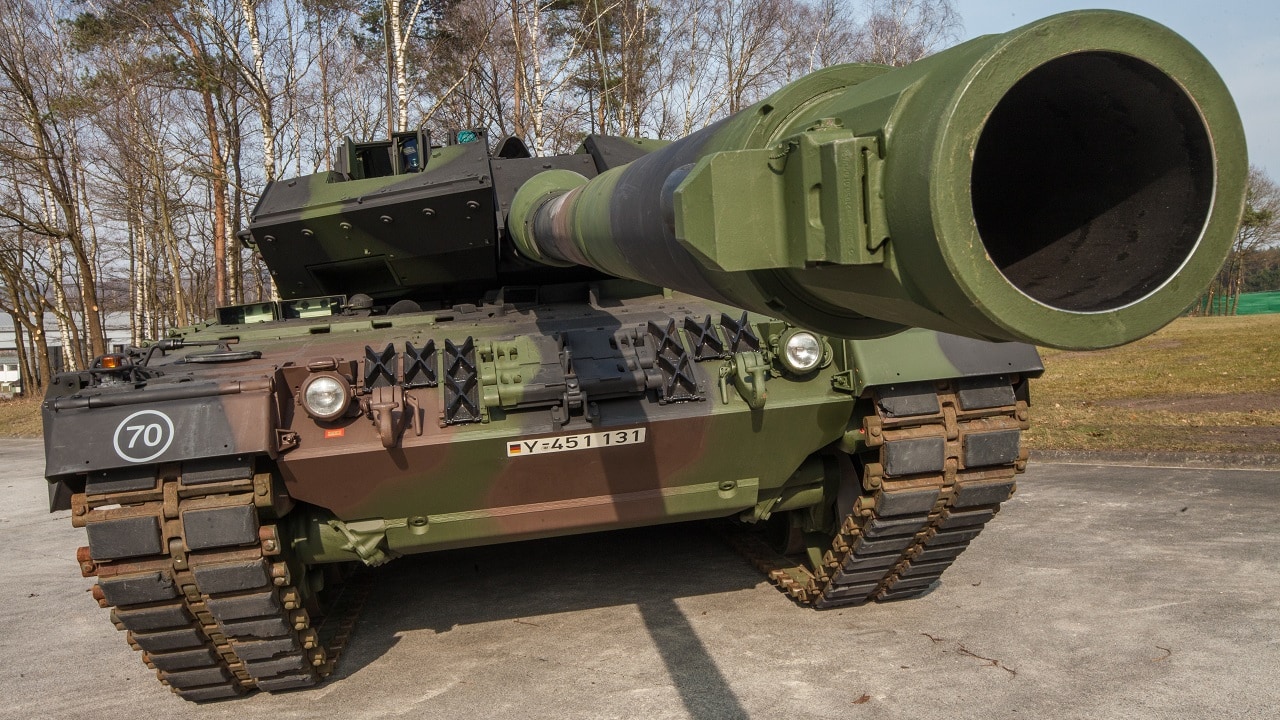
According to Lithuania Defense Services, Leopard 2 tanks that had been damaged in combat were refurbished in Lithuania and prepared for return to the Ukrainian armed forces. The political message of this report is clearer than any press formula. Europe is finally trying to understand support not just as an act of delivery, but as a maintenance chain. Especially with heavy platforms, it is not just the number of vehicles delivered that matters, but the ability to quickly make damaged systems operational again.
The Ukrainian ambassador to Lithuania, Olha Nikitchenko, articulated this remarkably openly. Despite the age of drones, she said, this armored technology remains important in the recapture of occupied territories. This is more than a diplomatic thank you. It is a correction of that convenient European narrative that tanks in the war of 2026 are merely expensive relics. No: They have become more vulnerable, but not obsolete. Precisely for this reason, maintenance becomes politically central. A Leopard 2 that does not remain out of action for months after being hit is militarily more valuable than three new promises in a summit communiqué.
Lithuania becomes the forefront of a European maintenance geography
The uniqueness of this project lies in its location. The repairs are not taking place in Germany, but in Lithuania, thus much closer to the eastern NATO front and nearer to Ukraine. This shortens transport routes, saves time, and directly connects Baltic infrastructure to the Ukrainian war economy. Lithuania is therefore not only providing political solidarity but also taking on a concrete function in Europe's military rear organization.
This development is no coincidence. Also in August, it was announced that the Finnish construction company YIT is to build a Leopard 2A8 assembly and maintenance facility for Lithuania Defence Services in the Kaunas free trade zone for around 30 million euros. The site covers almost ten hectares; construction is set to begin in 2026, with completion scheduled for November 2027. This will create not just a workshop for the current war in Lithuania, but infrastructure for a permanent regional tank support. The Baltic defense is thus becoming more institutional, not just symbolic.
However, this raises the analytically more important question. Is this already strategic autonomy? Only to a very limited extent. A maintenance facility creates availability but does not provide sovereignty over quantities, spare parts depth, fire control systems, engines, or ammunition production. Europe is building a better service corridor for existing systems. It is not yet creating a real armored industrial reserve.
Germany's role remains that of a financier with incomplete industrial leverage
The German ambassador Cornelius Zimmermann emphasized in Vilnius that Germany is fully financing the project and is Europe's largest bilateral supporter of Ukraine. This is politically correct and, in this case, also materially relevant. But the statement contains the typical German ambivalence of this turning point. Berlin is increasingly paying for availability, yet the larger European capability is developing only slowly. Money brings damaged tanks back. Money alone does not create a robust rotation of replacement vehicles, deep stocks, or quickly scalable production.
The industry itself illustrates this problem. KNDS Germany is expanding its capacities in Kassel, increasing production for Leopard 2A8 and RCH 155, and had an order backlog of 33.1 billion euros by the end of 2025. This shows demand, but demand is not the same as resilience. A full order book proves that Europe can place orders. It does not yet prove that Europe can deliver quickly enough, replace, and maintain a continuous operational rate from combat damage. Between the order book and front-line availability lies exactly that institutional gap where Europe's defense policy has been failing for years.
The real change lies not in the tank itself, but in the understanding of war
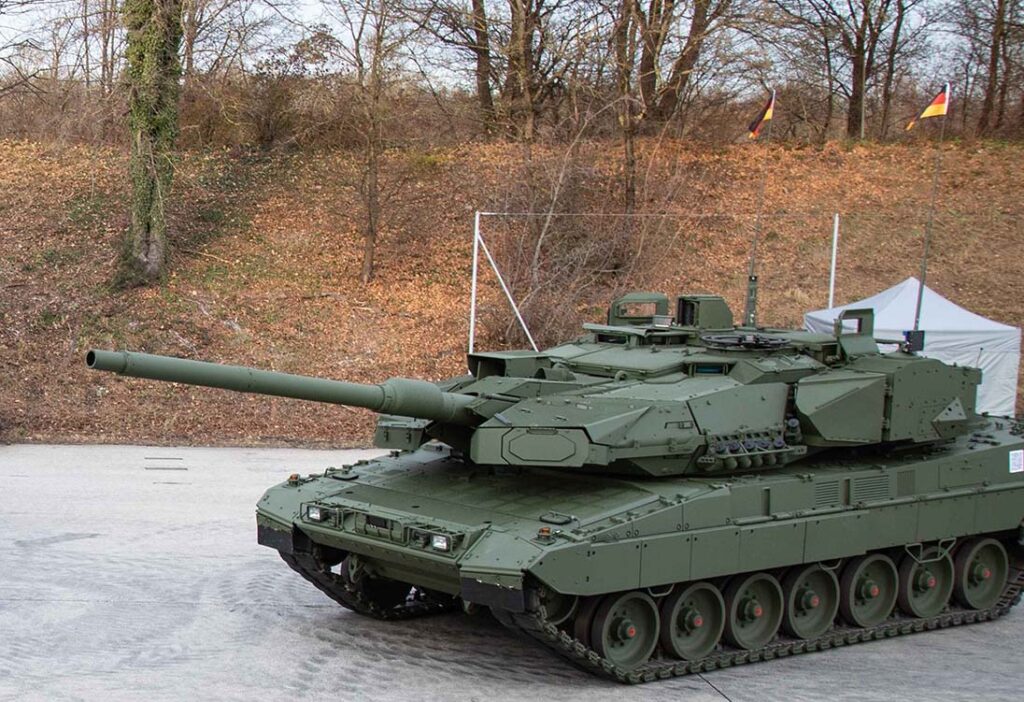
The news from Lithuania shows that Europe, under the pressure of the Ukraine war, is beginning to view war not as a series of individual delivery decisions but as a cycle of failure, recovery, repair, and return. This is progress. Those who want to support heavy systems in a war of attrition need not just a delivery policy but a repair regime.
And yet, the European dilemma remains. Maintenance is the answer to losses within a limited stock. Production would be the answer to scarcity itself. Lithuania helps Europe with the first problem. It does not solve the second. This is precisely the sober lesson of this Leopard 2 moment. Europe is today better at sending a damaged tank back than at producing enough new tanks in a timely manner. This is no small progress. But it is also not yet a strategic turning point. A defense order that lives off repair chains has not yet answered its industrial mass question.
Lithuania Defense Services reported that repaired Leopard 2 tanks are being prepared for return to the Ukrainian Armed Forces as of August 30, 2026. This initiative, funded by Germany, emphasizes the importance of maintenance and rapid operational readiness of military equipment in support of Ukraine. A new facility for Leopard 2A8 assembly and maintenance is also being established in Lithuania to enhance regional military support.
- Germany has funded a repair program for Ukrainian tanks in Lithuania since 2022.
- Leopard 2 tanks damaged in combat are being repaired for return to Ukraine.
- The repair facility is located in Lithuania, closer to the eastern NATO front.
- A new assembly and maintenance facility for Leopard 2A8 tanks is being built in Lithuania.
- The focus is shifting from merely supplying tanks to ensuring their operational readiness.