
Liaoning Ship Sails to the Western Pacific: PLA Aircraft Carrier Training Moves from Near Seas to Distant Seas
 Li Minghui
Liaoning Aircraft Carrier Heads to the Western Pacific, PLA Carrier Training Moves from Nearshore to Offshore
On October 14, the Chinese Navy announced that the Liaoning aircraft carrier group would conduct training in the Western Pacific. The official statement described it as an "annual routine training plan," aimed at testing the troops' combat training level and mission execution capability, while emphasizing that the actions comply with international law and norms and are not directed at specific countries. The wording is quite restrained, but the real takeaway is not the term "routine," but rather the shift of the training area from nearshore to the Western Pacific itself.
What the Liaoning's Deployment Reveals
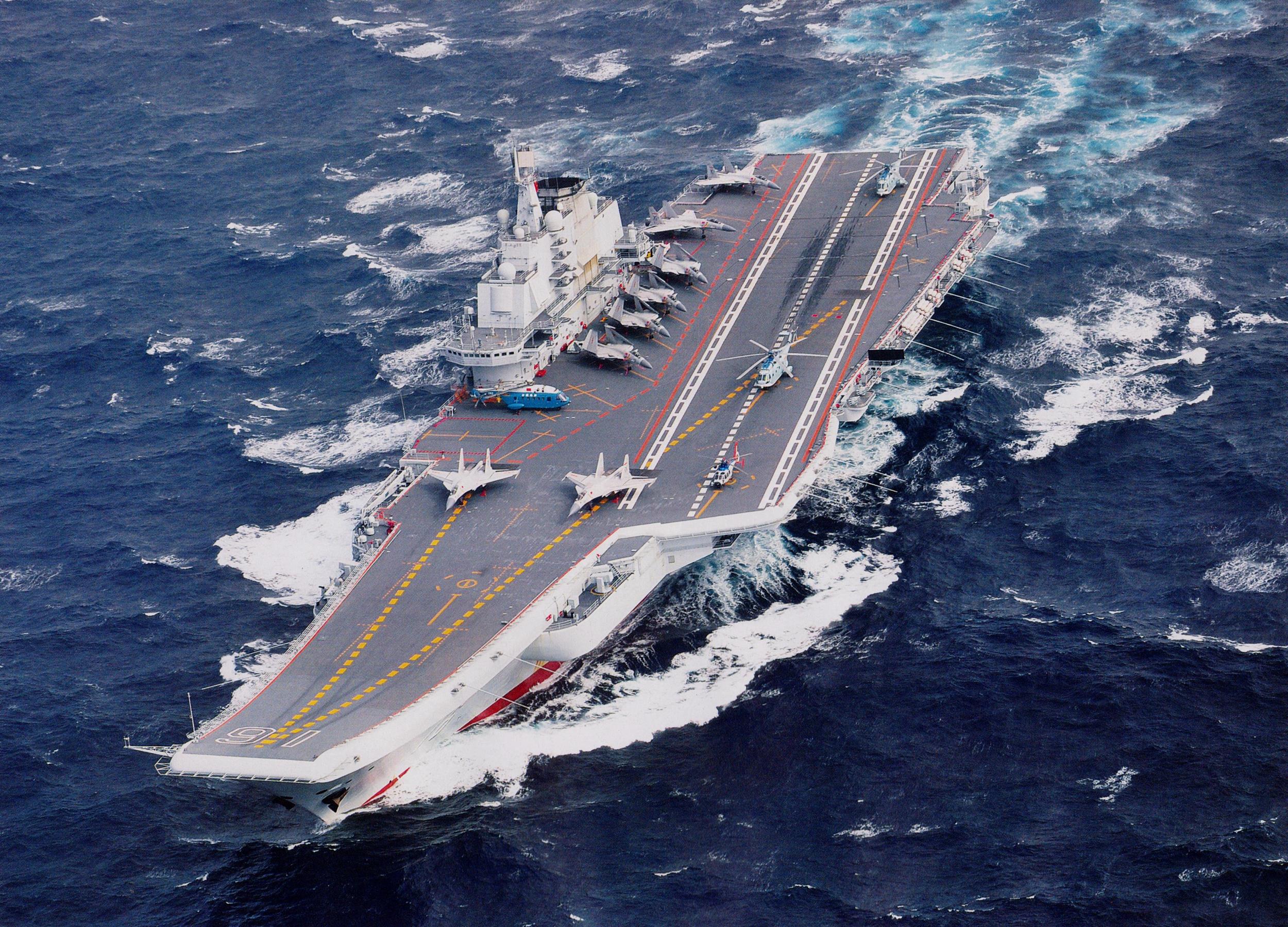
The Liaoning is the first aircraft carrier of the Chinese Navy, hull number 16, featuring a ski-jump takeoff deck, with a full-load displacement typically estimated in public data to be between 58,000 to 60,000 tons. Its core carrier-based aircraft remain the J-15 series, which, due to the ski-jump deck limitations, must make trade-offs between takeoff weight, fuel, and payload. Compared to the electromagnetic catapult system of the Fujian, the Liaoning is not the endpoint of Chinese aircraft carrier technology, but it is the most important training platform.
The value of this training lies primarily in transforming "can it take off" into "can it sustain combat." After the carrier group enters the Western Pacific, the carrier-based aircraft need to complete takeoffs and landings, alert missions, formation coordination, and resupply under conditions of longer ranges, more complex weather, and greater distances from shore-based support. The Liaoning's tonnage and the number of carrier-based aircraft have not suddenly increased; the change lies in the training subjects beginning to accept more tests in offshore environments. For a carrier group, continuous operation at sea often speaks more to the issues than a single public display.
From Single Ship Voyages to Group Systems
The Chinese official reports did not disclose the escort vessels, training routes, or the number of sorties for this group, so it is inappropriate to interpret this action as a military operation directed at a specific direction. Previous public reports indicate that the PLA's offshore training for aircraft carriers typically requires the support of destroyers, frigates, comprehensive supply ships, as well as shore-based aviation and satellite communication systems. What the Liaoning truly needs to verify is not just deck operations, but whether the command chain, air situation sharing, formation air defense, and offshore resupply can operate stably.
From the perspective of equipment development, the significance of the Liaoning is also changing. Initially, it undertook the basic tasks of "getting the aircraft carrier operational and getting the carrier-based aircraft flying"; today, it resembles a reusable offshore testing ground for training pilots, deck controllers, and formation commanders. The Chinese Navy already possesses the Shandong and is advancing the Fujian and subsequent catapult-equipped aircraft carriers. The more advanced the new ships, the more they require mature platforms to undertake high-frequency training; otherwise, the expensive catapult aircraft carriers will be forced to take on too many basic subjects.
Strategic Signals and Real Boundaries in the Western Pacific
Training in the Western Pacific will naturally attract attention from Japan, the United States, and Taiwan, as this area connects the outer edge of the first island chain, the Philippine Sea, and the direction of Guam, serving as an important space to test the Chinese Navy's offshore air power. However, "entering the Western Pacific" does not equate to the Liaoning having the same sustained long-range operational capability as U.S. aircraft carriers. Limitations of ski-jump takeoff, carrier-based early warning systems, offshore refueling, and spare parts support remain shortcomings that must be faced in public discussions. I believe that the Liaoning's current action is more about enhancing the routine operational capabilities of the carrier group rather than demonstrating a strike capability that could independently alter the regional balance of power.
Another easily overlooked detail is that the official statement particularly emphasizes "not targeting specific countries." This serves both as a standard phrasing to reduce diplomatic misinterpretations and as a narrative framework for subsequent similar actions. As the Liaoning, Shandong, and future catapult aircraft carriers take turns training, the Chinese Navy needs to acclimate the outside world to the presence of carrier groups beyond the first island chain while avoiding packaging each deployment as a crisis event.
Key Indicators to Observe
- How long the group stays in the Western Pacific and whether it conducts high-intensity takeoffs and landings of carrier-based aircraft over consecutive days;
- Whether more challenging subjects such as fixed-wing early warning, night takeoffs and landings, and offshore resupply are introduced;
- The combination of escort vessels and supply ships, and whether they can support the carrier's long-term operations away from shore-based air power.
What can currently be confirmed is that this is an annual plan for offshore training, but its specific intensity and mission boundaries cannot be confirmed. For the modernization of the PLA's aircraft carriers, the most important aspect to track is not where the Liaoning went this time, but whether it can turn Western Pacific training into a stable, repeatable, and rotational institutional capability—and when the Chinese Navy will be willing to publicly showcase the weakest links in this system.
Source: China Global Television Network (CGTN, October 14, 2026); China Daily Online (ECNS, October 14, 2026); U.S. Department of Defense "China Military Power Report" public data and reports on the PLA Navy aircraft carrier group's previous offshore training.
The Liaoning aircraft carrier group is conducting training exercises in the western Pacific Ocean as part of an annual routine training plan. This shift from nearshore to the western Pacific indicates an increase in operational scope, aimed at testing the carrier group's capabilities. The exercise is not directed against any specific country, as emphasized by official statements.
- The Liaoning aircraft carrier group is conducting training in the western Pacific Ocean.
- This training is part of an annual routine training plan.
- The exercise aims to test the operational capabilities of the carrier group.
- The training area has shifted from nearshore to the western Pacific, indicating an increase in operational scope.
- The report emphasizes that the actions are not directed against any specific country.