
Liaoning Ship's Regular Long-Distance Voyages in 2026: The PLA's Three Aircraft Carrier Training Chain Begins to Take Shape
 Li Minghui
Liaoning Aircraft Carrier's Regular Long-Distance Operations by 2026: PLA's Three Aircraft Carrier Training Chain Begins to Take Shape
On October 14, the Liaoning aircraft carrier led its fleet into the western Pacific for training. By October 23, observers noted that this fleet had been operating near the southern islands of Japan and might continue towards the South China Sea near the Philippines. For an aircraft carrier that entered service in 2012 with a full-load displacement of about 60,000 tons, the news point of this operation is not just that it has "gone to sea again," but that it seems to be integrated into a fixed rhythm of long-distance training.
The Role of the Liaoning is Changing
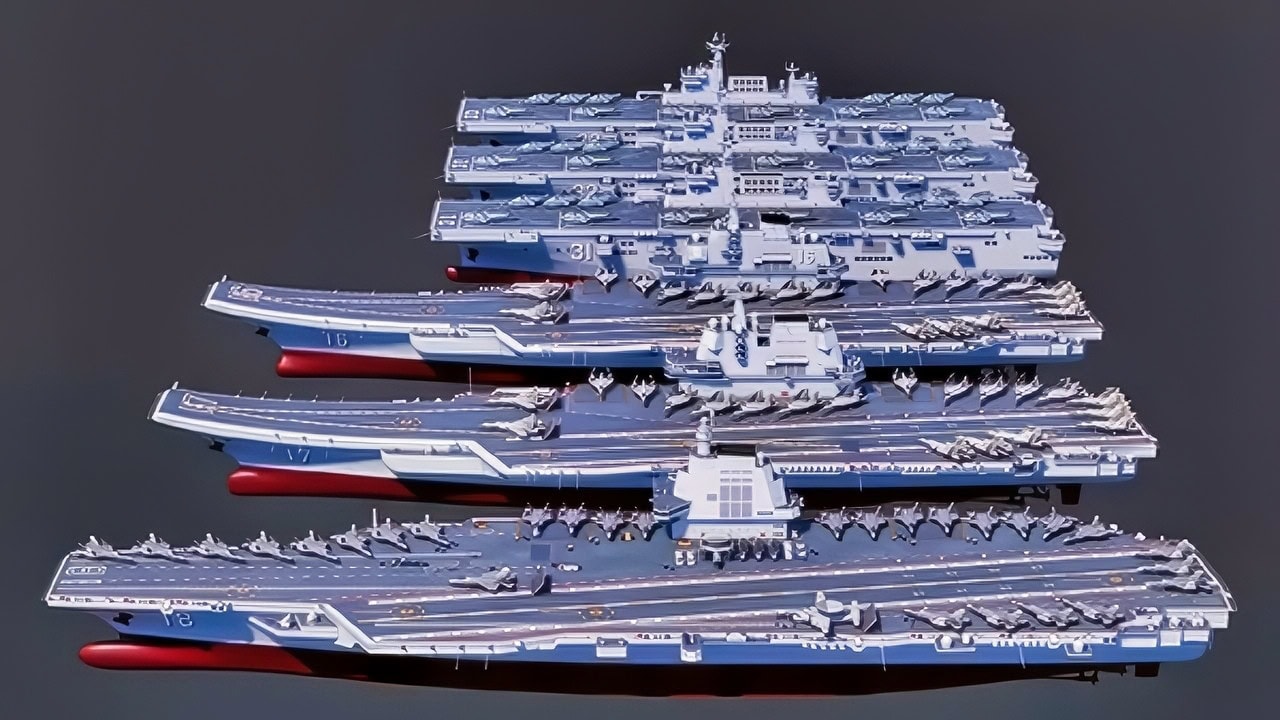
The Chinese military network and Xinhua News Agency defined this operation as an annual routine training aimed at testing and improving combat readiness. Defense News reported that the Liaoning has conducted at least six long-distance deployments during its 14 years of service. This frequency indicates that it is no longer just the "first aircraft carrier prototype" of the Chinese Navy, but is now tasked with validating carrier-based aircraft takeoffs and landings, fleet coordination, sensor utilization, and long-distance support.
It is noteworthy that the Liaoning is not acting alone. Public reports indicate that the fleet includes two large destroyers and one missile destroyer. The formation itself may not represent a combat-ready configuration, but it is sufficient to support continuous flight training and subjects such as air defense, anti-submarine warfare, and at-sea replenishment. In other words, the Liaoning is more like a mobile training ground, using relatively older platforms to accumulate data on sea conditions, routes, and support for the Shandong and Fujian carriers.
The Most Lacking Aspect of the Three Aircraft Carrier System is Not the Hull
The Shandong is an improved version of the Liaoning, while the Fujian employs electromagnetic catapults and arrestor wires, representing a significantly larger technological leap. Researchers from Singapore's Nanyang Technological University believe that the Liaoning's long voyage may be validating new technologies and tactics for subsequent carriers to absorb. My judgment is that what the PLA currently needs most is not to prove whether another aircraft carrier can be launched, but to organize carrier-based aircraft, early warning aircraft, escort ships, land-based aviation, and supply ships into a repeatable operational system.
This is also why older ships still hold value. The combat capability of an aircraft carrier is not simply the sum of hull tonnage, but is jointly determined by flight deck turnover rates, pilot training volumes, maintenance cycles, and fleet communications. The Liaoning's ski-jump deck limits the use of heavy fixed-wing early warning aircraft, but it can "digest" a large number of basic subjects and long-distance support tasks, allowing the more advanced Fujian to bear less of the inefficient trial and error.
Strategic Signals from Geographical Routes
Japan has reported observing the Liaoning conducting carrier-based aircraft takeoffs and landings about 250 kilometers south of Ishigaki Island, and researchers from the Australian Strategic Policy Institute believe that conducting such activities within Japan's exclusive economic zone is uncommon. The operation coincidentally occurred around the time of the US-Japan "Sword" joint exercises, and the route connects three sensitive directions: Taiwan, Japan, and the Philippines.
Beijing can emphasize that the operation complies with international law and is not aimed at any specific country; however, from a military effectiveness perspective, the mere existence of such operations is a signal. It compels Japan to maintain aerial surveillance, prompts Taiwan to assess carrier activities in the western Pacific, and presents the Philippines with a more complex maritime and aerial situation in the South China Sea. The Liaoning may not necessarily be the frontline strike force in a crisis, but it can layer training, deterrence, and political communication within the same deployment through regular operations.
The Real Bottleneck Lies in the Support Chain
Recent reports also indicate that China's naval tonnage being built from 2024 to 2025 will exceed that of the United States by more than double. This figure suggests that China has the industrial foundation for rapid fleet expansion, but it cannot be directly equated with the combat capability of aircraft carriers exceeding that of the United States. The rapid growth in the number of large vessels, along with the need for time to accumulate experience in carrier-based aircraft engines, long-distance replenishment, overseas maintenance nodes, and high-intensity flight training, remains. In simple terms, shipyards can deliver the "hardware," but the navy must refine the "software" through years of deployment.
Therefore, the frequent long voyages of the Liaoning may hold more analytical value than a photo of a new ship being launched. It demonstrates the PLA's efforts to incorporate the three aircraft carriers into a rotational training system, but public information has yet to prove that this system has matured. What is truly worth questioning is whether the Fujian can convert the advantages of electromagnetic catapults into a stable long-distance operational rate in the future, rather than how many more miles the Liaoning can still sail.
Sources
- Defense News, October 23, 2026, China’s first aircraft carrier forms ‘evolving pattern’ of voyages in disputed Asian seas.
- Chinese military network, Xinhua News Agency, October 2026 report on the Liaoning carrier group's training in the western Pacific.
- South China Morning Post, October 2026 report on the Chinese Navy's shipbuilding tonnage and aircraft carrier long-distance activities.
The Liaoning aircraft carrier conducted training exercises in the Western Pacific from October 14 to 23, 2026, accompanied by two large destroyers and one missile destroyer. The exercises included aircraft takeoffs and landings near southern islands of Japan and may extend towards the South China Sea. This deployment is part of a routine training schedule aimed at enhancing combat readiness and coincided with U.S.-Japan joint military exercises.
- Liaoning aircraft carrier conducted training exercises in the Western Pacific from October 14 to 23, 2026.
- The carrier was accompanied by two large destroyers and one missile destroyer.
- The exercises included aircraft takeoffs and landings near Japan and potential movements towards the South China Sea.
- This deployment is part of a routine training schedule aimed at improving combat readiness.
- The operation coincided with U.S.-Japan joint military exercises.