
Libya Reactivates CEN-SAD — Egypt Seeks a Security Lock in the Sahel

Libya Reactivates CEN-SAD — Egypt Seeks a Security Lock in the Sahel
Tripoli, November 7, 2026. In a Libyan capital where every institution remains a power struggle, the Executive Council of the Community of Sahel-Saharan States (CEN-SAD) held its 22nd meeting. Prime Minister Abdel Hamid Dbeibah called for the return of the executive secretariat to Tripoli and urged for closer African cooperation. On the same day, Cairo advocated for reviving the institutions of the bloc and strengthening the fight against terrorism.
This is not yet a rapid reaction force. It is a battle to determine who will have the right to define the security architecture between the Sahara, the Sahel, and the Mediterranean.
An Old Organization Facing a New Theater
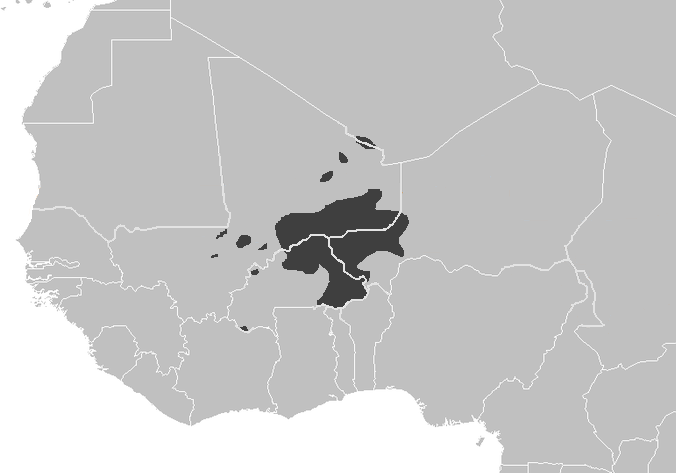
Founded in 1998, CEN-SAD brings together states that do not share the same military doctrine or the same interpretation of Sahelian coups d'état. Its advantage is geographical. It connects Libya, Egypt, and Chad to the inland countries, where smuggling routes, migrant flows, and jihadist corridors ignore administrative borders.
Its handicap is operational. Ministerial meetings produce statements, but not necessarily common radio transmissions, a chain of command, or units capable of holding a road during the rainy season. On the ground, the distance between Tripoli and northern Niger is measured in convoy days, fuel, and maintenance workshops. A political map does not create a logistical line.
The Egyptian Calculation
Cairo supports institutional revival and cooperation against terrorism. The Egyptian interest is perfectly clear. Egypt wants to prevent the Sahelian crisis from descending into Libya, then towards the Mediterranean approaches and the Egyptian western border. It also seeks to reposition North African states at the center of an issue that European powers have long treated through separate arrangements.
This approach complements Egyptian security diplomacy on the Libyan border. It gives Cairo an African framework without obliging it, at least for now, to deploy ground forces in areas controlled by armed groups. It is a cautious position. It offers influence at a limited cost.
The Return of Tripoli Does Not Mean the Return of the State
For Dbeibah, recovering the executive secretariat would be a symbolic and administrative gain. Hosting the organization would allow the Tripoli government to present itself as an African platform, despite the country's persistent division. However, an institutional presence does not erase Libyan fractures. A CEN-SAD structure established in Tripoli would still depend on the security of buildings, airport access, and rivalry among armed factions.
This is the point that statements avoid. Libya can offer diplomatic depth and financial means. It cannot yet guarantee a unified security space from the coast to Fezzan on its own. The Libyan south remains precisely one of the areas where traffickers, armed groups, and smuggling networks exploit sovereignty vacuums.
The AES Factor
Mali, Burkina Faso, and Niger have left ECOWAS and built the Alliance of Sahel States around a claimed military sovereignty. Their presence in the Sahel-Saharan mechanisms poses a practical problem for CEN-SAD. These governments will accept cooperation against jihadist groups but are wary of a structure that could become a channel for diplomatic pressure or external surveillance.
Nevertheless, a window exists. Nigeria wants to reposition the Multinational Joint Task Force and seeks partners beyond traditional regional frameworks. Egypt has an army capable of providing training, intelligence, and doctrine. Libya provides northern Saharan depth. But cooperation will need to be transactional, state by state. A large coalition announced in Tripoli will not replace the bilateral agreements that truly allow a convoy to cross a border.
What Needs to Be Monitored
- The effective appointment of an executive secretariat and its funding, beyond the final statement.
- The creation of an intelligence exchange mechanism between Egypt, Libya, Chad, Niger, and the AES states.
- The ability to treat the Libyan south and the axes towards Niger as a single theater of operations.
- Nigeria's reaction, whose cooperation with the AES could bypass ECOWAS arrangements.
Public information does not yet allow for the confirmation of a common force or a precise military timetable. This uncertainty matters. In the Sahel, institutional announcements come quickly, and resources rarely arrive.
A Security Architecture Tested by the Field
The meeting in Tripoli is therefore important, but for a reason more limited than suggested by official statements. It marks the return of the Sahel-Saharan issue into a framework where Egypt, Libya, and the inland states can negotiate without waiting for a European initiative. It does not resolve either the Libyan fragmentation or the jihadist expansion.
The next test will be concrete. If CEN-SAD cannot transform its maps into intelligence sharing, escorting, and controlling crossing points, JNIM and the Islamic State will continue to maneuver in the interstices. The most vulnerable route will not be that of one statement to another, but the one connecting Fezzan to Niger when no one is truly holding the next fifty kilometers.
Sources
- Xinhua — 22nd meeting of the Executive Council of CEN-SAD in Libya, November 7, 2026
- Ahram Online — Egypt calls for reviving CEN-SAD institutions and fighting terrorism
- The Libya Observer — Dbeibah calls for the return of the executive secretariat to Tripoli
- Egypt Today — regional cooperation and security in the Sahel-Saharan space
The 22nd meeting of the Executive Council of the Community of Sahelo-Saharan States (CEN-SAD) took place in Tripoli on November 7, 2026, where Egyptian officials called for revitalizing the organization's institutions and enhancing counter-terrorism efforts. Libyan Prime Minister Dbeibah emphasized the need for closer African cooperation and sought to relocate the executive secretariat to Tripoli, despite ongoing security challenges in the region.
- The CEN-SAD held its 22nd meeting in Tripoli on November 7, 2026.
- Egypt is advocating for the revival of CEN-SAD institutions and enhanced counter-terrorism cooperation.
- Libya's Prime Minister Dbeibah seeks to bring the executive secretariat back to Tripoli.
- The CEN-SAD faces operational challenges in establishing effective security cooperation.
- The report highlights the geopolitical interests of Egypt in preventing the Sahel crisis from affecting Libya.