
Lockheed gets new U.S. Army funding for MLRS engineering work
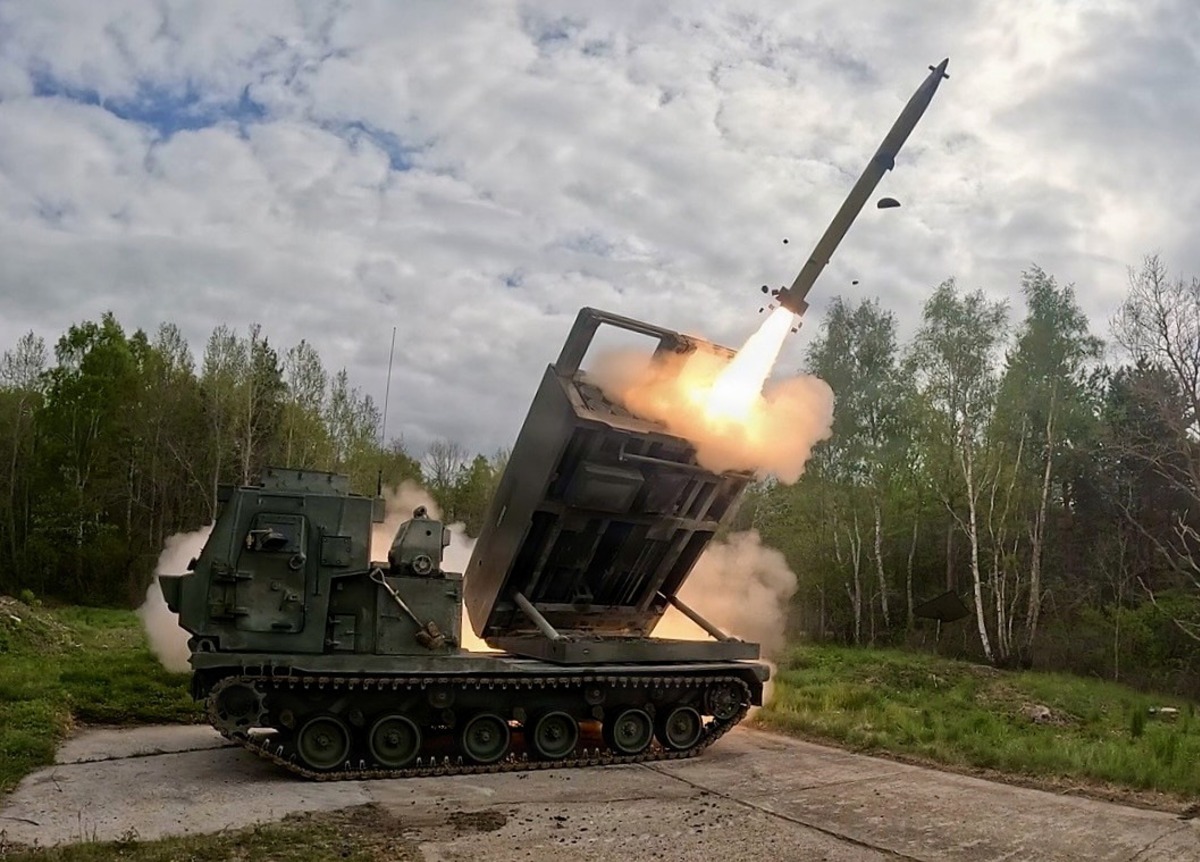
One of America’s most battle-tested rocket artillery systems just got a new round of engineering investment, with the U.S. Army awarding Lockheed Martin a $14 million contract modification to sustain and improve the Multiple Launch Rocket System across all its production variants.
The award, issued by Army Contracting Command at Redstone Arsenal, Alabama, brings the total value of the underlying contract to nearly $230 million and covers engineering work spanning performance, safety, reliability, maintainability, and product improvement through May 2027.
The Multiple Launch Rocket System, known universally as MLRS, has been one of the defining weapons of land warfare since its introduction in the early 1980s. The system fires salvos of unguided rockets or precision-guided munitions from a tracked or wheeled launcher, saturating an area or striking a specific target at ranges that put it well beyond the reach of conventional tube artillery. Its most famous modern descendant, the M142 High Mobility Artillery Rocket System, better known as HIMARS, became a household name when the United States supplied the wheeled variant to Ukraine in 2022. Ukrainian forces used HIMARS to strike Russian ammunition depots, command posts, and logistics nodes deep behind the front lines with precision that conventional artillery could not achieve, forcing Russia to relocate critical supplies further from the front and degrading its ability to sustain offensive operations. The footage of those strikes, widely shared on social media, turned HIMARS into a symbol of how long-range precision fires had changed the calculus of modern ground warfare.
The MLRS ecosystem that Lockheed Martin supports through this contract encompasses both the original tracked M270 launcher and the HIMARS wheeled variant, along with the family of munitions they fire, including the Army Tactical Missile System, known as ATACMS, and the newer Precision Strike Missile, called PrSM, which extends effective range beyond 499 kilometers. Maintaining engineering support across all production variants of a system that has been evolving for more than four decades, and that multiple allied nations operate in different configurations, is genuinely complex work that requires sustained investment even when no dramatic new capability is being added. Safety, reliability, and maintainability engineering keeps existing systems in the field performing as designed, prevents failures that could endanger crews or degrade mission capability, and identifies improvements that can be incorporated without costly redesigns.
The $14 million modification follows a pattern of sustained Army investment in the MLRS program that has accelerated since 2022, when Ukraine’s use of the system demonstrated its continued relevance at a scale that exceeded anything the U.S. military had publicly employed it for in years. Demand for HIMARS systems and compatible munitions, particularly the ATACMS long-range ballistic missiles that Ukraine eventually received after extended deliberation, has driven production increases and platform sustainment requirements that engineering support contracts like this one directly enable. A launcher that cannot be maintained to specification or that accumulates unresolved reliability issues becomes a less capable system regardless of how good its munitions are, and the Army’s investment in Lockheed’s engineering services reflects an understanding that the platform’s continued effectiveness depends on sustained technical work rather than production alone.
Lockheed Martin’s Grand Prairie, Texas facility, where this work will be performed, serves as a hub for the company’s missiles and fire control operations and has been central to MLRS and HIMARS production and support for decades. The concentration of engineering expertise, tooling, and institutional knowledge at a single location creates efficiencies in both normal sustainment work and the kind of rapid problem-solving that urgent operational requirements demand. When allied operators in Ukraine, or elsewhere, identify performance issues or request capability improvements that need to be engineered and validated, that work flows through the same engineering infrastructure that this contract supports.
The broader context for any MLRS investment right now is the global surge in demand for long-range ground-based rocket artillery that the Ukraine conflict catalyzed. Nations that had let their MLRS inventories atrophy or had delayed procurement decisions suddenly found themselves in urgent conversations with the U.S. Army and Lockheed Martin about acquiring or expanding HIMARS capability. Poland signed one of the largest foreign military sales agreements for HIMARS ever recorded. Romania, Estonia, Lithuania, Latvia, and other NATO members either ordered the system or accelerated existing procurement plans. Each new customer adds to the sustainment and engineering support requirements that Lockheed must manage, and each represents a nation that now has a strategic dependency on the engineering ecosystem this contract helps maintain.
Content preview only. Full article available at source. View Full Article
The U.S. Army awarded Lockheed Martin a $14 million contract modification for engineering work on the Multiple Launch Rocket System (MLRS) at Redstone Arsenal, Alabama, extending the contract's total value to nearly $230 million through May 2027. This investment supports the MLRS, including the HIMARS variant, which has proven effective in recent conflicts, particularly in Ukraine. The contract reflects the Army's commitment to maintaining and improving the system's performance and reliability amid rising global demand for long-range artillery systems.
- U.S. Army awarded Lockheed Martin a $14 million contract modification for MLRS engineering work.
- Total contract value is nearly $230 million, covering work through May 2027.
- The MLRS has been a key weapon system since the 1980s, with variants like HIMARS used in Ukraine.
- Demand for HIMARS and ATACMS has increased due to the Ukraine conflict.
- Lockheed Martin's facility in Texas will perform the engineering work.