
Lockheed Martin awarded $50M to keep LCS warships combat-ready
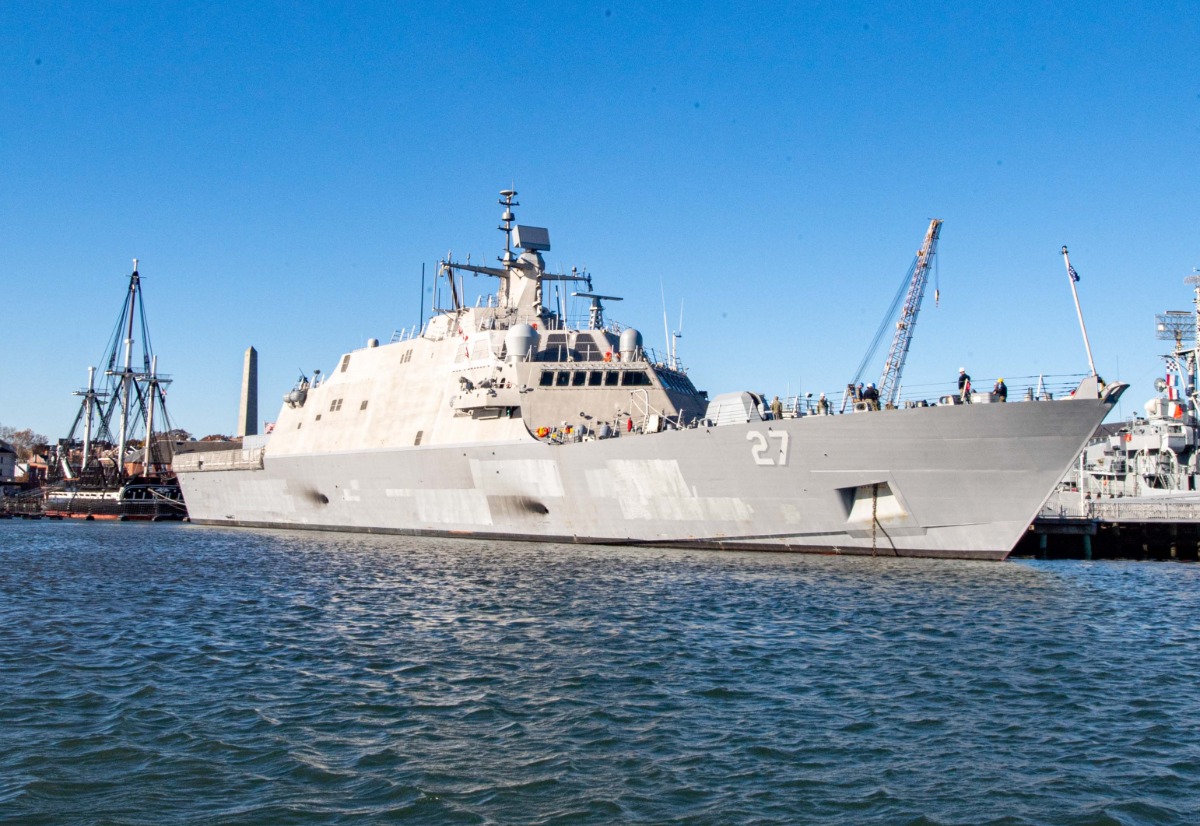
Lockheed Martin picked up a nearly $50 million contract modification to sustain the combat systems aboard the U.S. Navy’s Littoral Combat Ship fleet, extending support for a program that has faced years of scrutiny but remains an active part of the American surface fleet.
Naval Sea Systems Command awarded the $49,893,672 modification on April 22, 2026, in Washington, D.C. The contract — a cost-plus-incentive-fee and cost-only modification to a previously awarded deal — exercises options for sustainment of the Littoral Combat Ship Component Based Total Ship System-21st Century, along with associated combat system elements. Work is expected to wrap up by April 2027. Lockheed Martin Rotary and Mission Systems in Moorestown, New Jersey, holds the contract.
The bulk of the work — 87 percent — stays in Moorestown, which serves as the program’s primary engineering and sustainment hub. Camden, New Jersey, and Virginia Beach, Virginia, each account for 5 percent of the effort. Orlando, Florida, picks up 1 percent, with the remaining 2 percent distributed across various other locations. Funding comes from two fiscal year 2026 Navy accounts: $4,284,181 in research, development, test and evaluation funds covering 85 percent of the obligated amount, and $772,583 in operations and maintenance funds covering the remaining 15 percent. The operations and maintenance portion expires at the end of the current fiscal year.
The system at the center of this contract — the Component Based Total Ship System-21st Century, or CBS TSS-21 — is the integrated combat management architecture that ties together the LCS’s sensors, weapons, and communications into a single operational picture for the crew. It is not a single box or a standalone radar. It is the software and hardware backbone that allows the ship’s combat systems to talk to one another, process threat data, and enable the crew to make engagement decisions. Without sustained engineering support, that backbone degrades, and with it the ship’s ability to execute its mission.
The Navy commissioned its first LCS — USS Freedom — in 2008, and the fleet grew across two variants: the Freedom-class, built by Lockheed Martin, and the Independence-class, built by Austal USA. Early years brought persistent criticism over cost overruns, mechanical reliability problems, and questions about whether the ships were survivable enough for high-end combat. The Navy responded by retiring several vessels earlier than planned and scaling back the original buy. Despite that turbulence, a significant number of LCS hulls remain in commissioned service, and the Navy continues to invest in keeping their combat systems operationally relevant.
That ongoing investment reflects a straightforward reality: ships that are still in the fleet need to work. Decommissioning decisions take time, and in the interim the Navy cannot allow combat system software and hardware to fall out of support. A warship with degraded or unsupported combat systems is not a reduced-capability asset — it is a liability. The sustainment contract Lockheed Martin just secured is the mechanism that prevents that outcome for the LCS fleet’s current service life.
Moorestown’s role in this work is not incidental. The New Jersey facility has been Lockheed Martin’s center of gravity for naval combat systems for decades, supporting programs that range from the Aegis weapon system aboard cruisers and destroyers to the combat management systems on allied warships. The concentration of engineering expertise there means the LCS sustainment work benefits from institutional knowledge that cannot easily be replicated elsewhere. The 87 percent work share reflects that concentration.
The one-year performance window — completion by April 2027 — keeps the contract tightly scoped. This is not a long-term development effort or a major upgrade program. It is a focused sustainment action designed to maintain existing capability while the Navy continues working through broader decisions about the LCS fleet’s future force structure role. The relatively modest funding obligated at award, compared to major shipbuilding or weapons contracts, underscores that point.
For a program that spent years defending its existence, the quiet continuation of engineering support may be the most honest measure of where things stand. The LCS fleet is smaller than originally envisioned. The ambitions attached to it have been recalibrated. But the ships are still out there, still deployed, still tasked.
Content preview only. Full article available at source. View Full Article
Lockheed Martin secured a $49,893,672 contract modification from the U.S. Navy on April 22, 2026, to sustain combat systems for the Littoral Combat Ship fleet. The majority of the work will be conducted in Moorestown, New Jersey, with completion expected by April 2027. This contract reflects ongoing investment in maintaining the operational readiness of the LCS fleet amid previous criticisms and challenges.
- Lockheed Martin awarded a $49,893,672 contract modification on April 22, 2026.
- The contract is for sustainment of the Littoral Combat Ship fleet's combat systems.
- 87% of the work will be done in Moorestown, New Jersey.
- The contract is expected to be completed by April 2027.
- Funding comes from fiscal year 2026 Navy accounts.