
Lockheed tests key motor for new missile interceptor
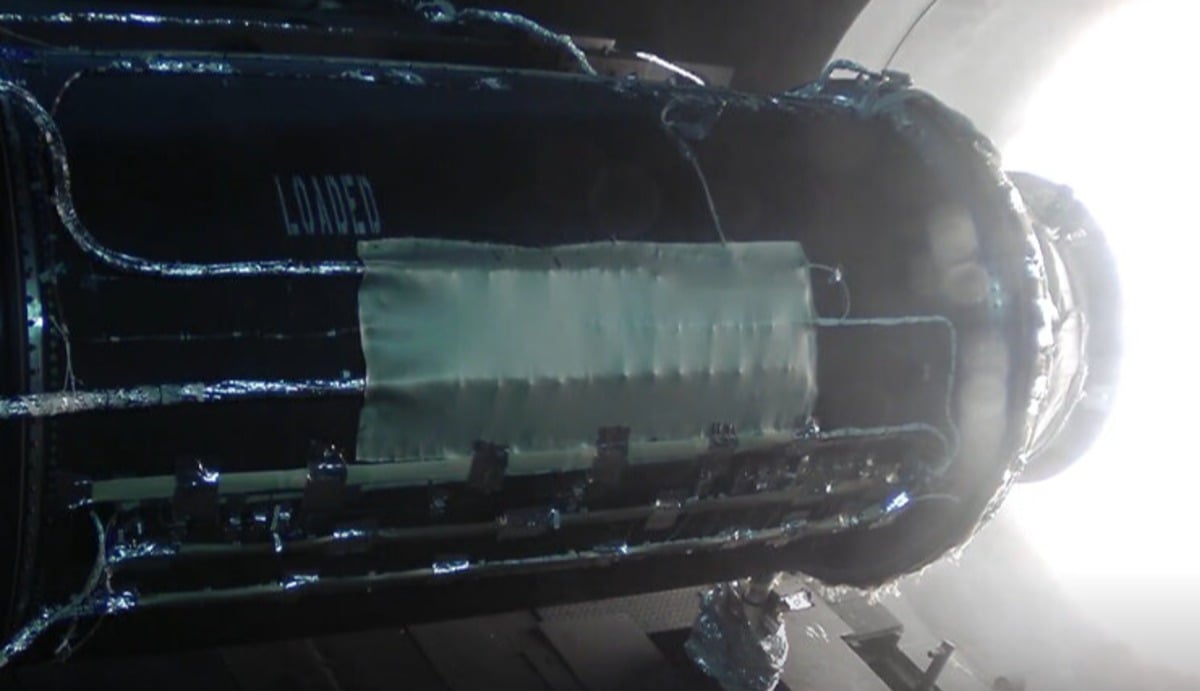
Lockheed Martin completed a static-fire test of the Stage 2 rocket motor for its Next Generation Interceptor inside a high-vacuum chamber that replicates conditions in low-Earth orbit, the company said.
The motor, built by L3Harris Technologies, completed a full-duration burn during the test. Lockheed Martin said the test confirmed thrust, chamber pressure and combustion stability, key performance metrics for the extreme thermal and pressure stresses the motor will face during an actual interceptor mission. Testing inside a vacuum chamber matters because a solid rocket motor behaves differently once it leaves the atmosphere. Without air resistance or atmospheric pressure acting on the exhaust plume, engineers need vacuum conditions to verify the motor performs as designed once the interceptor is above the atmosphere and closing on a target.
“This successful static fire test is a significant milestone on the path to the Critical Design Review and confirms our confidence that the NGI motor will meet the demanding performance envelope required for fielding by 2030,” said Christopher Jewell, Lockheed Martin NGI vice president. “The data gathered will directly inform the final interceptor design and accelerate integration with the Ground-Based Midcourse Defense architecture.”
Scott Alexander, president of Propulsion Systems, Missile Solutions at L3Harris, said the test reflected the company’s role supplying the interceptor’s propulsion hardware.
“NGI is critical to the security of the United States and will serve as a cornerstone of our homeland missile defense once deployed. This successful hot-fire test demonstrates L3Harris’ commitment to delivering dependable, high-performance propulsion systems, and we will continue to execute,” said Alexander.
The Next Generation Interceptor is designed to replace the current Ground-Based Interceptor as part of the Ground-Based Midcourse Defense system, the network of interceptors and radar the U.S. relies on to shoot down long-range ballistic missiles before they reach American territory. The Ground-Based Interceptor has been in service since 2004 and has faced criticism over the years for testing reliability issues, part of the reasoning behind developing a successor. The Missile Defense Agency selected Lockheed Martin to develop NGI in April 2024, choosing the company over a competing design from Boeing. L3Harris supplies the interceptor’s Stage 1 and Stage 2 solid rocket motors along with its Attitude Control System and Divert and Attitude Control System, the components that steer the interceptor during final approach to a target.
The Stage 2 static-fire test follows a separate milestone earlier this month. On August 4, Lockheed Martin completed a burst test of the interceptor’s second-stage motor case, pressurizing a carbon-fiber composite structure filled with water beyond expected launch loads to confirm the case’s strength-to-weight ratio. That test also advanced the program toward Critical Design Review, a formal review confirming a weapon’s design is mature enough to move into production, which Lockheed Martin expects later this year.
Lockheed Martin has described NGI as built on a “born-digital” design foundation, meaning the interceptor is designed, modeled and validated primarily through digital engineering tools rather than the years of physical prototyping older missile programs typically required. The company said that approach lets designs move from concept to fabrication and validation in months rather than years, a pace it credits for keeping NGI on schedule for fielding by 2030.
Lockheed Martin is investing millions of dollars to build and expand manufacturing facilities in Huntsville, Alabama, to support NGI production, adding new production lines, tooling and plant layouts specifically for the program. The company said it is drawing on suppliers across the country to support that industrial base as it prepares for the transition from testing into full-scale production.
Critical Design Review, expected later this year, will mark the point at which the Missile Defense Agency formally signs off on the interceptor’s design before Lockheed Martin moves into building qualification units for ground and flight testing ahead of the 2030 fielding target.
Content preview only. Full article available at source. View Full Article
Lockheed Martin completed a static-fire test of the Stage 2 rocket motor for its Next Generation Interceptor in Huntsville, Alabama. The test confirmed key performance metrics necessary for missile defense. This milestone is part of the development process leading to the Critical Design Review, with production expected to begin later this year.
- Lockheed Martin completed a static-fire test of the Stage 2 rocket motor for the Next Generation Interceptor.
- The test confirmed thrust, chamber pressure, and combustion stability.
- The Next Generation Interceptor is designed to replace the current Ground-Based Interceptor.
- Lockheed Martin expects to move into production after the Critical Design Review later this year.
- L3Harris supplies the interceptor's propulsion hardware.