
Lockheed’s New PAC-3 Edge interceptor aims for agility
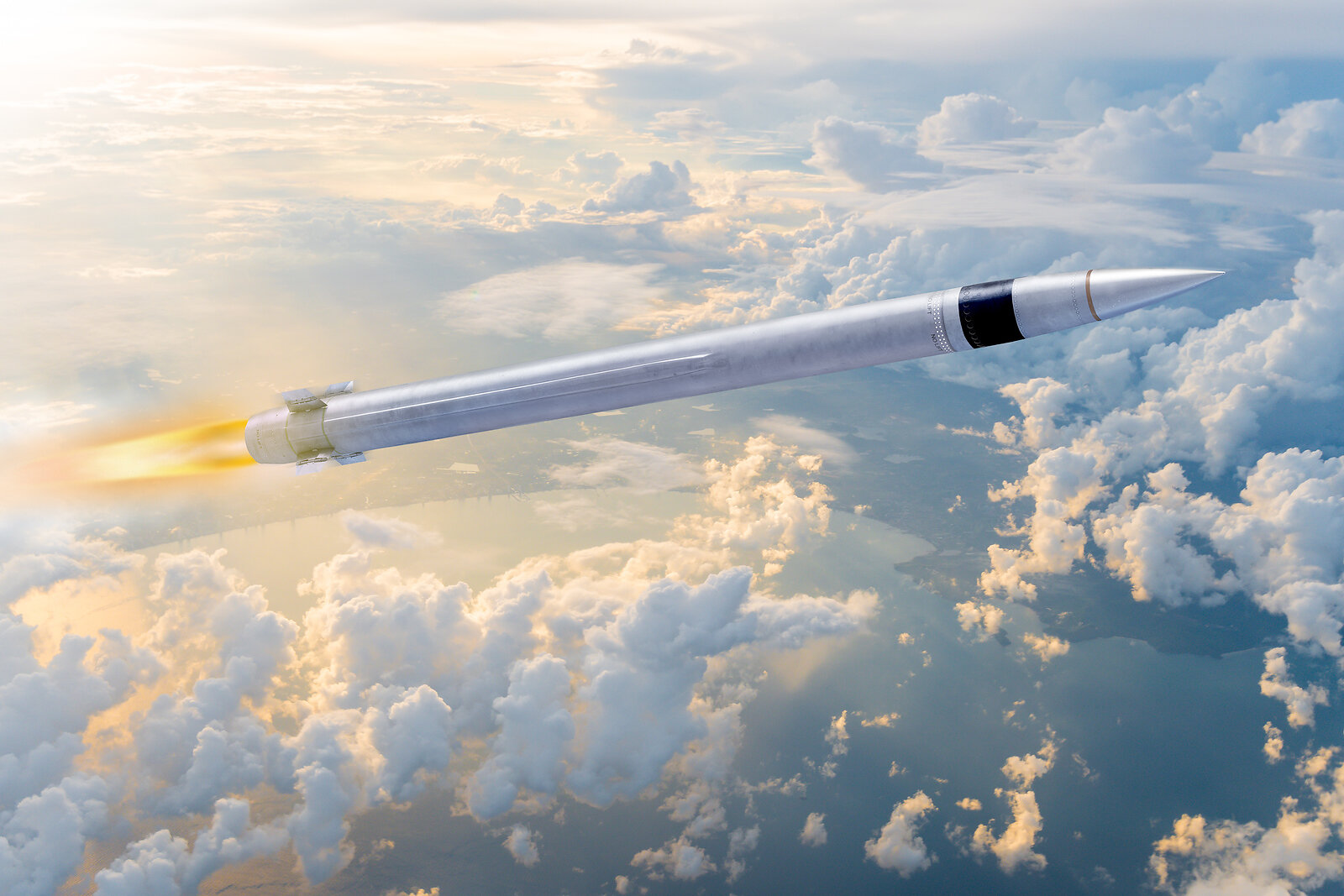
The latest iteration of Lockheed Martin’s PAC-3 family of missile interceptors is designed to bring extreme agility to bear against a diverse array of missile threats, Defense News learned.
The defense giant unveiled the PAC-3 Edge this Friday and debuted it at the Association of the U.S. Army’s annual meeting in Washington, D.C., today.
“This missile is capable of being launched from the traditional M903 launcher. It’s capable of being launched from the containerized launchers that are being sought after domestically and internationally, as well as our HIMARS FLEX, which is the offense and defense configuration of our traditional HIMARS vehicle,” Jason Reynolds, vice president and general manager of Lockheed Martin Missiles and Fire Control Integrated Air and Missile Defense, told Defense News.
Lockheed in January announced a seven-year framework agreement to increase annual PAC-3 interceptor production from approximately 600 to 2,000.
Designed to defend against hypersonic and advanced missile threats, the unveiling of the PAC-3 Edge comes as the U.S. military’s reliance on costly interceptors against cheap munitions, particularly those deployed by Iran during Operation Epic Fury, has come under increased scrutiny over the past eight months.
The new PAC-3 Edge missile builds on the foundations of the PAC-3 MSE, Lockheed’s baseline missile, and pushes its abilities farther.
The Edge system is longer and features a larger diameter, increasing its range.
“It also goes higher in altitude and has more agility. It has attitude control motors, which are located near the front of the missile and basically divert the missile in flight,” Reynolds explained. “This has additional attitude control motors that give it additional agility.”
While the PAC-3 MSE uses a two-pulse solid rocket motor to speedily approach moving targets, the new system has multi-pulse motor designed by Northrop Grumman.
“It has a third pulse to the motor, so that means the motor will fire three times during its flight, giving it additional agility to kill the target,” Reynolds said.
The weapon is designed not only for unprecedented maneuverability but to be easily integrated with both present and future missile defense networks. It is compatible with Northrop’s Integrated Battle Command System, or IBCS, a command-and-control network the Army uses to mesh air and missile defense sensors into a central hub.
The company intends to begin testing the PAC-3 Edge in 2027 and have it ready to deploy by 2031, although Lockheed aims to have it ready earlier, Reynolds added.
“The U.S. Army’s timeline is 2031. We, Lockheed Martin, are trying to pull that in and deliver this capability sooner, so around the turn of the decade,” he said.
Lockheed Martin unveiled the PAC-3 Edge missile interceptor in Washington, D.C., designed for enhanced agility against missile threats. The new system features a multi-pulse motor and is compatible with current missile defense networks. Testing is set to begin in 2027, with deployment targeted for 2031, although Lockheed aims to expedite this timeline.
- Lockheed Martin unveiled the PAC-3 Edge missile interceptor.
- The missile is designed for agility against various missile threats.
- Testing is scheduled to begin in 2027, with deployment aimed for 2031.
- The PAC-3 Edge features a multi-pulse motor for enhanced maneuverability.
- It is compatible with existing missile defense networks.