
Mali 2026 — 8 dead on the Bamako-Kayes road and the JNIM tightens the noose
 Marie Dubois
Mali 2026 — 8 dead on the Bamako-Kayes road as JNIM tightens the noose
On June 1, on the Bamako-Kayes route, a civilian bus hit a mine west of the Malian capital. Eight passengers were killed and forty-two injured according to Mamadou Kassambara, communications officer of the national drivers' union cited by Reuters on June 2. Africa Corps, the Russian paramilitary force present in Mali, provided a different toll — five dead and more than ten injured — and accused Jama'at Nusrat al-Islam wal-Muslimin, better known in Francophone Sahel as the Group for Support to Islam and Muslims (GSIM/JNIM). No claim of responsibility has yet been published for the placement of the mine.
This detail matters. In the Malian theater, an unclaimed mine is not just a simple road safety incident. It is often an operational message left on a road that everyone must take.
The Kayes road becomes a pressure line
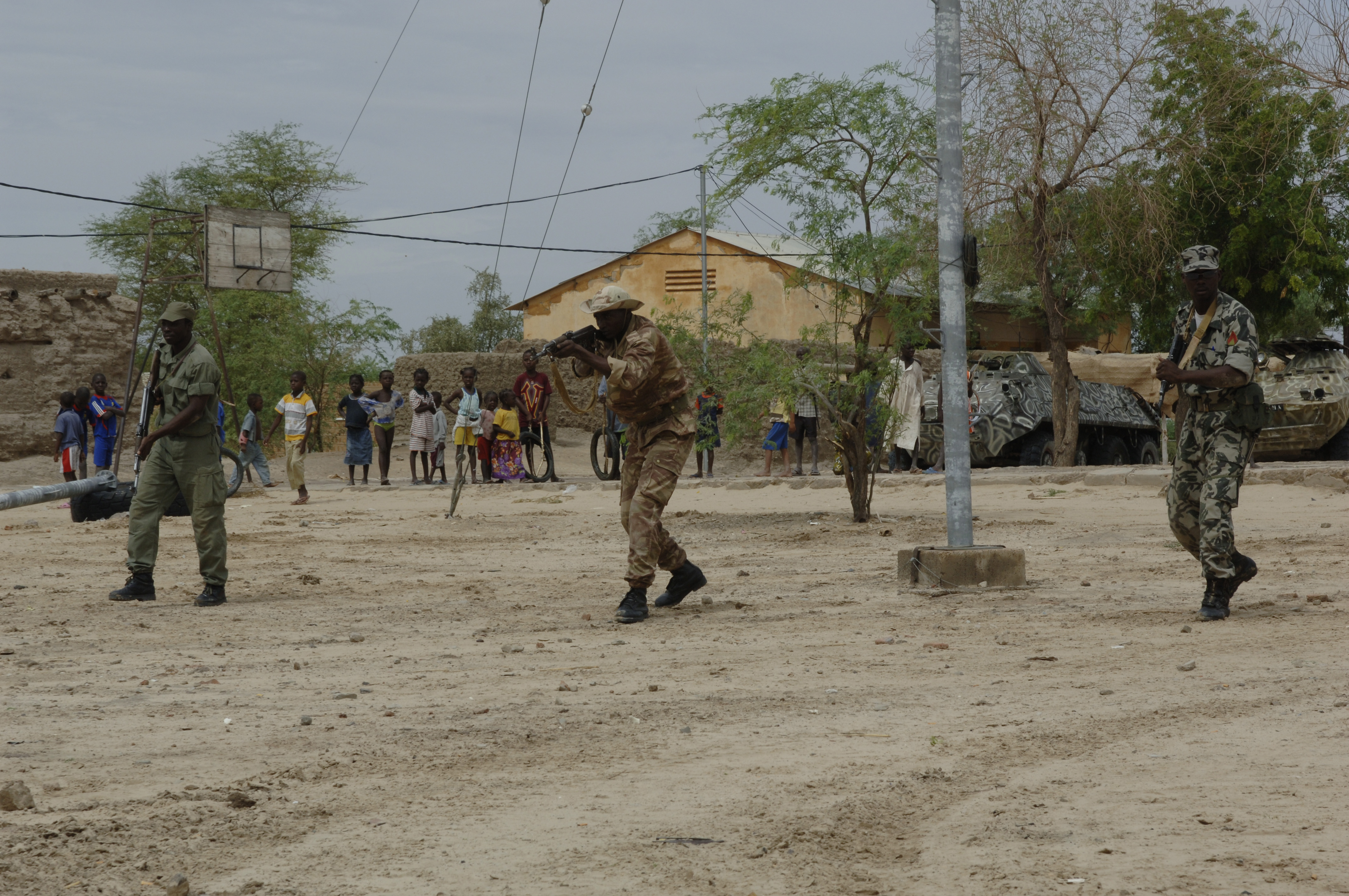
The Bamako-Kayes route is one of the western arteries connecting the capital to the border areas of Senegal and Mauritania. It may not be the most spectacular road in the Sahel, but it is a useful one: fuel, passengers, small businesses, administrative convoys, and diaspora traffic regularly use it. When an improvised explosive device strikes a bus on this route, the goal is not just to kill. It is to make transporters understand that the risk is no longer reserved for the military.
On the ground, the difference between a controlled road and one merely traversed by the state is stark. The former assumes support points, local intelligence, repetitive patrols, and a capacity for demining. The latter leaves drivers to do the detection work with their tires. This is exactly what JNIM seeks when it transforms major routes into spaces of uncertainty.
Reuters reports that the explosion occurred on a road where JNIM is already operating. The group had announced a blockade of Bamako after the coordinated attacks in April and set up checkpoints on certain major routes to the city. This does not mean that every mine is directly placed on the orders of Iyad ag Ghali. But the tactical effect is consistent with the claimed campaign: to slow down the capital, isolate the power, and force the population to daily measure the fragility of the junta.
Since April, Bamako is no longer a safe depth
The attacks on April 25 and 26 changed the psychological scale of the conflict. Chatham House described a sequence of attacks launched by JNIM in conjunction with the Azawad Liberation Front, hitting sites from Kidal to Kati, about fifteen kilometers from Bamako. The same episode revealed two weaknesses: the vulnerability of Malian intelligence and the difficulty of Africa Corps in ensuring the stability of the north when multiple fronts open simultaneously.
The mine on June 1 does not have the military scale of these attacks. It is smaller, dirtier, and harder to comment on in a triumphant communiqué. But it strikes at another dimension of the conflict: trust in movement. A regime can survive a barracks attack if it keeps the roads secure. It begins to lose control when families hesitate to board a bus.
JNIM understands this economy of fear very well. The American National Counterterrorism Center estimates that the group has at least 6,000 members and finances its influence through ransoms, local taxation, smuggling, extortion, and indirect control of flows. This model does not require a permanent presence on every kilometer. A few checkpoints, informants, mines, and a well-maintained rumor are enough to create a siege effect.
The Russian problem is also a road problem
Bamako has chosen Moscow and Africa Corps to replace the former French and UN apparatus. This decision has a political logic: to show that Malian sovereignty no longer depends on Paris. But a road cannot be secured by symbolism. It is secured by a regular, predictable presence, including intelligence. From experience, jihadist groups do not always seek direct combat against a better-armed convoy. They look for the moment when the convoy is not there.
The differing tolls between the drivers' union and Africa Corps also illustrate a battle of narratives. Transporters count the dead in their buses. Military partners seek the author and the message. Both approaches are useful, but they do not respond to the same urgency. For the population, the immediate question is not whether the mine was a remotely detonated charge or a device placed the day before. The question is: tomorrow, is the road open?
The Malian government can announce that the situation is under control, as Assimi Goita did after the April attacks. On the Bamako-Kayes road, this control will have to be proven through very concrete operations: reconnaissance of the route, neutralization of devices, monitoring of surroundings, protection of bus stations, coordination with drivers, and nighttime presence. It is slow. It is not very visible. Yet it is the heart of counterinsurgency.
A signal for neighboring capitals
This attack must also be read in Dakar, Nouakchott, and Abidjan. If JNIM manages to intermittently disrupt the supply routes to Bamako, it does not need to take the capital. It can raise the political cost of each trip, increase prices, exhaust security forces, and push urban elites to doubt the regime's ability to protect daily life.
The information remains incomplete: there is no claim of responsibility, the exact number of victims varies according to sources, and the precise origin of the device is not established. But the operational framework is clear. After the April attacks and the declaration of blockade, the Bamako-Kayes mine resembles less an isolated accident than a logical extension of the pressure on the capital.
The next weak point is probably not the presidential palace. It is more mundane: a bus station, a bridge, a gas station, a fuel convoy stuck between two localities. In the Sahel, when roads begin to lie to maps, the state is already losing ground.
Sources
- Reuters, June 2, 2026, report on the explosion on the Bamako-Kayes road and statements from the drivers' union.
- Chatham House, April 30, 2026, analysis of the coordinated attacks in April and the announced siege of Bamako.
- National Counterterrorism Center, JNIM fact sheet updated in 2026, personnel, tactics, and areas of operation.
On June 1, 2026, a civilian bus struck a mine on the Bamako-Kayes road, resulting in eight deaths and forty-two injuries. The attack is linked to JNIM, which has been increasing pressure on transportation routes to undermine confidence in the Malian government. This incident is part of a broader strategy to disrupt supply lines and instill fear among the population.
- A civilian bus hit a mine on the Bamako-Kayes road on June 1, 2026.
- Eight passengers were killed and forty-two were injured.
- The attack is attributed to JNIM, although no claim of responsibility was made.
- The incident reflects a broader strategy by JNIM to instill fear and disrupt transportation.
- The differing casualty figures from various sources highlight the ongoing narrative battle.