
Mali regains Kidal with Russian support — the victory of the AES opens a new front in 2026
 Marie Dubois
Mali retakes Kidal with Russian support — the victory of the AES opens a new front in 2026
In Kidal, the Malian flag has returned after nearly three years of absence. On October 6, the Malian Armed Forces entered the northern city after the withdrawal of Tuareg fighters from the Azawad Liberation Front. Bamako claims to have acted with the support of the Russian Africa Corps and airstrikes. Reuters, Al Jazeera, RFI, and Africanews converge on the essential fact, but the exact circumstances of the withdrawal and the extent of Russian resources remain partially documented.
On the ground, this is not a classic city takeover. Kidal is over 1,500 kilometers from Bamako, on the edge of a desert area where the road is not a logistical line but a succession of water points, tracks, and human relays. Holding the city is one thing. Supplying a garrison and protecting the routes to Anefis, Gao, and the Algerian border is another.
A territorial victory achieved without a decisive battle
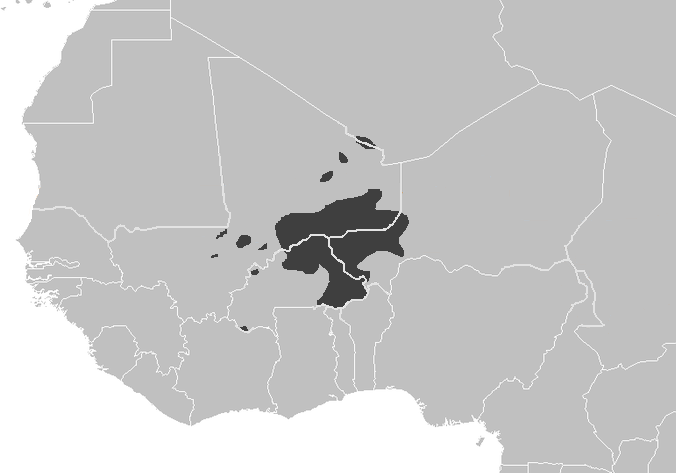
The official Malian narrative emphasizes the reconquest. However, it is necessary to distinguish the return of troops from the destruction of the adversary. The separatists left Kidal under the pressure of airstrikes and the advance of the government column, according to several reports. This reduces the immediate risk of urban combat but leaves the military problem intact: the enemy retains its mobility, caches, and networks in the Adrar des Ifoghas.
The difference is crucial. A force that abandons a city may lose its administrative buildings while preserving its fighters. In this theater of operations, control is measured less by the number of flags raised than by the ability to patrol 30 or 50 kilometers, secure convoys, and return the next day. The Malian army has learned this the hard way during previous offensives in the North.
The Africa Corps transforms the geography of war
The Russian presence gives Bamako an additional pressure capability, especially in the air, intelligence, and support of Malian units. It allows the junta to claim a victory without restoring the French or UN framework that once oversaw the monitoring of the North. This is exactly the political message sought by the Alliance of Sahel States: military sovereignty would now be ensured by Bamako, Ouagadougou, and Niamey with Moscow as a security partner.
But Russian support does not eliminate the logistical constraint. Foreign forces can help to open a breach; they cannot, on their own, administer the camps, negotiate with communities, or guarantee the movement of trucks on a 600-kilometer track. A successful strike does not create a supply chain. It also does not replace local intelligence, which remains the rarest resource in northern Mali.
“Retaking Kidal is an operational success. Keeping it will be a test of sustainment.”
The risk of a new cycle of fragmentation
The Tuareg withdrawal opens a space that jihadist groups will seek to exploit. The JNIM, or Group for Support of Islam and Muslims, does not need to conquer Kidal to benefit from the situation. It is enough for them to cut the roads, tax the convoys, and present the army as a foreign force to the population. In the North, the absence of regular administration often counts for more than a tactical defeat.
The danger is also political. The rift between Bamako and the armed movements in the North will not be resolved by a military ceremony. If the authorities impose an exclusively security presence without a local mediation mechanism, former combatants may disperse, align with criminal networks, or negotiate with jihadist organizations. It would be premature to assert that such a transfer is already confirmed; the available information does not yet allow for measuring the ongoing alliances.
For neighboring countries, the recapture of Kidal shifts the pressure towards the corridors. The Kidal–Anefis axis could become a harassment zone. Further west, the roads to Timbuktu and Mauritania remain vulnerable. Further east, the Gao–Ménaka link remains exposed to armed groups and trafficking. Staff maps will show an area under Malian control; drivers, however, will measure reality by the number of vehicles able to reach their destination.
A victory that commits Bamako
Kidal is a powerful symbol, but symbols do not hold an advanced base. Bamako will now have to establish a sustainable garrison, protect civilians, restore essential services, and prevent the city from becoming an isolated position supplied by air. The Africa Corps can reinforce the assault phase; it cannot make the distance shorter.
The next alert will therefore not necessarily come from a battle around Kidal. It could appear on a secondary road, against a poorly protected convoy, or in a village where the military administration has no relays. If attacks resume in the coming weeks, the reconquest of October 6 will have been a communication victory. If the routes remain open during the dry season, Bamako will have achieved something rarer in the Sahel: sustainable territorial control.
Sources: Reuters, October 6, 2026; Al Jazeera, October 7, 2026; RFI, October 7, 2026; Africanews, October 6, 2026; allAfrica, October 7, 2026.
Malian Armed Forces entered Kidal on October 6, 2026, reclaiming the city with support from the Russian Africa Corps after the withdrawal of Tuareg fighters. This operation, while a territorial success, presents significant logistical challenges for maintaining control and securing supply routes. The absence of a decisive battle raises concerns about the potential for jihadist exploitation of the situation.
- Malian Armed Forces entered Kidal on October 6, 2026.
- The operation was supported by the Africa Corps from Russia.
- Tuareg fighters withdrew from Kidal under pressure from airstrikes and advancing government forces.
- The control of Kidal poses logistical challenges for the Malian forces.
- The situation may lead to exploitation by jihadist groups.