
Michigan becomes hub for the U.S. Army’s next combat vehicle
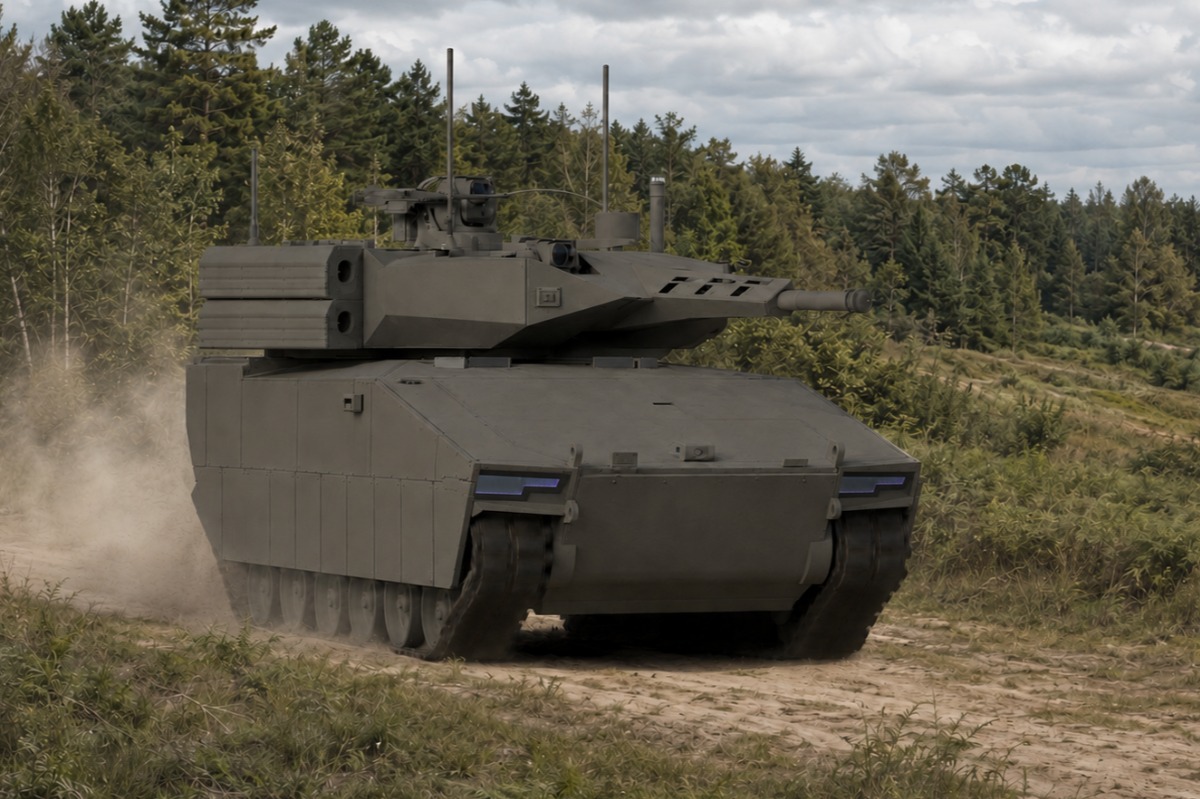
The U.S. Army is preparing to select a new infantry fighting vehicle that will replace the Bradley after more than 40 years in service and serve as the backbone of the Army’s armored formations for decades to come. Known as XM30, the program has two finalists, General Dynamics Land Systems and American Rheinmetall Vehicles, both of which are developing and testing their prototypes in Michigan, a state that has become a central hub for the competition.
The Defence Blog put a series of written questions to Mark Ignash, Strategic Initiatives and Ecosystem Development Director at the Michigan Office of Defense and Aerospace Innovation (ODAI), on why Michigan has emerged as a center for the XM30 competition, what the program means for the state’s defense industry, and what role Michigan could play in the vehicle’s production over the coming decades. For a question on changes in armored vehicle design, ODAI coordinated additional responses from Scott Taylor, Director of U.S. Business Development at General Dynamics Land Systems, and Nathan Greenough, Training Lead and Master Gunner at American Rheinmetall.
The full written responses follow.
Q: Both teams competing to build the U.S. Army’s XM30 infantry fighting vehicle are developing and testing their prototypes in Michigan. Why has the state become a central location for one of the Army’s most important modernization programs?
A: Michigan has a unique combination of assets that makes it an ideal environment for developing the Army’s next generation of combat vehicles. Both XM30 finalists, General Dynamics Land Systems and American Rheinmetall Vehicles, are based in Southeast Michigan, where they can tap into an unusually deep ecosystem of Army ground-vehicle expertise, advanced manufacturing, engineering talent and defense suppliers. At the center of that ecosystem is Detroit Arsenal, home to the Army’s Tank-automotive and Armaments Command (TACOM) and U.S. Army Combat Capabilities Development Command (DEVCOM) Ground Vehicle Systems Center, which conducts major ground-vehicle and mobility research and development. Michigan also offers world-class testing infrastructure and a manufacturing base shaped by generations of automotive and defense production.
That concentration of capabilities is increasingly being reinforced by the Michigan Office of Defense and Aerospace Innovation (ODAI). ODAI’s strategy is to amplify these existing advantages while strengthening the connections among government, industry, academia and the military; expanding dual-use production capacity; and accelerating applied R&D, experimentation and commercialization. In other words, Michigan is not simply home to the companies and Army assets developing the XM30. The state is intentionally building an ecosystem that helps defense technologies move more quickly from concept and prototype to production and scale.
Q: What does the XM30 competition mean for Michigan’s defense industry, including local suppliers, engineering companies, skilled workers, and future investment?
A: The XM30 competition represents an economic and technological catalyst for Michigan because both finalists are anchored right here in our state. This competition strengthens our entire defense economy, which already drives a $30 billion industry. For Michigan’s over 4,000 defense suppliers, the XM30 competition demands cutting-edge dual-use technology, Industry 4.0 manufacturing and advanced autonomous systems.
Q: American Rheinmetall and General Dynamics Land Systems are taking different approaches to the XM30, particularly in software, sensors, automation, and crew workload. What broader changes in armored vehicle design does this competition reveal?
A: The XM30 vehicle, when unveiled, will replace the Bradley Infantry Fighting Vehicle after more than 40 years, demonstrating that modern ground warfare relies largely on software agility and advanced sensor integration. Armored vehicles like these are expanding into an interconnected ecosystem of uncrewed platforms and dual-use technology.
“Today’s combat vehicles are highly networked, software-defined systems that can be continuously upgraded to outpace emerging threats,” said Scott Taylor, Director of U.S. Business Development at General Dynamics Land Systems. “There has been a clear shift toward human-machine teaming in recent years, reducing crew burden, improving survivability and ensuring full battlefield awareness, all while preserving the reliability soldiers expect and need. At General Dynamics Land Systems, we are digitally designing our next-generation platforms from the outset to be modular and growth-oriented with open architectures.”
The American Rheinmetall design blog for their Lynx XM30 describes their approach as one centered on attention: “From the first design iterations of the Lynx XM30, American Rheinmetall treated the Warfighter’s attention as a resource to defend. Artificial intelligence and automation were built into the vehicle’s architecture to do just that. By handling the mechanical work of combat, the searching and sorting of data, the vehicle lets the Soldier apply judgment where it matters most: to the fight, the formation, and the mission.”
“We’ve built a system that does the searching for you. The crew is no longer pinned to an optic that demands full attention. With the information they need organized and tiered, they are free to make a clear and informed decision to fire or hold,” said Nathan Greenough, Training Lead and Master Gunner at American Rheinmetall. “Every piece of AI and automation in this vehicle exists for one reason. We’ve been in that seat, we know the pressure these crews are under, and we built it to carry the weight for them so they can fight and come home.”
Q: What practical role does the Michigan Office of Defense and Aerospace Innovation play in helping defense companies move from early development to Army testing, certification, production, and potential contract awards?
A: ODAI leads efforts to grow Michigan’s defense and aerospace industries by supporting more manufacturing, innovation and research. The goal is to position Michigan as a leader in defense, aerospace, maritime and space by building on the state’s history as the Arsenal of Democracy. We support defense and aerospace companies in connecting with Michigan’s top manufacturing, testing resources and skilled workers. With over 166,000 skilled workers in Michigan, ODAI offers a complete environment for companies to design, test, manufacture and sustain critical systems. This support makes sure their technical work meets Army certification standards and federal R&D priorities.
Q: Beyond the XM30 program, which areas of military technology does Michigan see as its strongest growth opportunities, including autonomous vehicles, counter-drone systems, artificial intelligence, advanced manufacturing, and battlefield logistics?
A: ODAI’s greatest growth potential lies in attracting and retaining high-impact companies and projects in the defense, defense aerospace and homeland security sectors, especially in areas such as autonomous systems, artificial intelligence, counter-uncrewed aerial systems and automated battlefield logistics.
ODAI has the extensive commercial scale and technical depth necessary to deploy dual-use technologies rapidly. To advance these innovations from initial development to military adoption, ODAI connects local industry with top defense resources. This comprehensive approach strengthens state-level supply chain resilience, attracts critical federal R&D funding and helps Michigan maintain its position as America’s top destination for defense technology.
Michigan is also still the global center and nexus of commercial automotive, electrification and military vehicle technology. The state also ranks #1 among automotive-established hubs in Business Facilities’ 2026 Annual Rankings Report.
Q: The Army is expected to select an XM30 design in 2027. Regardless of which company wins, what long-term role could Michigan play in the vehicle’s production, supply chain, upgrades, and support over the coming decades?
A: No matter which way the selection goes next year, Michigan is positioned to anchor the lifecycle of the XM30 platform for decades to come. The program is worth $1.6 billion, according to the U.S. Army, just for the design and prototype phase. The new vehicle to replace the Bradley Infantry Fighting Vehicle will usher in a future in which armored ground combat is designed, prototyped and built in Michigan, cementing our supply chain resilience, high-paying engineering and manufacturing jobs for our skilled workforce and significant capital investment.
The MEDC and ODAI aim to expand their capacity for dual-use production and the implementation of Industry 4.0 automation, enabling our supply base to respond quickly to changing requirements. Michigan’s supply chain will, in turn, be strengthened and contribute to national security. As new combat platforms incorporate more autonomous systems, artificial intelligence, and rapid software updates, Michigan is shaping the future of America’s defense industrial base.
Content preview only. Full article available at source. View Full Article
The U.S. Army is preparing to select the XM30 infantry fighting vehicle to replace the Bradley, with prototypes being developed by General Dynamics Land Systems and American Rheinmetall Vehicles in Michigan. This program, expected to be worth $1.6 billion, highlights Michigan's role as a central hub for defense technology and manufacturing, leveraging its extensive ecosystem of expertise and resources. The selection is anticipated in 2027, marking a significant advancement in military vehicle design and production.
- The U.S. Army is selecting a new infantry fighting vehicle to replace the Bradley after over 40 years.
- General Dynamics Land Systems and American Rheinmetall Vehicles are the two finalists developing prototypes in Michigan.
- The XM30 program is expected to be worth $1.6 billion for the design and prototype phase.
- Michigan has a strong defense industry ecosystem supporting the XM30 competition.