
Microwave drone killer now on Pentagon’s online store
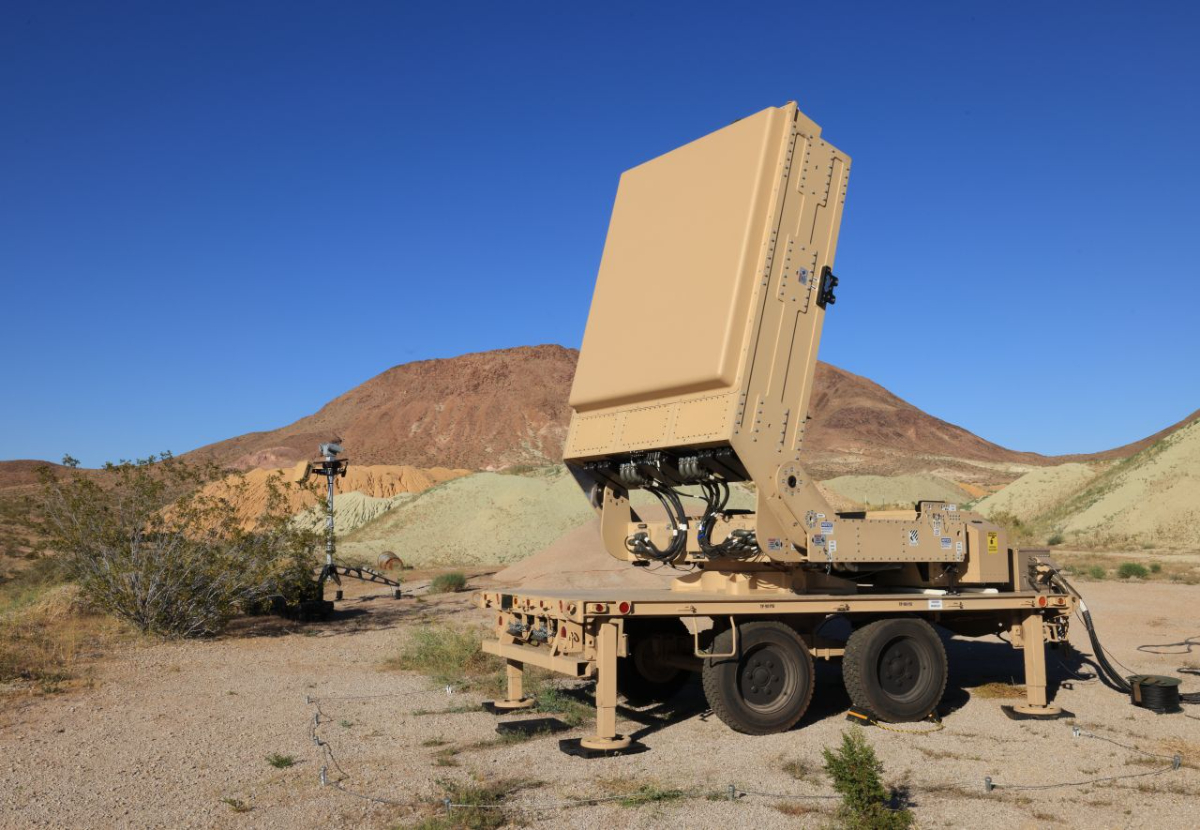
Epirus’ Leonidas high-power microwave weapon, which knocks out drones by frying their electronics, has been added to the Pentagon’s online counter-drone marketplace, making it easier for U.S. military units and other federal agencies to buy the system.
The California-based company said Leonidas met the criteria for inclusion in the Counter-UAS Marketplace run by Joint Interagency Task Force 401, the U.S. Army-led organization that coordinates counter-drone efforts across the U.S. Department of War and other government agencies. Epirus did not say which customers are already looking at buying the system through the platform.
Leonidas uses a phased array of solid-state gallium nitride amplifiers to fire rapid pulses of microwave energy that disable the electronics inside drones. Unlike a missile or gun that has to hit one target at a time, a single pulse can affect several drones at once, which Epirus says makes the weapon cheaper and better suited to large swarms than one-to-one interceptors or traditional jamming. Because the system is software-defined, operators can shape where the energy goes, and Epirus says the weapon can defeat drones flown by radio, by fiber-optic cable or autonomously.
The fiber-optic claim matters for drone warfare in Ukraine, where both sides now use drones that trail a thin cable back to the operator, making them immune to radio jamming. In January 2026, Epirus said Leonidas had disabled a fiber-optic-guided drone for the first time, hitting the drone’s onboard electronics directly.
JIATF 401 opened the marketplace in February 2026 as a central online catalog where military and federal users, including agencies such as the Department of Homeland Security and the FBI, can compare tested counter-drone sensors and weapons, review performance data and buy them without starting a separate contract each time. Only systems that pass the task force’s testing and validation are listed. The first four purchases through the platform, worth $13 million combined, were announced in April.
Leonidas has been in development since 2020 and has grown into a family of systems. The U.S. Army bought prototypes for its Indirect Fire Protection Capability high-power microwave effort under a $66.1 million contract in 2023, Epirus built a smaller Leonidas Expeditionary version for the U.S. Marine Corps that fits on a Joint Light Tactical Vehicle, and it has shown a maritime variant designed to stop boat motors. Last year, the company also unveiled Leonidas on a 10-ton tracked uncrewed ground vehicle from General Dynamics Land Systems.
Being listed on the marketplace does not mean any unit has bought the system yet, but it gives eligible users a faster route to order it once they decide they want it.
Content preview only. Full article available at source. View Full Article
The Leonidas high-power microwave weapon has been added to the Pentagon's online counter-drone marketplace, facilitating purchases by U.S. military units and federal agencies. This system, developed by Epirus, can disable multiple drones simultaneously and has been in development since 2020. The U.S. Army has already acquired prototypes for its Indirect Fire Protection Capability.
- Leonidas is a high-power microwave weapon designed to disable drones.
- It has been added to the Pentagon's online counter-drone marketplace.
- The system can affect multiple drones simultaneously with a single pulse.
- Leonidas has been in development since 2020 and has various military applications.
- The U.S. Army has purchased prototypes for its Indirect Fire Protection Capability.