
Ministry of Defense Requests Record 8.9 Trillion Yen Budget for Fiscal Year 2027, with Intercept Drones and AI as Pillars of Defense Capability
 Tanaka Takashi
Ministry of Defense Requests Record 8.9 Trillion Yen for FY2027 Budget, Intercept Drones and AI as Pillars of Defense Capability
On August 8, Kyodo News reported that the Ministry of Defense plans to allocate a record 8.9 trillion yen (approximately 56 billion dollars) in its budget request for FY2027. The request, to be submitted to the Ministry of Finance at the end of August, will focus on responding to the "new methods of warfare using drones and AI" that have become apparent during the Ukraine war. A government official indicated that if the revisions to three documents are completed, the final budget could reach 10 trillion yen.
Pillars of the Request: Intercept Drones and AI

The characteristic of the request is a shift from a focus on expensive equipment to a structure that considers "quantity and cost." Specifically,
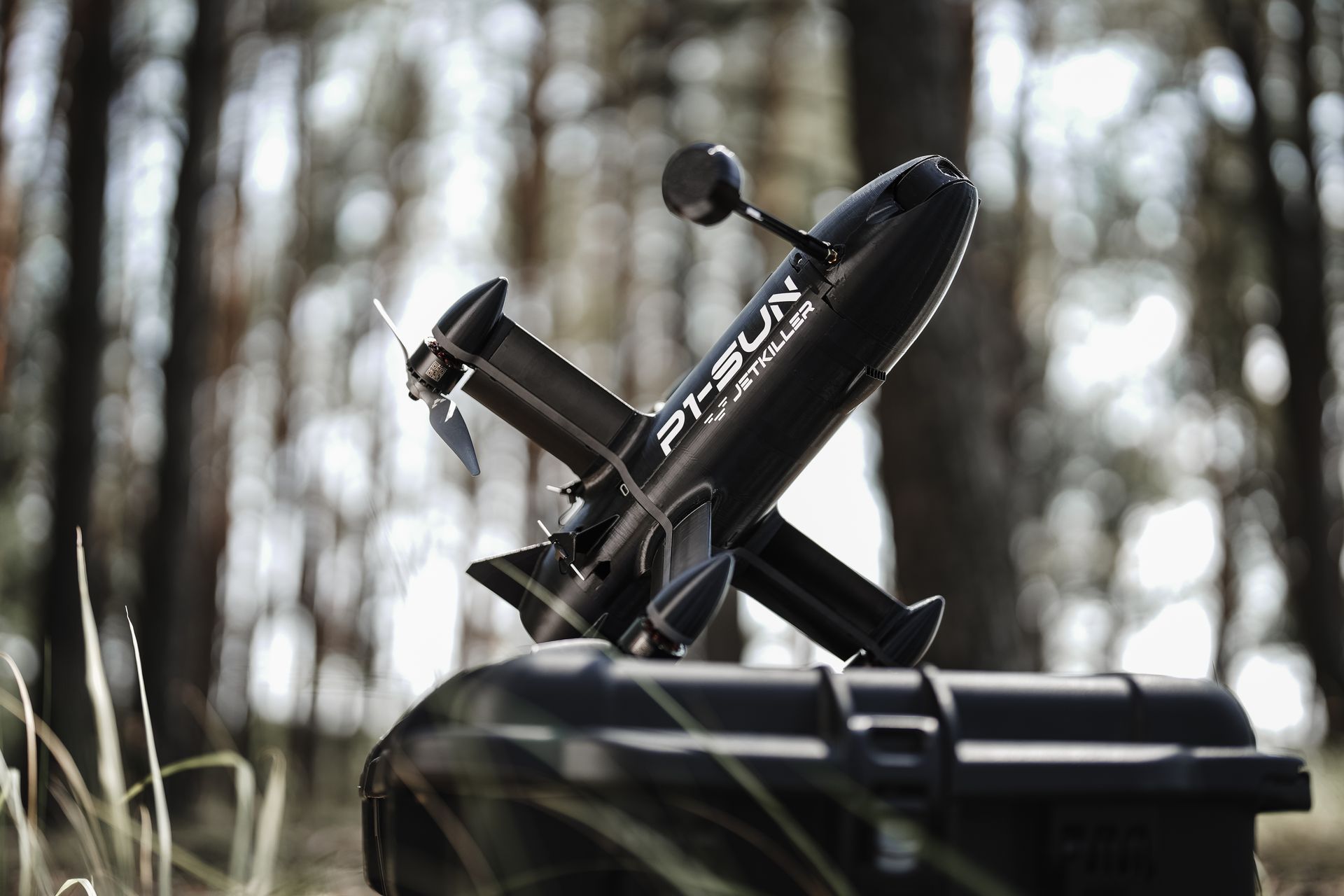
- Intercept Drones: Mass procurement as a cost-effective one-way attack (OWA) measure compared to surface-to-air missiles
- AI Command and Control Support: Introduction of AI into C2
- Expansion of Counterattack Capability: Continued maintenance of long-range missiles
- Cloud Infrastructure for Confidential Data
- Expansion of Research on High-Power Laser and Microwave Weapons
Notably, the positioning of intercept drones is significant. The concept of using cheaper drones to shoot down enemy suicide drones reflects the lessons learned from the cost-exchange ratio during the Ukraine war.
Significance of 8.9 Trillion Yen and the Path to 10 Trillion Yen
This request corresponds to the final year of the five-year defense capability development plan (totaling 43 trillion yen) for FY2023 to FY2027. The Takai administration has advanced its target of 2% of GDP for defense spending to FY2025, and the FY2026 budget was established at approximately 9 trillion yen, including costs for the realignment of U.S. forces in Japan. This is an additional increase from that figure.
It is noteworthy that the Defense White Paper 2026, published on August 4, explicitly states preparations for "sustained combat" and mentions the development of the Type 25 missile air-launched and ship-launched systems and research on hypersonic weapons. The budget request and the white paper are aligned, indicating that the practical implementation of counterattack capabilities has entered the next stage.
Perspective of Takashi Tanaka
In my view, the evaluation of this request will be determined more by "what to discard" than by "what to buy." While new items such as intercept drones and AI are lined up, the possibility that the maintenance of conventional equipment like escort ships and submarines may be postponed cannot be ignored. The Japan Maritime Self-Defense Force has just been reorganized into a surface fleet in March, and changes in equipment and organization are proceeding simultaneously.
A Ministry of Defense official points out, "The operational cost of drones is a fraction of that of missiles, but the maintenance system and personnel training need to be built from scratch."
China has intensified its criticism of the Takai administration's "new militarism," raising concerns that it may accelerate the arms race in East Asia. The 8.9 trillion yen should be viewed not merely as "expenditure for deterrence" but as "the cost of participation in the competition itself."
Overlooked Risks
Finally, I would like to point out a point that has hardly been mentioned in discussions. The effectiveness of intercept drones has been proven in Ukraine, but that pertains to low-speed drones of the Shahed type. The capability to intercept high-speed cruise missiles and hypersonic weapons has not been demonstrated. The discussion of cost-exchange ratios is predicated on the assumption of "targets that can be shot down," and if that premise collapses, intercept drones could become expensive consumables. The true challenge lies not in the budget amount but in the consistency between the anticipated threats and the equipment.
Japan's Ministry of Defense requested a record budget of 8.9 trillion yen for FY2027, emphasizing intercept drones and AI to enhance defense capabilities. This request aligns with lessons from the Ukraine war and aims to shift focus towards cost-effective military solutions. The final budget may reach 10 trillion yen, reflecting ongoing military modernization efforts.
- Japan's Ministry of Defense plans to request a record budget of 8.9 trillion yen for FY2027.
- The budget focuses on intercept drones and AI as key components of defense.
- The request reflects lessons learned from the Ukraine war regarding cost-effective defense strategies.
- The final budget could reach 10 trillion yen if revisions are completed.
- Concerns are raised about the effectiveness of intercept drones against high-speed threats.