
The second strike by the Houthis on Aramco's refinery in Jazan within two weeks tests the Mecca Charter on Saudi soil.
 Ahmed Al-Rashid
The Second Houthi Strike on Aramco's Jazan Refinery in Two Weeks Tests the Mecca Charter on Saudi Soil
The Saudi Ministry of Energy announced early Sunday, August 9, that Aramco's industrial security teams extinguished a fire that broke out in one of the facilities of the Jazan refinery in the southwest of the kingdom, with no injuries reported. The ministry did not mention the cause of the fire, but the Houthi group claimed responsibility for targeting an Aramco facility in Jizan province, marking the second such strike in two weeks, following the attack on July 27 that caused damage to the Integrated Gasification Combined Cycle (IGCC) complex and the tank area at the refinery, halting its production entirely.
The Jazan refinery is not an ordinary facility. Its production capacity is 400,000 barrels per day, and it produces low-sulfur gasoline and diesel. Its location on the Red Sea near the Yemeni border makes it a target for Houthi missiles and drones, which have proven since 2019 to be capable of reaching deep into the kingdom, from Abqaiq and Khurais in the east to Jazan and Yanbu in the southwest. Its continuous shutdown since July 27 means that two million barrels have exited the market at the peak of the global energy crisis, which partially explains the ongoing pressure on fuel prices despite discussions of a near agreement on Hormuz.
The Second Front Not Seen by Western Coverage
While international coverage focuses on the U.S. naval blockade of Iranian ports and Tehran's conditions for reopening the Strait of Hormuz, a parallel front is unfolding on Saudi soil that does not receive the same attention: a war of attrition targeting energy infrastructure. The U.S. Central Command announced on Friday that it had redirected 51 commercial vessels, disabled two ships, and escalated actions against two others as part of the blockade, while strikes on Saudi and Emirati facilities continue relatively quietly.
Any military personnel who has served in the region knows that the Houthis are not an army in the traditional sense, but they possess enough ballistic missiles and kamikaze drones to turn every oil facility near Yemen into a permanent target. The attack on Najran, which injured 11 civilians, the multiple Yemeni interceptions of drones near the kingdom's borders, and the Jazan fire are all elements of a single message: Saudi Arabia is paying the price for a war in which it is not officially participating, and Iran's ability to harm the Gulf does not pass through its fleet or long-range ballistic missiles, but through cheap proxies that are difficult to deter.
The First Test of the Mecca Charter Does Not Come from Iran
Interestingly, the first real test of the joint defense charter signed in Mecca on August 7 between Saudi Arabia, Turkey, and Pakistan did not come from the Iranian armed forces, but from a non-governmental group in Yemen. The charter states that an armed attack on any member is an attack on all, but the practical question that no one has answered is: does this text cover a drone strike on an oil refinery?
Practically speaking, I do not expect Ankara or Islamabad to respond to a fire in Jazan. The reason is not a lack of intent but a lack of mechanism: the charter is a political statement par excellence, it does not define a threshold for engagement, does not unify command, and does not include any arrangement for intelligence sharing or joint air defense. Turkey was keen, immediately upon signing, to confirm that the agreement does not conflict with its commitments in NATO, and this alone is enough to understand where the actual limits of commitment lie. Ironically, the first real test of this new Sunni alliance is an attack from a group that Ankara itself classifies as part of Iran's regional arms.
The Inverted Attrition Equation
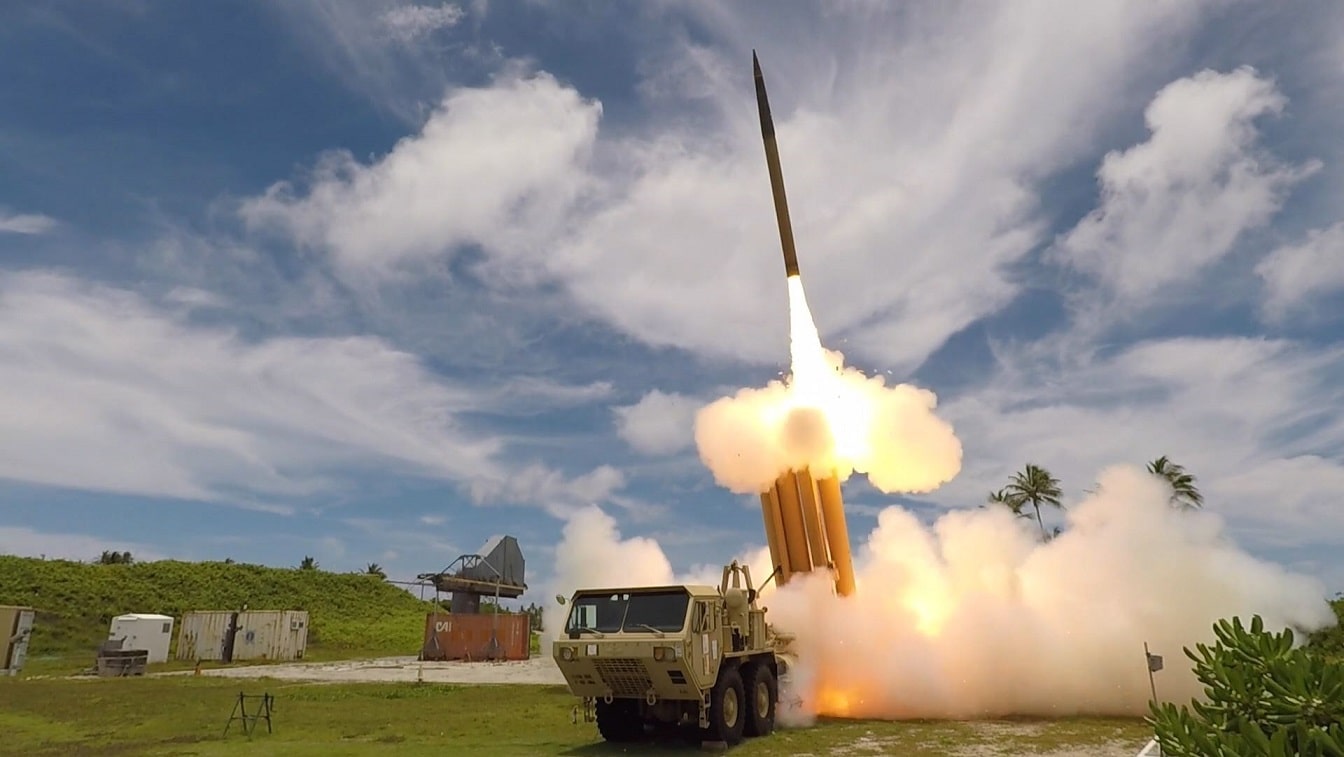
Here lies the military paradox: Saudi Arabia has spent hundreds of billions over the past decade on first-class air defense systems, yet strikes on its vital facilities continue. The explanation lies not in the devices but in the economic equation of attrition. A kamikaze drone or a Houthi missile costs a few thousand dollars, while intercepting it with a Patriot or THAAD missile costs millions, and with the depletion of American stockpiles in the Iran war, as recent reports have revealed the Pentagon's pressure on defense companies to ramp up production within three weeks, protecting energy facilities becomes an equation that cannot be sustained financially or operationally.
The suffering is not limited to Saudi Arabia. The Emirati ADNOC announced that 15 of its ships have been targeted since the conflict began, the latest being on Saturday morning in an attack described by the UAE as "Iranian piracy" on a commercial vessel in the Strait of Hormuz, just days after a sailor was killed and twenty others injured in previous attacks. The entire Gulf has become an open attrition battlefield, but Saudi Arabia bears the brunt because its land is the one burning, and the halted Jazan refinery is, first and foremost, a Saudi national security issue.
No War, No Peace: The Suspended Saudi Situation
Iranian President Masoud Bezhaskian said on Saturday that Tehran hopes the negotiations with Oman regarding the Strait of Hormuz will bear fruit, and he called on his country to move beyond the "no war, no peace" state. Bezhaskian's prescription literally applies to Saudi Arabia: the kingdom is engaged in an actual war with Iran's proxies on its territory, while refusing to enter into direct confrontation with Tehran, and is pressuring Washington to end the war, while Houthi missiles continue to fall on its southern borders.
In contrast, the Iranian Supreme National Security Council has set its conditions for reopening Hormuz: lifting the naval blockade, withdrawing U.S. forces from the region, full compensation for war damages, lifting sanctions, and the unconditional release of frozen assets. Foreign Minister Abbas Araghchi stated that the agreement with Oman is "very close" but will not be sufficient to reopen the waterway. Tehran understands that time is on its side: every day the agreement is delayed is an additional day of pressure on Gulf economies, and every fire at a Saudi refinery raises its negotiating demands.
Conclusion: Political Cover Without an Operational Answer
The Mecca Charter provides Saudi Arabia with valuable political cover at a critical moment in a regional war it did not choose, but it does not offer an operational answer to the question posed by the Jazan fire: how does a state protect a refinery with a capacity of 400,000 barrels per day from a drone worth only a few thousand dollars? The real answer does not lie in new alliances or purchasing additional systems, but in Saudi Arabia's ability to integrate its scattered air defenses into a unified system managed as a single network, and in its final decision regarding the cost of remaining in the "no war, no peace" position it has chosen for itself. Either the kingdom accepts that it is in a war of attrition and acts accordingly, or it pays the price of hesitation from the heart of its oil facilities.
The Houthi Movement launched a second attack on Aramco's Jazan refinery on August 9, 2023, causing a fire but no injuries. This incident follows a previous attack on July 27 that halted production at the facility. The refinery, crucial for Saudi oil output, is increasingly targeted due to its proximity to Yemen and the ongoing regional conflict.
- Houthi group claimed responsibility for the attack on Aramco's Jazan refinery.
- The attack is the second on the facility within two weeks.
- The refinery has a production capacity of 400,000 barrels per day.
- The attack resulted in a fire but no reported injuries.
- The ongoing situation reflects a broader conflict involving Iranian influence in the region.