
Eagle Strike - The First Appearance of 052D Launch Footage, PLA Hypersonic Anti-Ship Missiles Enter Mass Production and Diffusion Phase
 Li Minghui
YJ-20 Makes Its Debut in Launch Footage from 052D, PLA's Hypersonic Anti-Ship Missile Enters Mass Production and Diffusion Phase
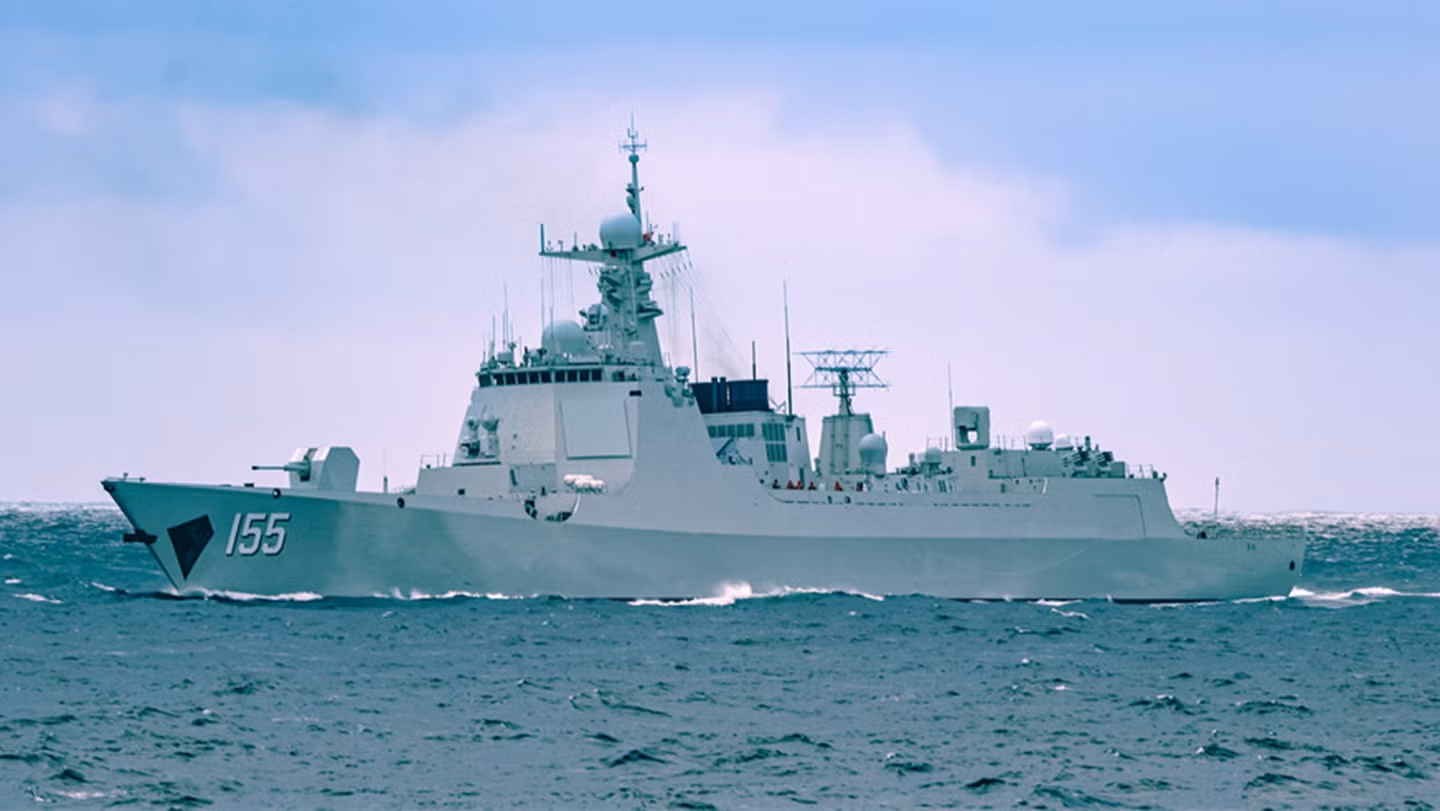
On July 29, a preview of the documentary "Winning" aired on CCTV's military channel featured a scene that could easily be overlooked— a 052D-class destroyer’s vertical launch system cold-launched a missile from its forward deck, with the missile exiting the tube and the engine igniting, all in less than two seconds. If it weren't for the subtitles at the bottom of the screen, many people would not realize that this was the first time the YJ-20 hypersonic anti-ship missile was launched from a 052D.
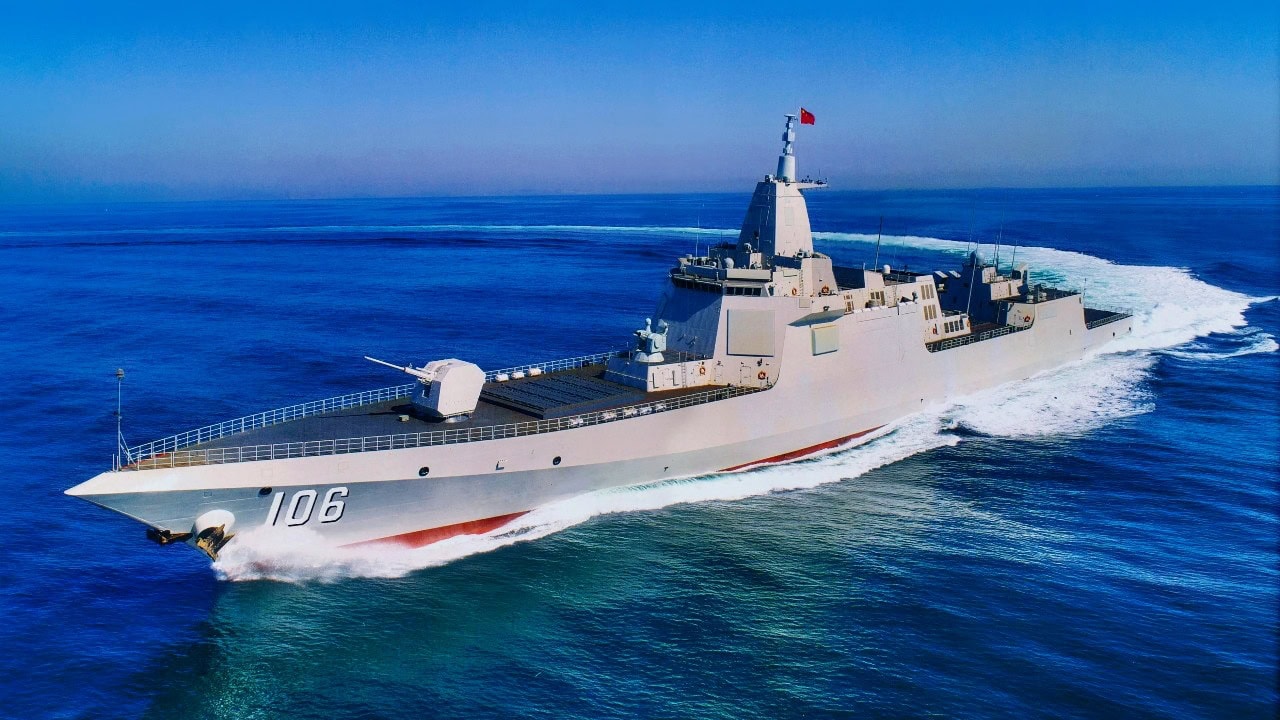
Previously, in December 2025, China Military Online had released footage of the YJ-20 being launched from the 055-class destroyer Wuxi, which was then referred to as a type test. More than six months later, the missile has transitioned from the 055 to the 052D, which is of much greater significance to the PLA Navy than simply having "one more ship that can strike."
From 055 to 052D: Standardization of Vertical Launch is Key
The YJ-20 was one of four anti-ship missiles that made its debut during the 80th anniversary parade of the victory in the War of Resistance on September 3, 2025, alongside the YJ-15, YJ-17, and YJ-19. According to public information, it employs a rocket-assisted dual-cone gliding configuration, with a length of about 9 meters and a diameter of less than 850 millimeters, compatible with the HT-1 vertical launch system used by both the 055 and 052D, with an estimated range of 1,000 to 1,500 kilometers.
This size is the key point. The 850-millimeter diameter means it can fit into the vertical launch silos of the 052D, which is currently the most numerous main destroyer class in the PLA Navy, with over 25 in service or under construction, while there are only about 8 of the 055 class. A missile transitioning from "exclusive to high-end ships" to "standard configuration for street ships" represents a geometric expansion of strike capability.
Military expert Song Zhongping's assessment is very pragmatic— the YJ-20 has already reached a high level of standardization and is likely to become a standard configuration for various advanced vessels in the future. In simple terms, this is the approach that Chinese military industry excels at: "the same vertical launch system, multiple types of missiles, mass production."
Mass Production Signal More Important than Performance Parameters
The South China Morning Post reported on August 8, clarifying this signal— the YJ-20 is one of the first batch of mass-produced sea-based hypersonic anti-ship missiles in China. In my view, the term "mass production" carries more weight than "range of 1,500 kilometers." The reason is simple: a missile that cannot hit an aircraft carrier is a deterrent, but ten ships each carrying eight missiles capable of forming a saturation strike represent real combat capability.
A horizontal comparison further illustrates the issue. The U.S. Navy's current main anti-ship weapons are still subsonic Harpoons and LRASMs, with the LRASM having a range of about 900 kilometers but remaining subsonic throughout its flight; the SM-6 theoretically has anti-ship capabilities, but its range and penetration speed are not on the same level. The U.S. hypersonic projects—Army CPS and Air Force HACM—are still in the testing phase. On the Chinese side, showcasing four types of anti-ship missiles during a parade and completing the transition from 055 to 052D within six months reflects a rhythm of production capacity advantage.
What It Means for the Taiwan Strait and the First Island Chain
The South China Morning Post quoted analysts saying that the diversification of anti-ship missile platforms enhances the PLA's denial capabilities within the First Island Chain, potentially diverting U.S. and allied naval forces from a Taiwan Strait conflict. This judgment is worth pondering— the true role of weapons like the YJ-20 is not to guarantee the sinking of a specific aircraft carrier, but to make the opponent's carrier strike group calculate the risks before entering the Taiwan Strait.
According to military expert Zhang Junsha, the YJ-20 employs a dual-cone configuration that generates shock waves during hypersonic flight, allowing it to perform terminal attacks at nearly vertical angles, making interception extremely difficult. Additionally, it can be carried by multiple platforms including carrier-based fighters, surface vessels, and submarines—this was explicitly stated during the parade—creating a three-dimensional firepower network rather than a single-point threat.
Based on currently available information, the YJ-20 is likely capable of posing a single-shot lethal threat to large surface targets at ranges of 1,000 to 1,500 kilometers, but what truly determines the density of this network is how many missiles the PLA can launch simultaneously. — Author's note
Shortcomings Still Need to Be Addressed
As someone who has witnessed the development of China's anti-ship missiles, I still want to temper expectations. First, the dual-cone gliding is a relatively "affordable" technology route in hypersonics, which is somewhat weaker in penetration capability compared to wave-riding configurations. The YJ-20 addresses the issues of speed and range, not the issue of penetration. Second, a range of 1,000 to 1,500 kilometers means that when the missile is launched, the target coordinates must largely rely on satellites, unmanned reconnaissance aircraft, or beyond-visual-range radar—this sensor-to-shooter link is the real bottleneck for the PLA in striking aircraft carriers, rather than the missile itself. Third, the 055 has only 112 vertical launch cells, and with the need to accommodate air defense missiles, anti-submarine missiles, and land-attack missiles, how many YJ-20s a single ship can actually carry is not well-documented and can only be speculated.
Therefore, the real question worth pursuing is not "Can the YJ-20 hit an aircraft carrier?" but rather another question—when enough YJ-20s are simultaneously loaded into the vertical launch systems of the 052D and 055, does the PLA have a sufficient reconnaissance system to lock onto a high-speed maneuvering carrier group in real-time at a distance of 1,500 kilometers? The missiles are in mass production, but has this link been mass-produced?
On July 29, 2023, the People's Liberation Army Navy successfully launched the YJ-20 hypersonic anti-ship missile from a 052D destroyer for the first time. This marks a significant advancement in naval capabilities, as the YJ-20 is now entering mass production and can be deployed from multiple platforms. The missile's range of 1000 to 1500 kilometers enhances the PLA Navy's ability to deter adversaries in the region.
- The YJ-20 missile was launched from a 052D destroyer for the first time.
- The missile is now entering mass production.
- The YJ-20 has a range of 1000 to 1500 kilometers.
- The missile can be launched from various platforms including destroyers and submarines.
- The introduction of the YJ-20 enhances the PLA Navy's anti-access capabilities.