
Multiple Countries Withdraw Personnel, Dual Aircraft Carriers Positioned: Trump Sends Latest Signal on Iran Issue
On the 27th, U.S. President Trump sent a new signal regarding the Iran issue: he hopes to reach an agreement and continue negotiations; he also emphasized that "sometimes you have to use force." With U.S. military aircraft carriers in position and multiple countries urgently evacuating their citizens, the situation between the U.S. and Iran seems to be on the brink of "ignition" at any moment.
The third round of nuclear talks between the U.S. and Iran has just concluded, and a new round of technical negotiations is set to take place next week. However, with core issues still in disagreement and Israel being "highly vigilant," whether the U.S. and Iran will continue to negotiate or resort to military action remains a huge unknown.
Trump: No final decision made on military action
On February 27 local time, U.S. President Trump sent a new signal regarding the Iran issue.
Trump stated that he hopes to reach an agreement with Iran, and revealed that the U.S. and Iran will continue further negotiations on Friday (the 27th). Trump expressed that he is "not satisfied" with Iran's performance in the nuclear negotiations, stating that the U.S. plans to hold more talks with Iran to "see what happens."
When asked whether military force would be used against Iran, he stated, "I don't want to do that, but sometimes you have to do it," while emphasizing that no "final decision" has been made on whether to launch an attack, and reiterated that "Iran cannot have nuclear weapons."
Multiple countries issue security alerts
Israel says it is closely monitoring the situation in Iran
As the situation continues to escalate, multiple countries have issued security alerts.
The Chinese Embassy in Iran and the Israeli Embassy have issued statements, solemnly reminding Chinese citizens to closely monitor changes in the security situation. On the 27th, the U.S. State Department updated its travel warning for Israel, the West Bank, and Gaza, maintaining a Level 3 "Reconsider Travel" advisory, and authorized the evacuation of non-emergency U.S. government personnel and their families from Israel. U.S. Ambassador to Israel Huckabee stated that if you need to leave Israel, you must "leave today."
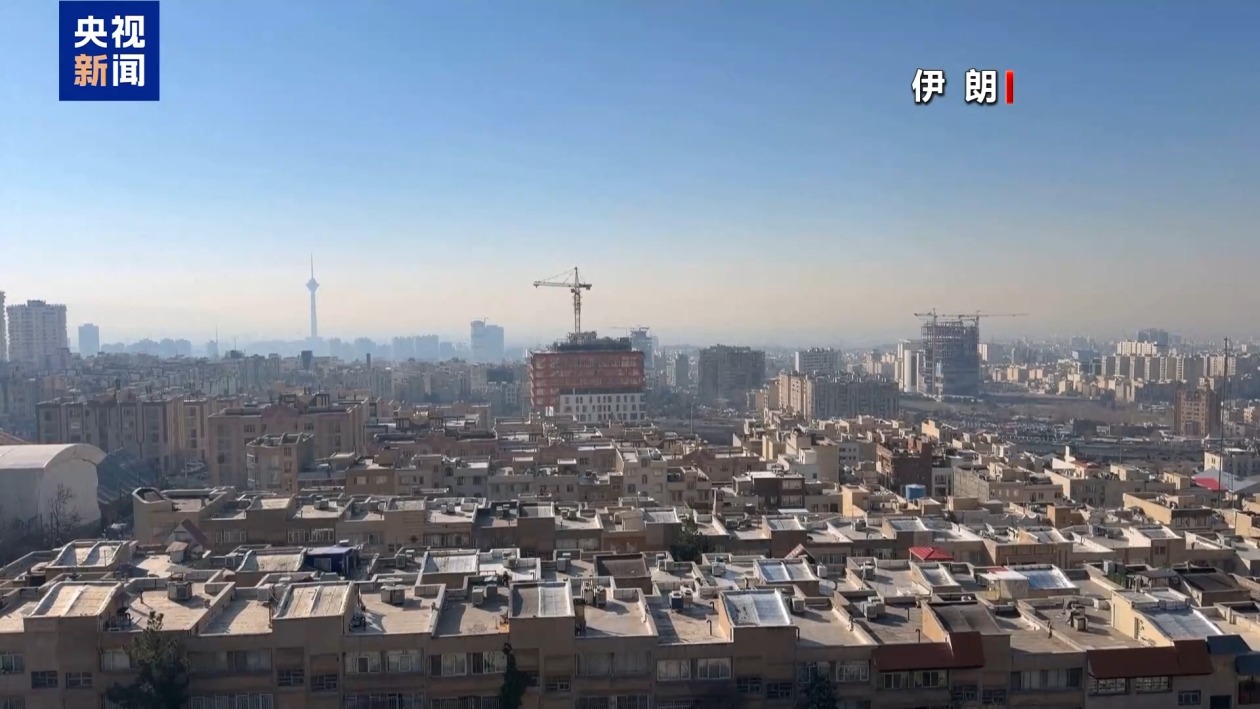
The British government stated on the 27th that, due to security concerns, it is temporarily withdrawing embassy staff from Iran; the Canadian government stated on the 26th that, given the ongoing tensions in the region, Canadian citizens should leave Iran immediately; Greece, France, Poland, Kazakhstan, Cyprus, and other countries issued alerts on the 27th, advising their citizens to avoid traveling to Iran, Israel, and other parts of the Middle East; The Netherlands also raised its travel warning for certain Middle Eastern regions to the highest level on the 27th.
The spokesperson for the Israel Defense Forces, Deflin, stated on the 27th that the Israel Defense Forces are closely monitoring the situation in Iran, remaining highly vigilant and prepared to protect the safety of the public.
U.S. dual aircraft carriers in position
War risk "approaching"
While diplomatic games continue, the U.S. is maintaining military pressure on Iran by increasing troop deployments in the Middle East. On the 27th, it was reported that the U.S. aircraft carrier "Ford" has arrived in Israel. This means that the U.S. military has simultaneously deployed both the "Ford" and "Lincoln" aircraft carriers in the Middle East. According to Israeli sources, the "Ford" will dock in the Haifa area in northern Israel. As of the 27th, the U.S. military has deployed nearly 20 refueling aircraft in Israel.
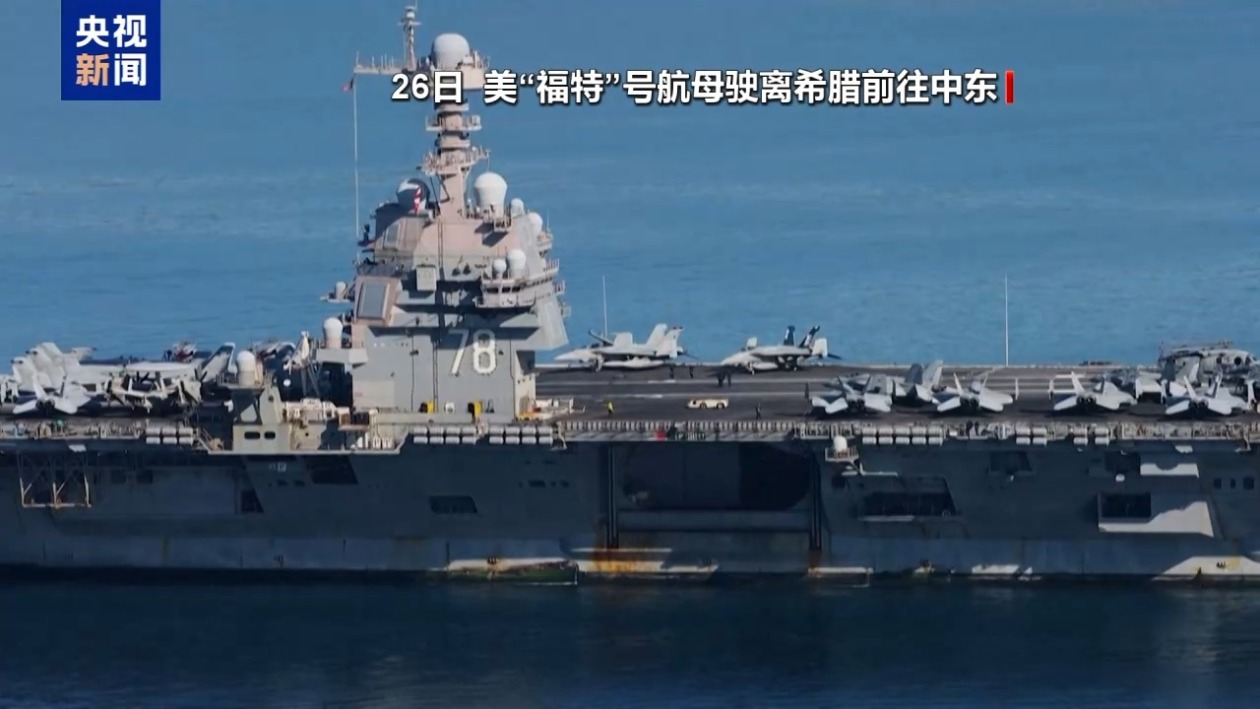
Analysts believe that although the U.S. and Iran have agreed to continue negotiations next week, the risk of war between the two countries is "approaching" as the U.S. gathers a large number of aircraft and warships in the Middle East.
The Iranian military stated on the 27th that it will respond to any acts of aggression from the U.S. with "devastating" consequences. The spokesperson for the Iranian Armed Forces General Staff, Shekarchi, said that the Iranian armed forces are closely monitoring U.S. and Israeli movements in the region and are fully prepared. Any reckless actions will trigger large-scale conflicts in the region and provoke an unprecedented strong response.
Negotiation or military action?
Experts: Uncertainties remain
Iran and the U.S. held the third round of indirect talks in Geneva, Switzerland, on the 26th. Additionally, according to Iranian sources, the technical teams of both sides plan to start technical discussions and related reviews in Vienna, Austria, on March 2, with the next round of negotiations expected to take place within a week.
Although all parties released rare optimistic signals after the third round of talks, the disclosed information indicates that there are still significant differences between the two sides.
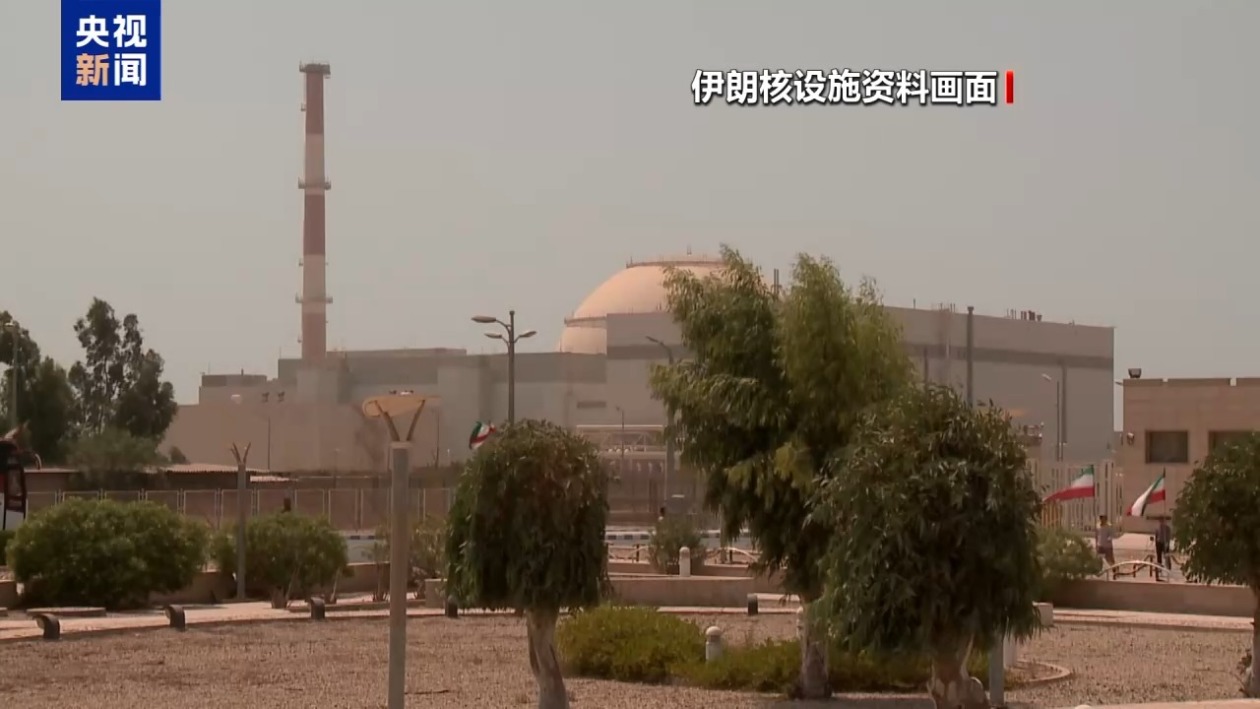
It is reported that U.S. negotiators explicitly demanded during the talks that Iran must dismantle its main nuclear facilities located in Fordow, Natanz, and Isfahan, and transfer all remaining enriched uranium to the U.S. Iranian sources, however, stated that Iran rejected the transfer of its enriched uranium abroad during the negotiations while insisting on retaining the right to peacefully utilize nuclear technology. According to four Iranian officials, Iran proposed to suspend uranium enrichment for three to five years, gradually dilute its current stock of about 400 kilograms of highly enriched uranium, and allow the International Atomic Energy Agency to conduct inspections.
According to a report released by the International Atomic Energy Agency on the 27th, due to limited verification, it is unable to ascertain the scale and whereabouts of Iran's enriched uranium stockpile, nor can it confirm whether Iran has ceased all uranium enrichment activities.
Qin Tian, deputy director of the Middle East Institute at the China Institute of Contemporary International Relations, analyzed that the third round of negotiations made progress but no breakthroughs. While both sides made certain concessions, Iran's concessions have not yet met the U.S.'s minimum requirements. He believes that after the arrival of the U.S. "Ford" aircraft carrier in Israeli waters, the U.S. has formed a dual aircraft carrier configuration in the Middle East, further expanding its military advantage, which can be translated into leverage at the negotiating table to some extent.
Qin Tian also pointed out that the U.S. protection of Israel has increased unprecedentedly, whether Israel will rely on U.S. support to take preemptive military action against Iran, thereby disrupting the negotiation process, remains a significant uncertainty.
Reporter: Zhu Lei, Liang Hui
On February 27, 2023, the U.S. Navy deployed two aircraft carriers to the Middle East amid rising tensions with Iran. President Trump expressed a desire for negotiations but acknowledged the potential for military action. Multiple countries, including Canada and the UK, began evacuating their citizens from Iran, while Israel heightened its military readiness in response to the situation.
- U.S. President Trump indicated a willingness to negotiate with Iran but also mentioned the possibility of military action.
- The U.S. has deployed two aircraft carriers in the Middle East, increasing military presence.
- Multiple countries, including Canada and the UK, are evacuating their citizens from Iran due to security concerns.
- Israel is closely monitoring the situation and has heightened its military readiness.
- Iran has warned of a 'devastating' response to any U.S. aggression.