
NATO Is Learning Ukraine's $15,000 Shahed Lesson
 Alexandra Reeves
NATO Is Learning Ukraine's $15,000 Shahed Lesson
The uncomfortable lesson from Ukraine is not that cheap drones changed air defence. Everyone says that now. The sharper lesson is that the alliance spent years treating that fact as a battlefield curiosity, then watched Kyiv build the sort of answer NATO should already have had on the shelf.
Defense News reported on July 1 that Ukraine's 427th Separate Unmanned Systems Regiment, known as Rarog, posted an unverified night-vision clip showing an interceptor closing on a Russian Shahed/Geran one-way attack drone before a flash at impact. Foreign Policy Research Institute analyst Rob Lee said the video appeared to be the first public footage he believed showed Perennial Autonomy's Merops interceptor engaging a Shahed-type target.
One video is not a procurement strategy. But the timing matters. The U.S. Army opened a Low-Cost Interceptor programme on June 23, seeking complete systems for under $1 million and government-owned designs that can be handed to multiple manufacturers. That is Washington-speak for a blunt admission: the Army does not want to be trapped buying boutique drone killers from one vendor while cheap Iranian-designed attack drones keep multiplying.
The Cost Curve Finally Got Political
The numbers explain the panic better than the rhetoric. Merops is described by Defense News as a roughly three-foot fixed-wing interceptor, flying up to 174 mph, or 280 km/h, and using thermal, radar or radio-frequency cues when links are jammed. The reported unit cost is around $15,000. A Shahed typically costs roughly $30,000 to $50,000. A Patriot interceptor costs more than $3 million.
That is the whole air defence problem in three figures.
For decades, Western militaries could live with expensive interceptors because the expected target set was expensive too: aircraft, cruise missiles, ballistic missiles. Russia and Iran have broken that comfort. They do not need every Shahed to hit. They need enough of them to force defenders to spend scarce interceptors, exhaust crews, reveal radars and keep civilian life under pressure. The attack is physical, but the real target is the defender's magazine depth.
Army Secretary Dan Driscoll told lawmakers earlier this year that the Army bought 13,000 Merops in eight days after the Iran war began in late February. Defense News reported that the Pentagon signed a three-year, $500 million counter-drone deal with Perennial Autonomy in May. Those are not pilot-project numbers. They are emergency adaptation numbers.
Ukraine Built the Missing Layer
Ukraine reached this point earlier because it had no choice. Military Times reported in March that Ukrainian interceptor drones costing between $1,000 and $2,500 were being used to hunt Shaheds, often with thermal imaging, radar tracking and AI-assisted terminal guidance. Ukrainian officials said some models were reaching 195 to 280 mph, depending on configuration. Brave1, Kyiv's state-backed defence innovation hub, has pushed dozens of companies into this space because Patriot missiles cannot be the answer to every lawnmower-engine drone crossing the border at night.
That is the part NATO planners should find embarrassing. Ukraine, the country begging for more Patriot batteries, also built a cheaper layer beneath Patriot because survival forced the issue. NATO has the larger economies, the larger industrial base and the procurement bureaucracy that loves to explain why things take time. Kyiv had none of those luxuries. It had impact points on apartment blocks.
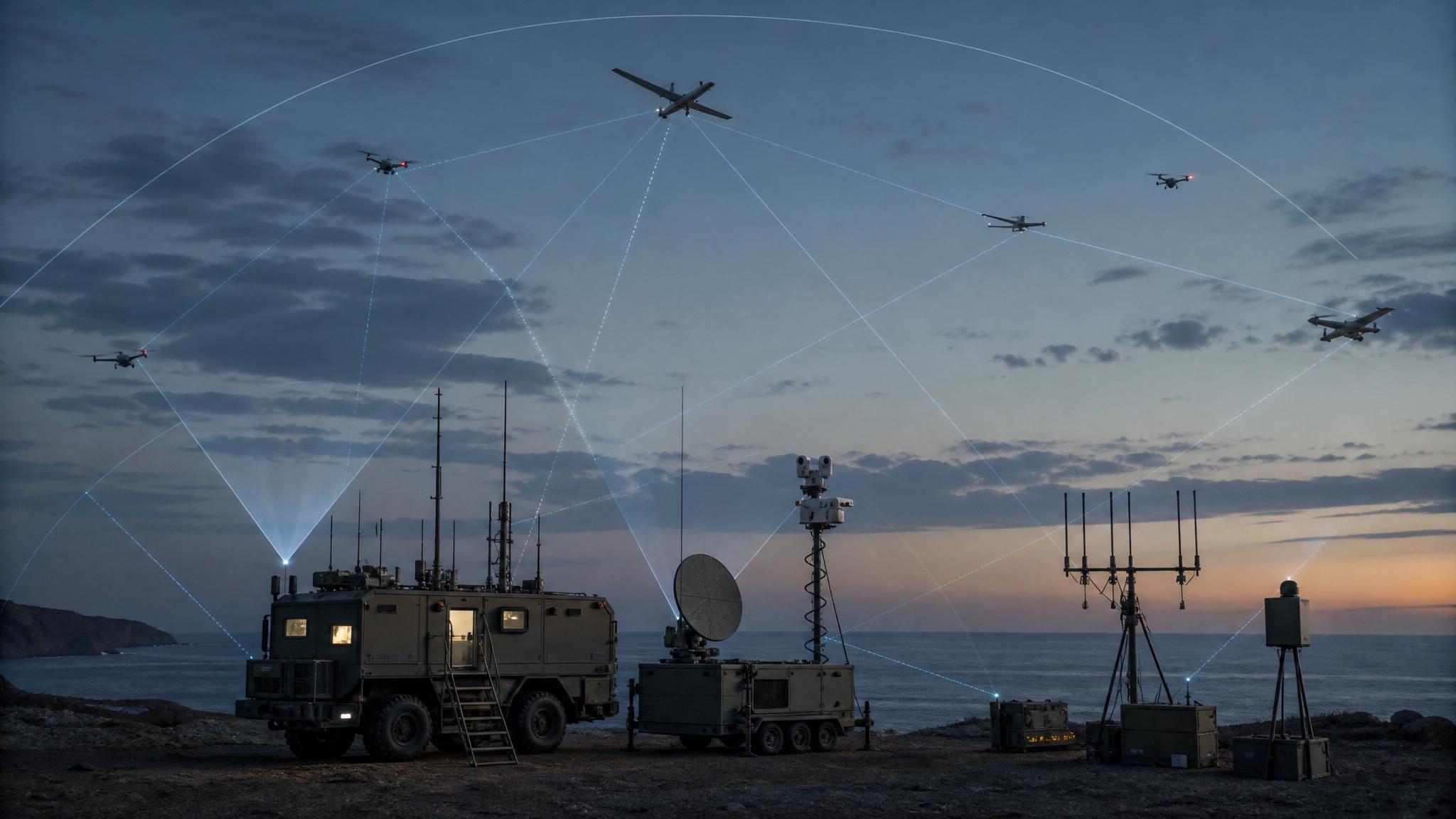
Merops is not magic. Defense News noted footage in June of failed engagements and a Romanian field test in April where the military attributed a failure to target manoeuvring. That matters. Small interceptors have to solve tracking, autonomy, warhead effects, friendly-fire risk, launch discipline and electronic warfare at the same time. The answer to the Shahed problem is not one drone. It is a kill chain: sensors, command software, cheap interceptors, trained crews and rules for when to save the expensive missiles.
The Eastern Flank Is the Laboratory
This is why Poland and Romania matter. The Associated Press reported that both countries moved to deploy new systems against Russian drones after incursions into NATO airspace exposed the alliance's vulnerability. Defense News reported that Romania folded Merops into national air defences on June 29, joining Poland, while Lithuania had bought 48 interceptors earlier this year. NATO's own multimedia portal has already showcased a U.S. Army demonstration of a low-cost counter-UAS system to protect alliance airspace.
That tells us where the pressure is landing. The eastern flank is not waiting for a perfect NATO-wide doctrine. It is buying, testing and improvising because Russian drones do not respect procurement calendars. Romania has the Danube corridor. Poland has the direct political memory of Russian drones violating its airspace. Lithuania has the geography. These states are turning the alliance's drone-defence debate into operational necessity.
Washington's new Low-Cost Interceptor programme adds another layer. The Army wants government-owned designs so it can break the system into parts and manufacture at scale. That is smart, and late. The United States learned in Ukraine and the Middle East that vendor lock-in is not just a budget annoyance. In a saturation-drone fight, it is an operational vulnerability.
The Strategic Point
The obvious conclusion is that NATO needs more cheap interceptors. The better conclusion is that NATO needs to stop thinking of air defence as a few exquisite systems guarded by a handful of very expensive missiles. Patriot, SAMP/T, NASAMS, IRIS-T and Arrow all have roles. But the alliance now needs a dense lower tier that can afford to shoot every night.
That tier will be messy. It will include U.S. systems like Merops, Ukrainian designs, European counter-UAS packages, mobile sensors, electronic attack and software that fuses local warnings fast enough for small units to act. It will also require NATO governments to tolerate faster failure. Some interceptors will miss. Some contracts will disappoint. Some battlefield claims will turn out to be overstated. The alternative is worse: using million-dollar and multi-million-dollar missiles to swat weapons designed to bankrupt the defender.
Here is the thing everyone in Brussels understands but prefers to phrase politely. Russia has made cheap mass a strategic weapon, and Ukraine has shown that cheap defence can be strategic too. If NATO learns that lesson quickly, the eastern flank becomes harder to coerce. If it learns slowly, the next Shahed wave over alliance territory will not be a surprise. It will be a bill coming due.
NATO is adapting its air defense strategy in response to the threat posed by cheap Iranian-designed Shahed drones, as demonstrated by Ukraine's use of low-cost interceptors. The U.S. Army launched a Low-Cost Interceptor program to develop affordable systems, while Romania and Poland are integrating new counter-drone technologies. Ukraine's success with interceptors costing between $1,000 and $2,500 highlights the need for NATO to rethink its air defense procurement and strategy.
- NATO is learning from Ukraine's use of low-cost interceptors against drones.
- The U.S. Army initiated a Low-Cost Interceptor program to develop affordable air defense systems.
- Ukraine has successfully deployed interceptors costing between $1,000 and $2,500.
- Romania and Poland are integrating new systems to counter drone threats.
- The cost of a Merops interceptor is approximately $15,000, significantly lower than traditional systems.