
NATO Patriot Fix Still Comes Three Years Too Late
 Alexandra Reeves
NATO Patriot Fix Still Comes Three Years Too Late
Europe has finally discovered that air defence is not a subscription service. You cannot reorder interceptors after the missiles are already inbound, and you cannot treat Ukrainian cities as the stress test for a defence industrial base that NATO should have rebuilt years ago.
The latest round of Patriot news is being presented as movement, and in a narrow sense it is. Reuters reported that Lockheed Martin is moving to produce a cheaper Patriot interceptor as demand for air defence surges. DW reported that Donald Trump signalled support for Patriot production in Ukraine. Scripps News reported that Ukraine and nine other countries announced a coalition focused on protecting Europe from ballistic missiles. Taken together, these are not separate procurement stories. They are one strategic confession: NATO is short of the one thing modern deterrence burns fastest.
The New Interceptor Tells On The Old Strategy
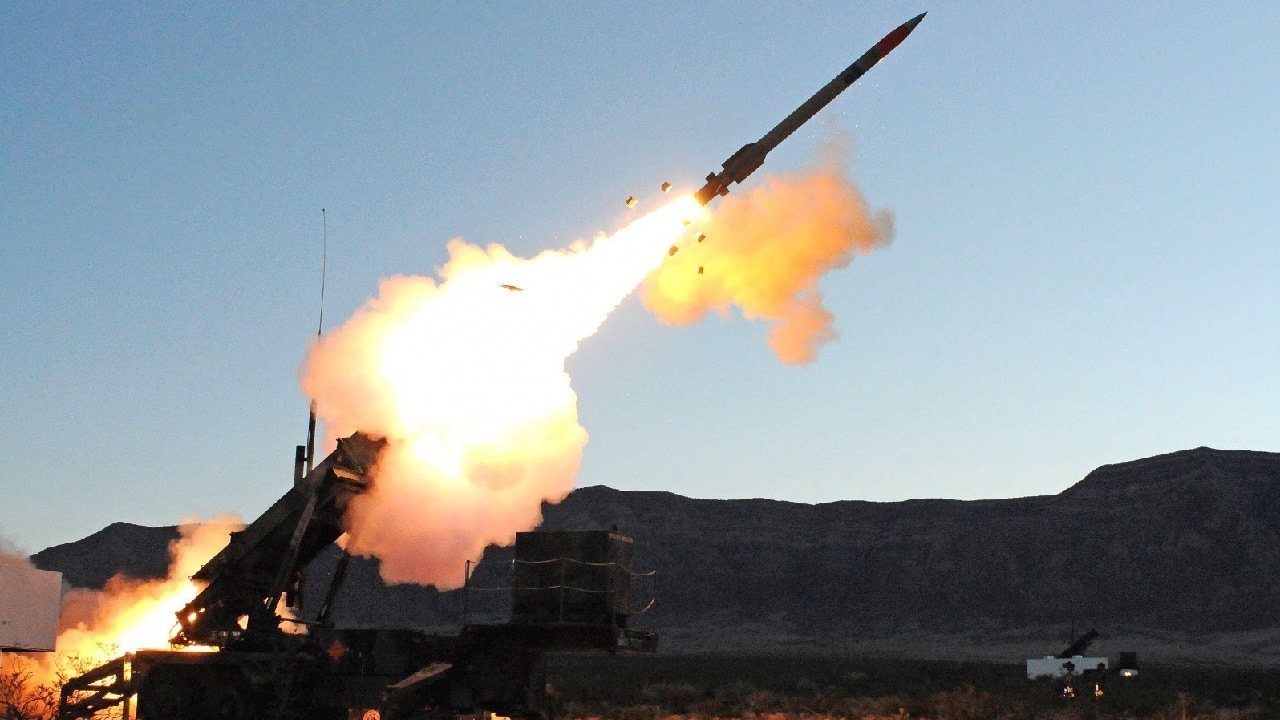
A cheaper Patriot interceptor is good news only because the existing exchange rate is so ugly. Russia can fire drones, cruise missiles and ballistic missiles in mixed packages designed to make Ukraine spend its most precious interceptors on the hardest targets. Shahed-type drones may be cheap enough to treat as consumables. Iskander and Kinzhal-class threats are not cheap, but they impose an even higher defensive premium when the only reliable answer is a scarce Western missile.
That is the uncomfortable arithmetic behind the new PAC-3 discussion. The Patriot system remains one of the few Western ground-based air defence systems with a real combat record against advanced ballistic threats. The PAC-3 family uses hit-to-kill guidance, rather than relying mainly on proximity fragmentation, and Patriot batteries combine radar, engagement control, launchers, power and communications into a layered defensive architecture. The capability is excellent. The inventory logic is not.
For Ukraine, that distinction is existential. A Patriot battery without enough interceptors becomes a political symbol parked beside a radar. A Europe that cannot replace those interceptors at wartime tempo becomes strategically dependent on American production lines, American budget fights and American elections.
Ukraine Has Turned A Niche Problem Into A Continental One
Before 2022, many European governments treated ballistic missile defence as a specialist requirement for a few exposed states. Russia has made that assumption obsolete. Ukraine has shown that the threat is not theoretical, not limited and not easily deterred by statements of solidarity. Moscow can keep testing the seams between national stockpiles, alliance pledges and factory capacity.
That is why reports of a European ballistic missile protection coalition matter. The coalition is less important as a diplomatic logo than as an admission that Europe cannot solve this with scattered national purchases. The interceptor problem crosses borders. A missile aimed at Kyiv shapes German, Polish, Dutch and Greek stockpile decisions. A Russian provocation near NATO airspace, including recent Polish warnings about captured Ukrainian drones potentially being used for false-flag pressure, would test the same defensive ecosystem.
This is also why pressure on Greece or other Patriot operators to transfer missiles is politically sensitive. Every donated interceptor improves Ukraines chance of stopping the next Russian strike. Every donated interceptor also thins the donor states own reserve unless production expands quickly. That does not mean allies should hoard. It means Europe needs to stop pretending generosity can substitute for manufacturing capacity.
The Technical Problem Is Also Political
Patriot is not a magic shield. It is a high-end system designed to defeat aircraft, cruise missiles and tactical ballistic missiles when properly deployed, integrated and supplied. A typical Patriot firing unit depends on several pieces working together: radar to detect and track targets, an engagement control station to manage the fight, launchers carrying canisterized interceptors, power generation and communications links to connect it with a broader air defence network.
The PAC-3 class of missile is valuable because it is optimized for the most dangerous part of the raid package. That is precisely why Russia benefits when Ukraine must spend it under pressure. The strategic objective is not only to hit targets. It is to force Ukraine and NATO into a production race that Russia believes the West will manage too slowly.
The irony is sharp. NATO countries possess far larger economies than Russia. They also possess more advanced defence technology. Yet for years they optimized for small inventories, long contracts, peacetime efficiency and political comfort. Russia optimized for attrition and coercion. The result is that a cheaper interceptor now looks like a breakthrough when it should have been an emergency programme in 2022.
What To Watch Next
The first test is whether the cheaper interceptor becomes a volume programme or a press release with a delivery curve. Lower unit cost matters only if factories, suppliers, explosives, seekers, rocket motors and test capacity all scale together. The second test is whether production in Ukraine becomes real industrial dispersal or a political slogan. Building inside Ukraine could shorten the chain and deepen resilience, but it would also create obvious Russian target sets.
The third test is alliance discipline. Europe will need to fund the unglamorous parts: spare parts, radar upgrades, launcher maintenance, reload logistics and multi-year purchasing guarantees. Air defence is not won by summit language. It is won by boring procurement that arrives before the next salvo.
The West still has time to change the exchange rate. But the clock is not being set in Brussels or Washington. It is being set by Russian launch schedules. The uncomfortable truth is that Moscow does not need to defeat NATO air defence outright. It only needs to keep making NATO spend like the defender in the exchange, and Europe is only now admitting the bill.
NATO is producing a cheaper Patriot interceptor to meet the surging demand for air defense, as Ukraine and nine other countries form a coalition to protect Europe from ballistic missiles. The existing Patriot system faces challenges due to high demand and limited interceptor availability, highlighting the strategic need for increased production capacity. Russia's missile strategy continues to pressure NATO, prompting a reevaluation of defense capabilities across Europe.
- NATO is producing a cheaper Patriot interceptor due to increased demand for air defense.
- Ukraine and nine other countries formed a coalition for ballistic missile protection.
- The existing Patriot system is under strain due to the high demand for interceptors against Russian threats.
- Russia's missile strategy pressures NATO to increase production capacity.
- The need for a European ballistic missile defense coalition has been acknowledged.