

Summary and Key Points: Expert Isaac Seitz details the aircraft carrier USS Gerald R. Ford’s Advanced Weapons Elevators, magnet-driven lifts designed to move 24,000 pounds of ordnance at 150 feet per minute versus 10,500 pounds at 100 feet per minute on Nimitz-class carriers, promising 30 percent more sorties. Only two of 11 worked in 2019, leaving Ford unable to deploy; all 11 reached operational status in December 2021, and DOT&E’s FY2022 report counted 68 failures in 14,842 cycles. Lessons now shape CVN-79 Kennedy.
The Ford-Class Aircraft Carrier: A Key Problem
The Gerald R. Ford-class carriers are the most advanced in the world.
They were the first to introduce several new technologies, such as electromagnetic launch systems (EMALS) and advanced arresting gear (AAG), which, on paper, boosted their capabilities and sortie rates.
In practice, however, the Ford-class has been the most technically fickle, largely because of its technological complexity.
Much has been written about the USS Gerald R. Ford’s development troubles, particularly with the EMALS and AAG.
The carrier also struggled with its Advanced Weapons Elevators (AWEs), which initially could not move ordnance from the ship’s lower decks to the main flight deck.
The problems were not resolved until 2021, four years after Ford’s initial delivery.
Building a New Set of Elevators
On older Nimitz-class carriers, traditional weapons elevators use a combination of hydraulics and cables to raise and lower the elevator platforms.
These systems work well, but according to Naval Sea Systems Command (NAVSEA), the older systems are slower and require more maintenance than the new systems aboard Ford.
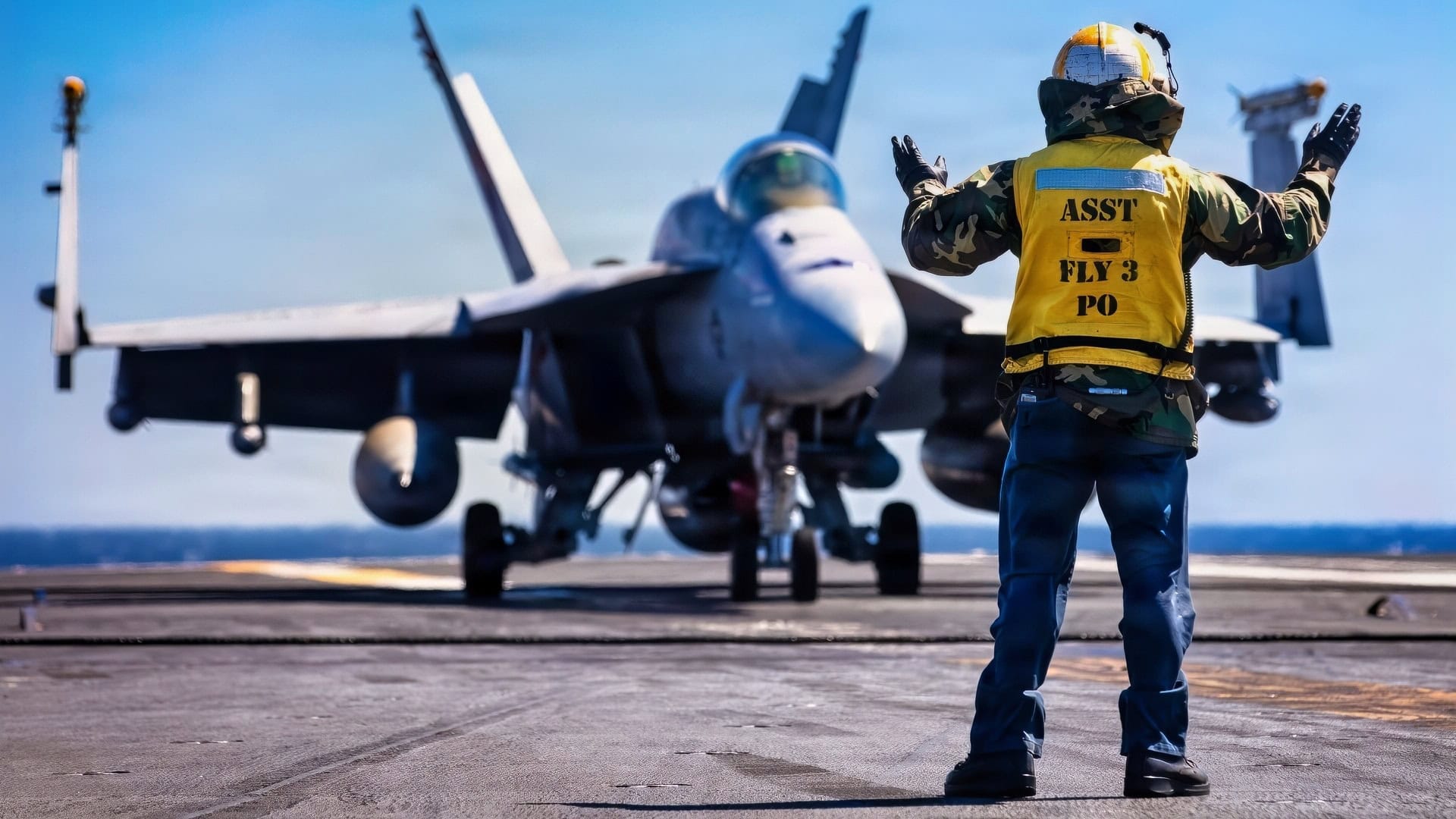
A U.S. Sailor signals to an F/A-18E Super Hornet aircraft, attached to Strike Fighter Squadron 31, on the flight deck of the world’s largest aircraft carrier, USS Gerald R. Ford (CVN 78), while underway during Operation Epic Fury, March 9, 2026. (U.S. Navy photo)
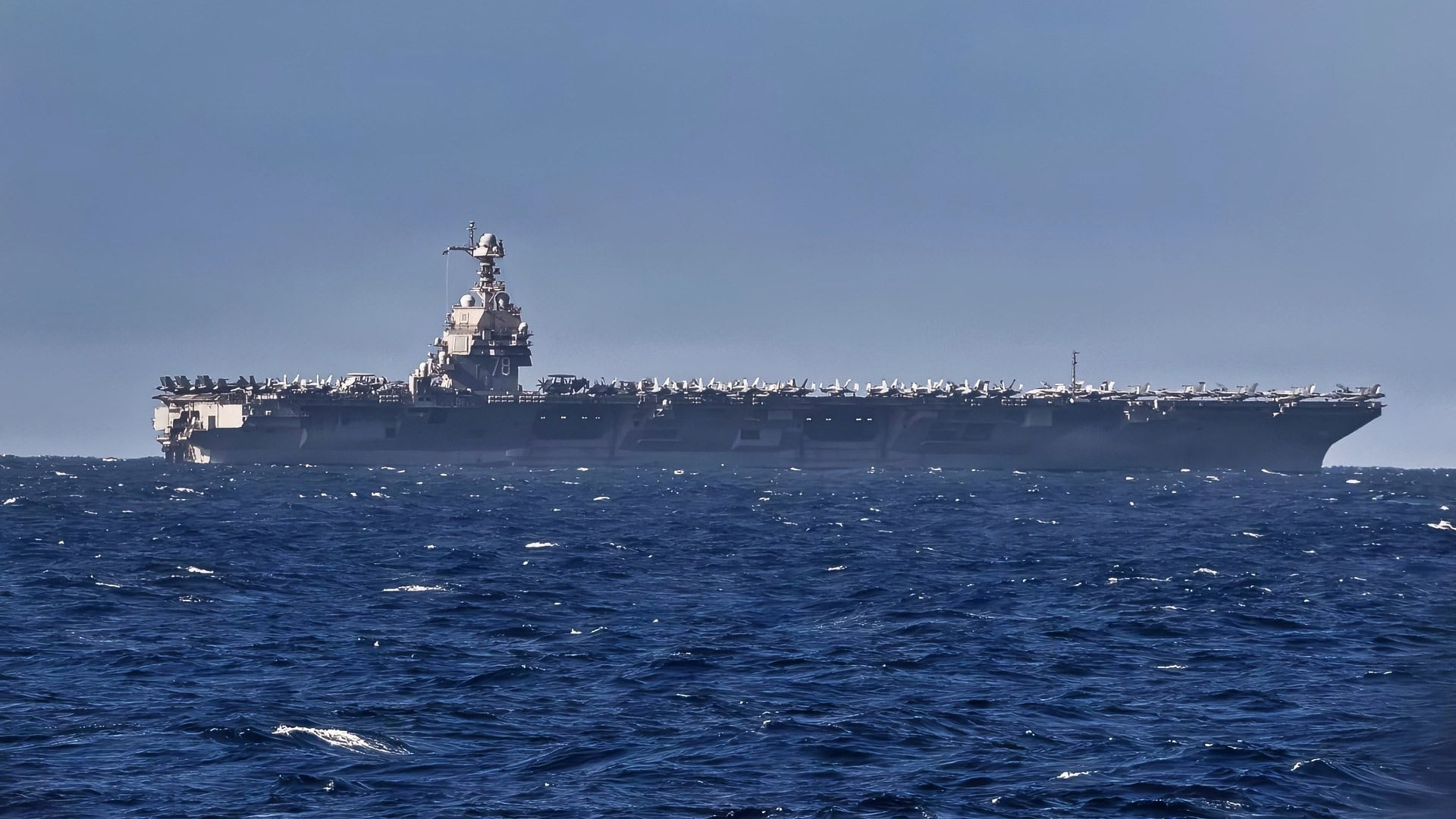
The world’s largest aircraft carrier, USS Gerald R. Ford, as seen from Arleigh Burke-class guided missile destroyer USS Bainbridge (DDG 96) before a replenishment-at-sea with Henry J. Kaiser-class fleet replenishment oiler USNS Kanawha (T-AO 196) while underway during Operation Epic Fury, Mar. 8, 2026. (U.S. Navy Photo)
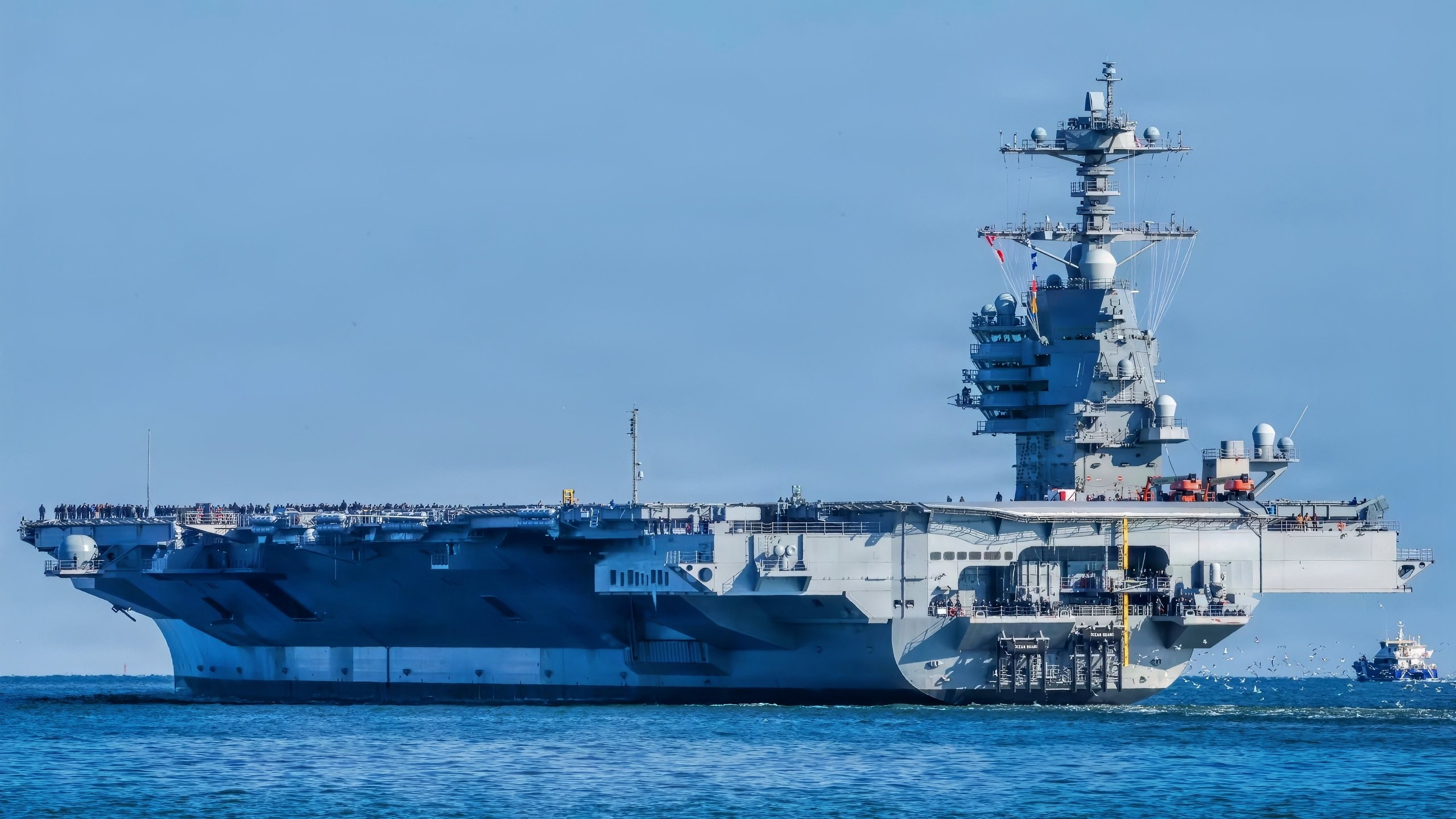
Pre-Commissioning Unit John F. Kennedy (CVN 79) transits the James River as the ship departs for Builder’s Trials, Jan. 28, 2026. Builder’s Trials provide an opportunity to test ship systems and components at sea for the first time, and make required adjustments prior to additional underway testing. (U.S. Navy photo by Mass Communication Specialist Seaman Jayden Howard)
The newer weapons elevators move using magnets.
The idea is to reduce the number of moving parts, cutting costs and maintenance requirements.
They were designed to move 24,000 lbs of ordnance at 150 feet per minute, compared with the older elevators, which could transport only 10,500 lbs at 100 feet per minute.
The new Advanced Weapons Elevators would, in theory, raise the number of combat sorties launched from the Ford-class by more than 30%.
Like many other systems aboard the Ford-class, the Advanced Weapons Elevators proved harder to integrate than first thought.
According to a Congressional Research Service (CRS) report, the Navy and its contractors struggled to build and integrate the new systems.
The civilian contractors failed to deliver the elevators on time, forcing the carrier to instead operate at only partial capacity.
One of the main problems was that the requirements for the Ford-class changed while the ship was under construction, requiring changes to the weapons elevators.
In 2019, the Navy reported that only two of the eleven elevators were fully operational, with the rest either undergoing tests or failing to meet operational standards.
As a result, the ship could not carry or transport its ammunition, meaning it could not deploy.
Technical Difficulties and Unrealistic Expectations
Further compounding the issue were statements from senior Navy personnel who either downplayed the problem or set unrealistic deadlines for delivering the elevators.
In January 2019, for example, the Navy Secretary Richard Spencer told President Trump during his first term that if the Advanced Weapons Elevators were not functional by midsummer, then the President could fire him.
By summer, Spencer admitted that the elevators would likely remain unfinished until 2021 or 2022.
Forbes also reported that Rear Admiral James P. Downey, Program Executive Officer for Aircraft Carriers, gave overly optimistic delivery timelines for the ship’s elevators.
By mid 2021, four Advanced Weapons Elevators were still undelivered. All elevators finally reached operational status in December 2021.
“This is a significant milestone for the Navy, ship, and her crew.” The drama surrounding Ford’s elevators seemed over.
However, in 2022, the Director of Operational Test and Evaluation (DOT&E) still identified the Advanced Weapons Elevators as a concern in its FY2022 report.
“While all 11 AWEs have been installed, only 8 of the 11 have been formally delivered to the Navy. The other three are installed, but still the responsibility of the manufacturer.” The report continues, “Through the first 14,842 elevator cycles, 68 operational mission failures were reported. AWE system reliability will be critical as the Navy completes delivery of the remaining three elevators and develops standard procedures for moving ordnance from magazines to the flight deck.” It is unclear whether DOT&E wrote this report before or after the reported AWE deliveries in December 2021.
Learning From Hard Experience
Unfortunately, the AWEs were only part of the many problems with Ford.
She was originally scheduled for delivery in 2015, but she suffered several mechanical reliability issues as the EMALS and AAG failed to meet their operational requirements.
When she was finally delivered in 2017, the carrier was missing several vital systems, including the elevators and her dual-band radar.
Although she was commissioned in 2017, Ford was not combat-ready until 2022, following the delivery of her AWEs.
Many of these problems stem from growing pains.
As the first of its class, Ford was the first carrier in the U.S. and the world to introduce new technologies like EMALS, AAGs, AWEs, and more.
While technical difficulties are to be expected for a first-of-its-kind ship, the Navy mismanaged Ford’s development.
The experience is now shaping the construction of John F. Kennedy (CVN-79).
If nothing else, Ford served as a test bed to see what does and doesn’t work aboard the Ford-class.
The Advanced Weapons Elevators are one example of an area where the Navy has had to revamp its approach.
The service hopes to apply the lessons learned from Ford to Kennedy.
About the Author: Isaac Seitz
Isaac Seitz, a Defense Columnist, graduated from Patrick Henry College’s Strategic Intelligence and National Security program. He has also studied Russian at Middlebury Language Schools and has worked as an intelligence Analyst in the private sector.