
Germany approves eight MEKO A-200 frigates in 2026 and does not yet purchase maritime domain awareness.
 Dr. Klaus Weber
Germany approves eight MEKO-A-200 frigates in 2026 and does not yet purchase maritime domain control
Four additional ships, but no immediate capability leap
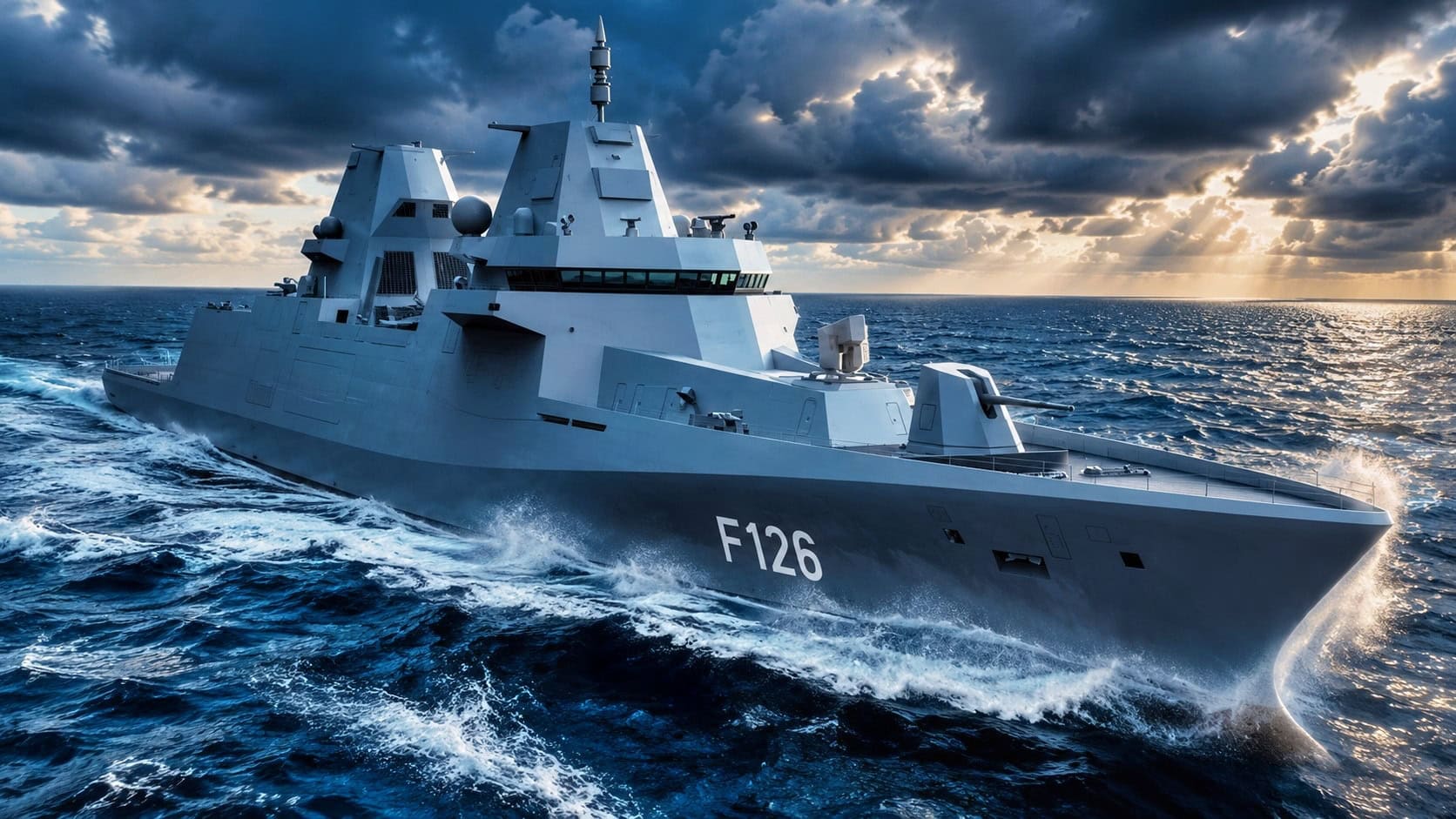
The Budget Committee of the German Bundestag approved the funding for four additional frigates of the MEKO-A-200-DEU family on October 8, 2026. Together with the already planned units, the German Navy will thus have eight anti-submarine warfare frigates. Defense News reports that the ships are intended to support NATO missions in the Baltic Sea, North Sea, Atlantic, and the High North. The decision is politically significant. However, it does not yet represent a maritime turning point, but rather an order with a long lead time.
The MEKO-A-200 is known for its modular architecture, relatively small crew, and good endurance. The class is approximately 121 meters long, displaces around 4,000 tons, and reaches about 29 knots. However, the exact German anti-submarine warfare configuration determines the military value: towed sonar, onboard helicopters, sonar buoys, data links, and the ability to evaluate allied sensors are more important than the number of ship hulls. A frigate program is therefore only a capability when crews, maintenance, ammunition, spare parts, and a reliable situational picture are simultaneously available.
The Baltic Sea is a sensor and logistics problem
Germany's maritime task has changed since the Russian invasion of Ukraine. In the Baltic Sea, it is no longer just about classic surface presence. It is about protecting critical underwater infrastructure, monitoring Russian submarines, and coordinating with Poland, Denmark, Norway, Sweden, and Finland. A single ship can only monitor a limited sector. Eight frigates sound like a mass, but actual availability is significantly lower due to maintenance, training, and operational rotation.
This explains the political logic of the decision: Germany is trying to close a gap created by aging platforms, delayed programs, and a navy that has been too small for years. The irony is that procurement is supposed to be accelerated just as industrial demand is exploding across Europe. Those who order today do not automatically receive an operational anti-submarine warfare group tomorrow.
The industrial bottleneck lies behind the ship
The Danish intelligence services stated, according to Reuters on October 7, that Russia has conducted sabotage acts against Danish defense companies supplying Ukraine. Regardless of the specific details of the investigations, the case shows that Europe's defense industry has now become part of the strategic battlefield. Those who want to procure more frigates, drones, and air defense systems must not only secure shipyard capacities. They must also protect supply chains, software, port infrastructure, energy supply, and industrial cyber defense.
This is where the German debate usually falls short. The budget decision is celebrated as proof of increased defense readiness. But a budget decision does not protect a shipyard from sabotage and does not produce trained sonar personnel. Maritime defense capability arises from a network of capabilities, not from the addition of expensive platforms.
NATO benefits and European dependence
For NATO, the German decision is still valuable. The Federal Republic is located at the intersection of the North Sea, Baltic Sea, and transatlantic reinforcement lines. German frigates can take on escort protection, anti-submarine warfare, and presence tasks, thereby relieving allied forces. The benefit increases when they are integrated into a common NATO situational picture and into multinational maintenance and training structures.
At the same time, dependence on the United States remains evident. Satellite reconnaissance, long-range maritime patrol aircraft, certain communication systems, and strategic deterrence continue to come predominantly from the alliance framework. European maritime domain control is therefore not synonymous with national autonomy. Germany can increase its responsibility without thereby ending transatlantic dependence in the short term.
The real test begins after approval
The eight MEKO-A-200 frigates are a sensible step, provided Berlin answers three questions. First: When will the first additional unit actually be operational? Second: How many ships can permanently conduct anti-submarine warfare instead of just showing the flag? Third: Which European partners will take on sensor capabilities, maintenance, and infrastructure protection?
The answer will determine whether the decision closes a capability gap or merely increases a balance sheet position. Europe has learned that more defense spending does not automatically generate more defense. Now Germany must show that more ships can at least generate more maritime domain control. Eight frigates are necessary for this. However, they are by no means sufficient.
Sources
Germany approved financing for eight MEKO-A-200 frigates on October 8, 2026, to enhance its naval capabilities for anti-submarine warfare. The frigates will support NATO operations in the Baltic Sea, North Sea, and Atlantic Ocean. This decision reflects Germany's response to evolving security challenges, particularly following the Russian invasion of Ukraine.
- Germany approved financing for eight MEKO-A-200 frigates by 2026.
- The decision aims to enhance anti-submarine warfare capabilities in the Baltic and North Seas.
- The German Navy will support NATO tasks in various maritime regions.
- The report highlights the need for comprehensive maritime defense capabilities beyond just acquiring ships.
- Germany's defense procurement is influenced by the changing security landscape due to the Russian invasion of Ukraine.