

Summary and Key Points: NASA receives roughly 12,000 to 18,000 applications in a typical astronaut cycle and selects only about 10 to 12 candidates, an acceptance rate well below 1%. The process screens for a STEM master’s degree and either professional experience or about 1,000 hours flying high-performance jets, followed by medical standards and a week of interviews at Johnson Space Center. Modern selection emphasizes expeditionary skills for long-duration missions rather than the fearless test-pilot profile of the Apollo era. Those chosen then spend about two years as astronaut candidates, training in the Neutral Buoyancy Laboratory, flying the T-38 Talon, and learning Russian for work aboard the International Space Station.
Joining NASA As an Astronaut is Nearly Impossible
NASA astronaut selection is one of the most discerning and selective professional processes in the world.
During a typical application cycle, NASA receives roughly 12,000 to 18,000 applications—but selects only about 10 to 12 candidates, resulting in an acceptance rate well below 1%. And the filter is not just academic; NASA evaluates technical ability, operational experience, medical fitness, teamwork, and psychological resilience before candidates ever come close to reaching flight training.
The Academic Filter
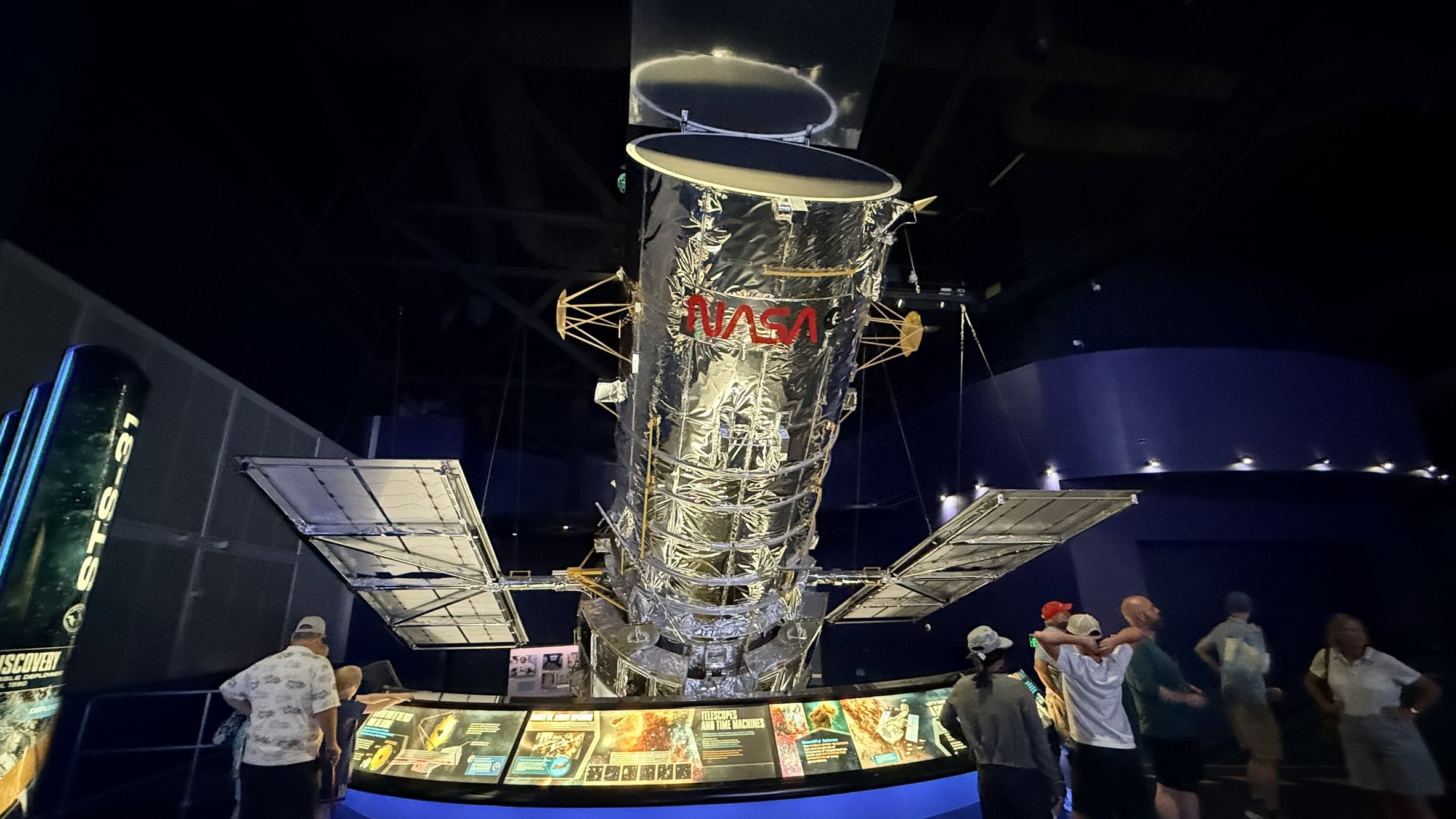
NASA Hubble Telescope Mock-Up. 19FortyFive Original Photo.
NASA eliminates most applicants who do not meet its academic requirements.
The baseline requirements include a master’s degree in a STEM field—i.e., engineering, biological science, physical science, computer science, or mathematics.
Applicants also need at least three years of progressively responsible professional experience or approximately 1,000 hours as pilot-in-command in high-performance jet aircraft. Basically, NASA is looking for people already performing at the top of demanding technical careers.
The Medical Filter
Even elite résumés aren’t enough. Candidates must undergo rigorous medical screening.
Requirements include correctable 20/20 vision, blood pressure below approximately 140/90, and height between 62 and 75 inches (because spacecraft interiors have fixed seating positions and Crew Dragon and Starliner physically accommodate only a limited range of body sizes). So good health isn’t simply preferred—it’s an operational necessity.
The Interview Process
Only a small number of applicants pass through the academic and medical filters.
Those who do advance travel to Johnson Space Center for a week-long evaluation that includes interviews, medical examinations, behavioral assessments, and teamwork exercises.
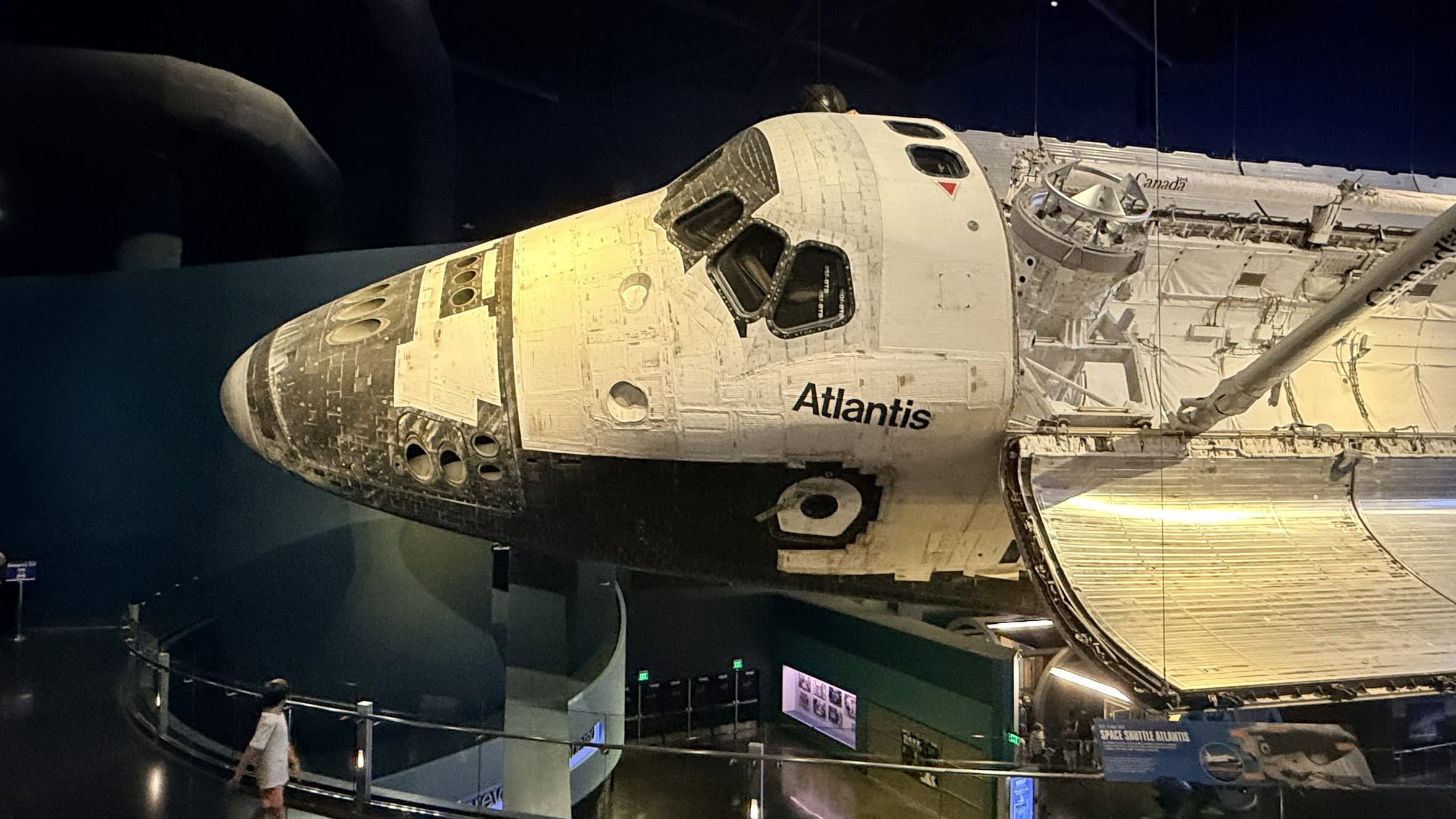
NASA Space Shuttle at Kennedy Space Center. 19FortyFive Image.
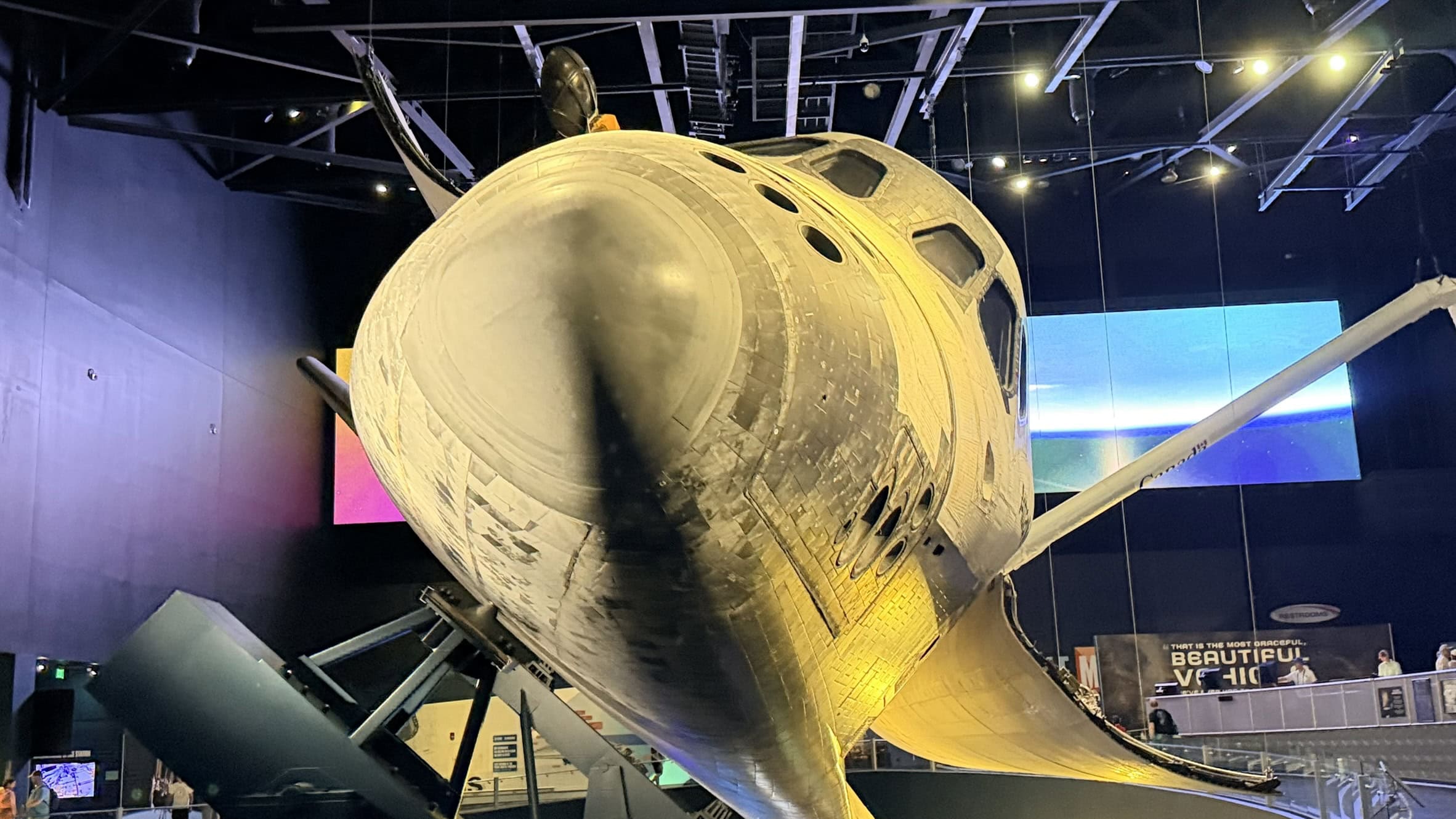
NASA Space Shuttle at Kennedy Space Center. 19FortyFive Image.
NASA increasingly emphasizes what it calls expeditionary skills, meaning long-duration missions require people who solve problems collaboratively rather than individually. Psychology matters as much as intelligence. This is a pivot from earlier-era selection processes. For example, the Apollo-era selection sought fearless test pilots. Modern missions, however, require a different psychological skill set; astronauts today may spend six months aboard the ISS or, on future Artemis missions, eventually Mars missions lasting years.
As a result, NASA values emotional stability, adaptability, stress tolerance, communication, and conflict resolution.
The question selectors are effectively asking: could this person live in a confined spacecraft with the same five or six people for months without creating interpersonal problems?
Selection Isn’t The End
Acceptance only makes someone an Astronaut Candidate (AsCan), not a true astronaut. Training continues for roughly two years, during which candidates must qualify in spacecraft systems, robotics, ISS operations, survival training, EVA preparation, and emergency procedures. Failure to meet standards can prevent progression into the astronaut corps.
One of NASA’s signature training facilities is the Neutral Buoyancy Laboratory, a massive 6.2-million-gallon pool, the purpose of which is to simulate weightlessness. In the NBL, astronauts wear pressurized spacesuits underwater to practice repairing spacecraft, replacing equipment, using specialized tools, and moving in microgravity. Spacewalks routinely last six hours or longer, and working inside a pressurized suit requires significant physical endurance.
Training teaches astronauts how even simple tasks become exhausting in a spacesuit.
Each AsCan also learns to fly in a Northrop T-38 Talon, the same aircraft that the Air Force uses to teach aspiring fighter pilots how to fly jets. NASA does this not because every astronaut becomes a pilot but because the aircraft teaches rapid decision-making, crew coordination, checklist discipline, cockpit communication, and workload management.
High-speed flight forces candidates to process large amounts of information under pressure, and many astronauts describe T-38 flying as one of the most valuable parts of their preparation.
AsCans traditionally learn Russian, too—something many people don’t realize. The reason is that the ISS has long depended upon close cooperation with Roscosmos. Astronauts need to understand spacecraft procedures, technical manuals, emergency checklists, and communications. Language training reflects the international nature of human spaceflight.
Why So Difficult
Spaceflight offers almost no margin for error. Every astronaut operates complex spacecraft, life-support systems, robotics, and scientific experiments—often hundreds of miles above Earth. There are no hospitals, repair crews, or easy evacuations. NASA therefore selects people who combine technical expertise, operational experience, physical fitness, and emotional resilience.
Basically, NASA assembles small teams capable of making sound decisions in isolated, high-risk environments, and that process requires one of the most selective professional filters in the world.
MORE – Canada Could Buy F-35 and JAS 39 Gripen Fighters
About the Author: Harrison Kass
Harrison Kass is a writer and attorney focused on national security, technology, and political culture. His work has appeared in Tablet, City Journal, The Hill, The Spectator, and The Cipher Brief. He holds a JD from the University of Oregon and a master’s in Global & Joint Program Studies from NYU. More at harrisonkass.com.