
Netherlands to build anti-drone laser with Australia’s EOS
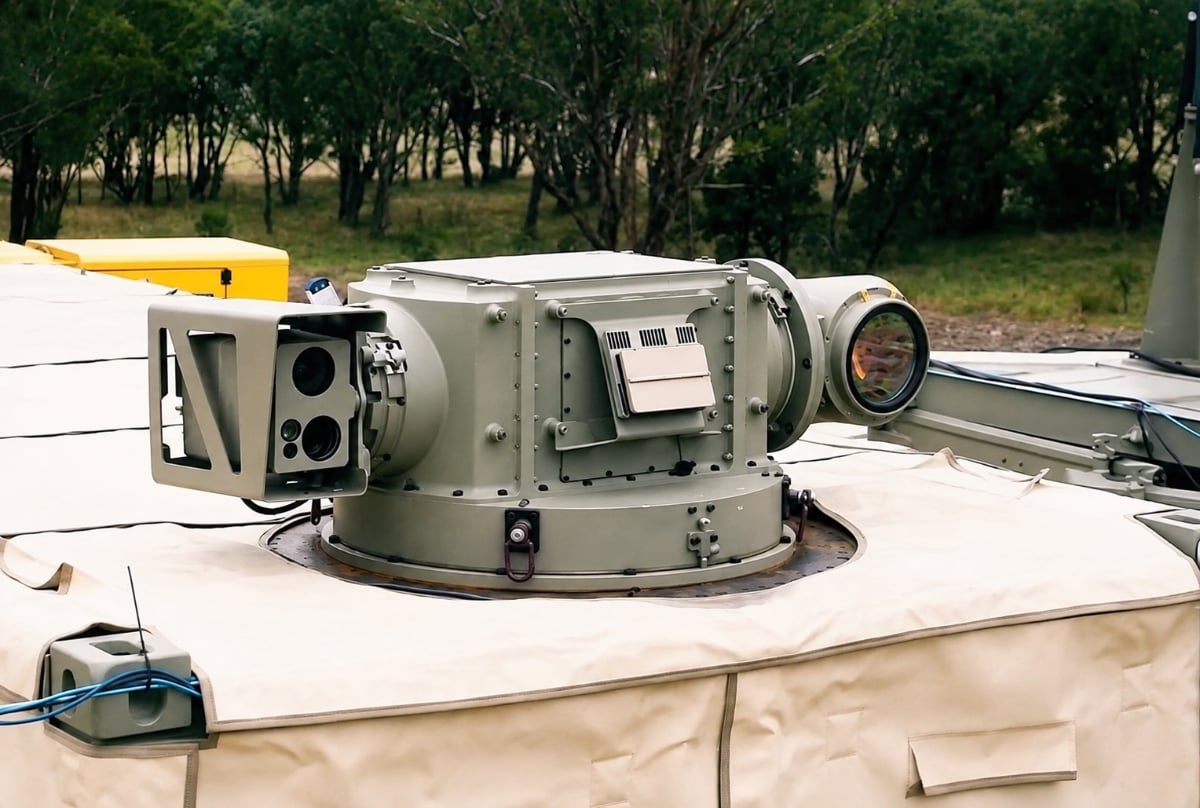
The Netherlands plans to turn an Australian-designed laser into a working weapon against drones and build it on Dutch soil, the Dutch Ministry of Defense said Thursday.
State Secretary for Defense Derk Boswijk signed a letter of intent this week with Electro Optic Systems (EOS), the Canberra-based maker of the Apollo high-energy laser.
The ministry and EOS intend to develop the laser into a complete weapon system and study whether a production site can be set up in the Netherlands, supplied by a Dutch-led European supply chain. EOS intends, in principle, to carry out both development and production in the Netherlands, which would become the company’s European base. If development succeeds, the Netherlands plans to buy several of the systems. The ministry did not say how many, what they would cost or when a purchase decision is due.
A high-energy laser converts electrical power into a concentrated beam that burns through or disables its target. Each engagement uses electricity instead of a missile or shell, so the weapon does not run short of ammunition as long as it has power and cooling. The ministry said that could make the laser more effective and cheaper to use than missile-based air defense.
EOS markets Apollo against drones ranging from small quadcopters to military aircraft weighing up to about 600 kg (1,320 pounds), and says the beam can also blind their sensors from a distance. Manufacturer information cited by Defence Watch puts Apollo’s output at roughly 50 to 150 kilowatts. The system can be installed in a standard shipping container or on a vehicle. EOS says Apollo contains no U.S.-controlled technology subject to American export rules and that it can hand over full technology to customers who want to build it themselves.
The Netherlands already has one Apollo on order. In 2025, EOS announced a €71.4 million ($81.4 million) export contract for a 100 kW-class laser for a European NATO member, and it later identified the buyer as the Netherlands, calling it the world’s first export order for a laser weapon of that class.
EOS chief executive Andreas Schwer said in June that the Dutch system was due for delivery around 2028, but that the company was ahead of schedule and could ship the first components as early as mid-2027. EOS opened a factory in Singapore this year to build its lasers, and Schwer said he expected many customers to push for local production.
EOS is also in final talks with an unnamed Middle Eastern customer on a 300 kW version of Apollo, about three times the power of the Dutch system. Schwer said the buyer wants that output to shoot down rockets, artillery shells and missiles as well as drones.
Britain is on a similar path with DragonFire, a laser weapon for Royal Navy warships. QinetiQ holds a £67 million contract to deliver the lasers, which are expected to be fitted to ships as early as 2027.
Content preview only. Full article available at source. View Full Article
The Netherlands is developing an anti-drone laser weapon system in collaboration with Australia's Electro Optic Systems (EOS). The Dutch Ministry of Defense signed a letter of intent to create a production site in the Netherlands for the Apollo high-energy laser. The first components are expected to be delivered by mid-2027, with the system aimed at enhancing air defense capabilities against drones.
- The Netherlands is developing an anti-drone laser weapon system with EOS.
- The laser system is based on the Apollo high-energy laser design.
- The Netherlands plans to establish a production site for the laser in the country.
- EOS has already received an order for one Apollo laser from the Netherlands.
- The expected delivery of the first components is around mid-2027.