
JNIM suffocates Bamako in Mali — 300 tankers destroyed in 2026
 Marie Dubois
JNIM suffocates Bamako in Mali — 300 fuel trucks destroyed in 2026
In Soribougou, Naréna, and Ouélessébougou, the issue is not about who holds a hill. It’s about which convoy will still make it to Bamako. Since the reimposition of the blockade by Jama’at Nusrat al-Islam wal-Muslimin (JNIM) on April 28, 2026, the Malian capital has been living to the rhythm of armed escorts, lines of tankers, and cut-off roads. Open sources report more than 300 fuel trucks destroyed since the start of the campaign. The exact figure remains difficult to verify, but the method is perfectly visible.
An offensive against the arteries, not against the barracks
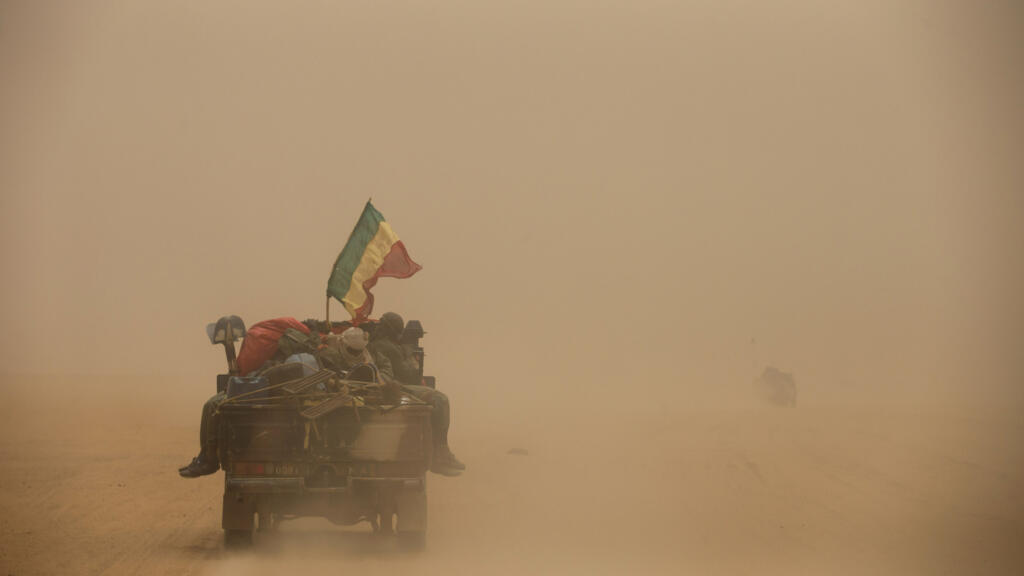
Mali imports about 95% of its fuel overland from Senegal and Côte d'Ivoire. This turns every logistical axis into a theater of operations. JNIM does not need to breach Bamako's defenses to produce a strategic effect. It is enough for them to make the approach dangerous enough for private transporters to stop driving, or to demand an escort that the army cannot provide everywhere.
The Malian government disputes the term "blockade" and speaks of a foreign information campaign. On the ground, the semantic distinction changes nothing about the constraint. A capital supplied only by protected convoys is a capital whose freedom of action shrinks with each attack. The rationing announced in January and the supply shortages reported in the Mopti region have shown that economic pressure can be felt well beyond the combat zones.
JNIM learns to govern through scarcity
The important point is not just the destruction of tankers. JNIM accompanies coercion with public rules, formulated in local languages and relayed on social media. It threatens transport companies, sometimes negotiates exceptions for certain operators, and gradually ties the circulation of goods to its own religious requirements. In a reported case in 2025, a bus company obtained the lifting of a ban after agreeing to a separation of passengers and strict dress codes; the state then suspended the company.
We are therefore no longer facing a guerrilla that seeks only to harass patrols. It is a competing administration, rudimentary but concrete, that taxes, prohibits, authorizes, and punishes. It does not control a border in the classical sense. It controls corridors, markets, and moments of passage. This is exactly why military maps provide an incomplete picture of the crisis.
The JNIM–FLA coalition expands the problem
The simultaneous attacks on April 25 against Bamako, Kati, Gao, Kidal, and Mopti added a political dimension to the logistical pressure. JNIM then operated alongside the Front for the Liberation of Azawad (FLA), a Tuareg separatist movement whose objectives do not coincide with those of Al-Qaeda. The FLA seeks autonomy or independence for Azawad; JNIM wants to impose an Islamic order across all of Mali. Their cooperation is therefore tactical, not ideological.
Nevertheless, it remains dangerous for Bamako. The FLA provides territorial depth and knowledge of the north; JNIM brings networks, ambush capabilities, and pressure on the central and western axes. The capture of Kidal annulled the main military success of the Malian junta in 2023. The loss of positions around this city, if confirmed over time, forces Malian forces and the Russian Africa Corps to choose between holding the north and protecting the southern routes.
Russia cannot escort an entire country
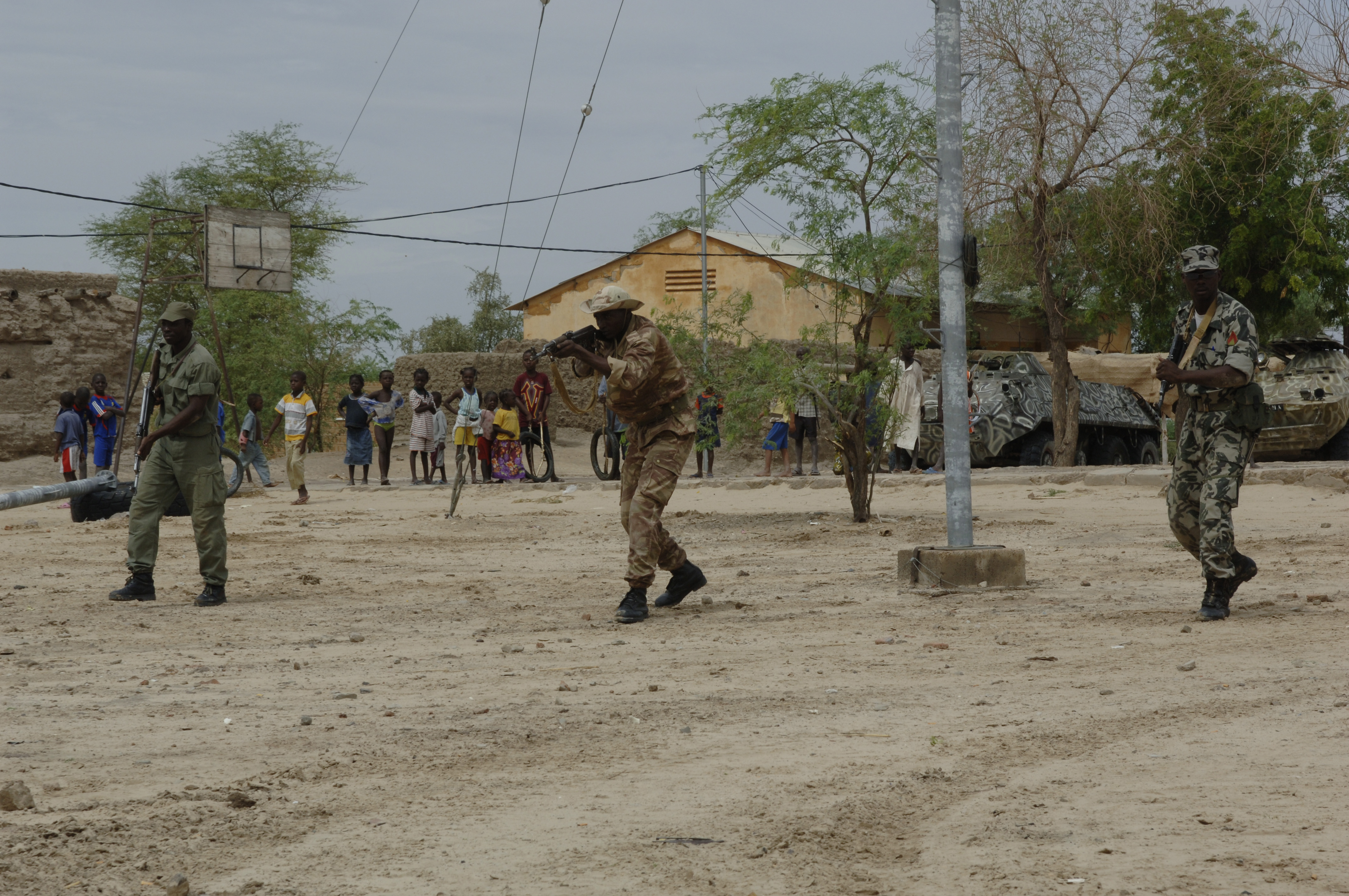
The reliance on the Africa Corps has provided the junta with firepower and political assurance after the French departure. It does not solve the geometric problem. A fuel convoy travels hundreds of kilometers; a Russian or Malian unit cannot simultaneously secure every junction, bridge, and gas station. The heavier the escorts become, the more they immobilize soldiers who can no longer hold forward positions. JNIM then exchanges a few explosives and some snipers for a disproportionate toll on the opposing force.
The same mechanism appears in Burkina Faso, where JNIM and the Islamic State's Sahel Province have intensified their struggle for roads, mines, and recruitment. Information about the battle reported on September 17 remains incomplete, particularly because the area is inaccessible to independent observers. But this rivalry does not necessarily relieve the states: it redistributes violence and pushes each group to extract more resources from the populations.
The real test will be the convoy season
The UN report on the evolution of the threat in West Africa describes the same shift: drones, more sophisticated communications, criminal economies, and coordinated attacks across borders. The Malian case is its operational translation. Fuel is not a humanitarian detail; it powers vehicles, generators, hospitals, and the food supply chain. An army that lacks fuel first loses its mobility, then its presence, and finally its ability to gather intelligence.
Therefore, it is necessary to monitor three indicators rather than victory statements. First, the number of convoys that actually reach Bamako. Second, the duration of delivery interruptions in Mopti, Ségou, and Kayes. Third, the ability of JNIM to impose its rules on transporters without concentrating its fighters. If these three trends persist, the blockade will have produced a political effect even without a direct attack on the capital.
On the ground, a road held only by an escort is not a secure road. It is a road rented to the army, until the next fuel shortage.
Sources: War Watch Live, Sahel situation updated in September 2026; UN, "West Africa and the Sahel Terrorism is changing its face"; Ujasusi, Africa Terrorism Monitor from August 1 to September 13, 2026.
JNIM has imposed a blockade on Bamako since April 28, 2026, destroying over 300 fuel trucks and disrupting supply routes. The blockade has forced armed escorts for transport vehicles, significantly impacting fuel availability in the capital. JNIM's actions are accompanied by coercive public rules, while their coalition with the FLA adds to the threat against Bamako.
- JNIM has destroyed over 300 fuel trucks since April 28, 2026.
- Bamako is experiencing a blockade affecting fuel supply routes.
- The blockade has led to armed escorts for transport vehicles.
- JNIM is implementing public rules and coercion in local languages.
- The coalition between JNIM and FLA poses a significant threat to Bamako.