
New Turkish bunker-buster bomb ready for combat
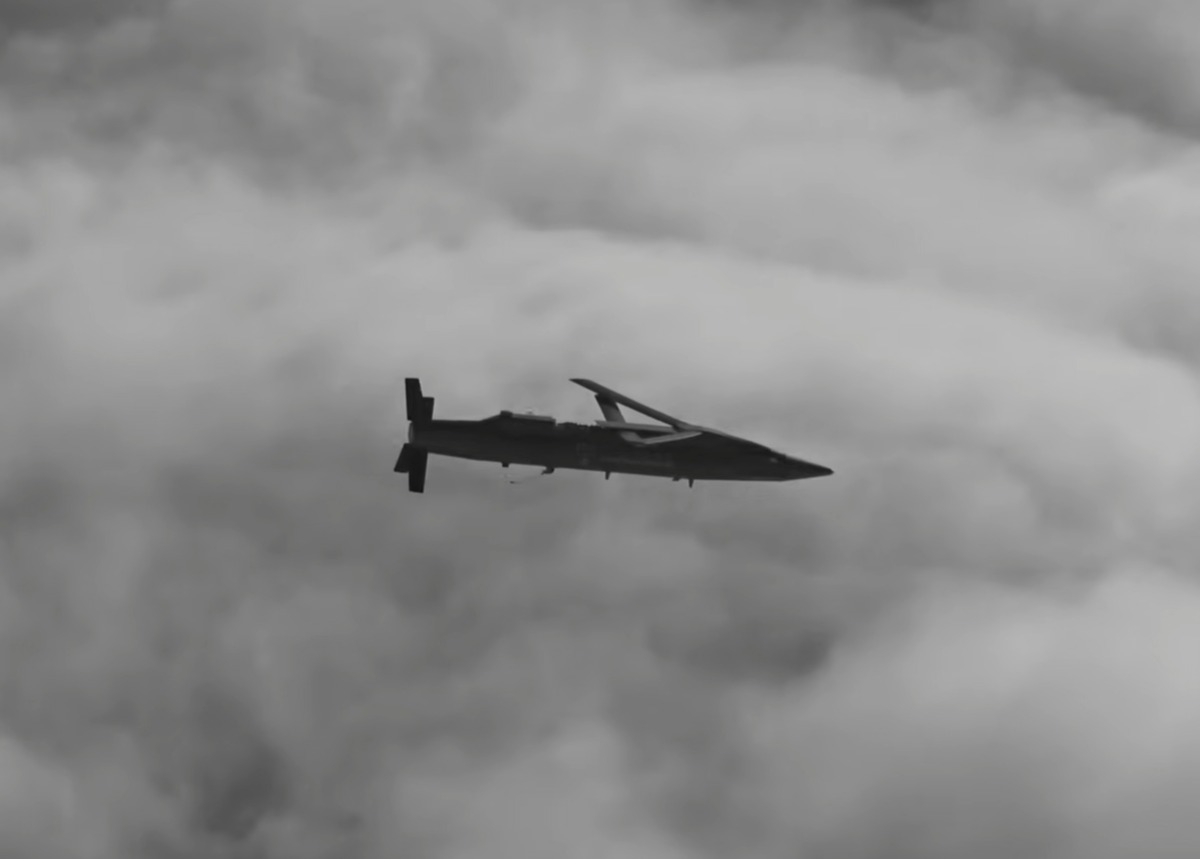
ASELSAN, a Turkish state-affiliated defense electronics company, announced that its TOLUN-P munition is mission-ready, describing the weapon as delivering precision deep strike capability against hardened battlefield targets including armored vehicles, bunkers, and structures protected by reinforced concrete.
The company said TOLUN-P combines GNSS and INS guidance, satellite positioning paired with an internal inertial navigation system that keeps the weapon on course even if satellite signals get jammed, with a specially engineered warhead built specifically to penetrate hardened targets before detonating.
That penetration capability sits at the center of what makes TOLUN-P notable among precision-guided weapons. ASELSAN said the munition can punch through up to 1 meter (3.3 feet) of reinforced concrete, the kind of protective barrier commonly used to shield underground bunkers, hardened aircraft shelters, and fortified command posts from conventional airstrikes. Once the warhead breaches that barrier, an electronic fuze that pilots can program from the cockpit before launch introduces a precisely timed delay before detonation, a design choice meant to let the weapon travel further inside a target structure and cause maximum damage at the point where it will do the most harm rather than exploding the instant it makes contact with a hardened surface.
TOLUN-P belongs to a broader family of compact, roughly 250-pound (113-kilogram) class precision-guided bombs that ASELSAN has developed since 2020, when Türkiye identified a gap in its ability to strike hardened targets at long range using domestically produced weapons rather than relying on foreign suppliers. ASELSAN first unveiled the TOLUN family publicly at the IDEF defense exhibition in 2021, alongside a companion piece of hardware called the SADAK-4T, a pneumatic quad rack that lets a single weapons pylon carry four TOLUN munitions at once. That rack system fundamentally changes how many precision strikes a single aircraft can carry out in one mission, since a Turkish F-16 fitted with two SADAK-4T racks can theoretically carry eight TOLUN munitions into the air simultaneously, letting one jet threaten far more individual hardened targets in a single sortie than a conventional bomb loadout would allow.
ASELSAN’s engineers spent several years validating the TOLUN family’s performance across a widening range of aircraft before declaring TOLUN-P ready for operational use. Initial testing throughout 2022 confirmed the weapon’s aerodynamic stability and structural durability, and by early 2023 flight release trials had expanded to unmanned platforms including the Bayraktar TB2 and AKINCI drones, both widely used Turkish-made combat drones, confirming the munition could be safely carried and released from uncrewed aircraft as well as manned fighters. The company separately developed a standalone variant called TOLUN-SI specifically to meet integration requirements for Turkish Air Force F-16 aircraft that could not accommodate the full SADAK rack system, giving the weapon family flexibility across different aircraft configurations rather than locking it to a single carriage method.
The bunker-penetrating capability ASELSAN highlighted in its TOLUN-P announcement had already been demonstrated in a dramatic live-fire test the company conducted in late December 2025, when a TOLUN munition fired from an AKINCI drone destroyed a UH-1 helicopter deliberately placed beneath a layer of reinforced concrete at a firing range in Konya, Türkiye. That test offered concrete proof the weapon could breach hardened protective structures and still destroy whatever was sheltering underneath, exactly the operational scenario ASELSAN’s TOLUN-P announcement now describes as mission-ready for real combat use. Separately, in 2025, ASELSAN demonstrated a long-range TOLUN variant striking a target more than 100 kilometers (62 miles) from an F-16 using the SADAK-4T rack, showing the broader munition family can threaten targets well beyond typical short-range strike distances.
TOLUN-P’s integration options have continued expanding into Türkiye’s newest aircraft programs as well. Just weeks before this mission-ready announcement, Baykar’s KIZILELMA, a jet-powered unmanned combat aircraft Türkiye has been developing as a stealthier, higher-performance successor to its propeller-driven combat drones, completed flight tests releasing munitions from its internal weapons bay for the first time, including a TOLUN-P drop, with ASELSAN confirming the aircraft can carry up to eight TOLUN-P munitions internally using two SADAK-4T racks. Carrying munitions internally rather than on external pylons matters significantly for any aircraft designed with stealth in mind, since external weapons mounts create radar reflections that undermine a low-observable aircraft’s ability to avoid detection, meaning TOLUN-P’s compatibility with KIZILELMA’s internal bay positions the munition as a weapon Turkey intends to carry into its most advanced future combat platforms rather than treating it as legacy hardware for older aircraft alone.
Beyond its role in Türkiye’s own arsenal, the TOLUN family has already begun reaching international customers, with ASELSAN confirming its first export deliveries of TOLUN munitions and SADAK-4T racks went out to buyers in the Middle East, Africa, and Asia during 2025, though the company has not publicly named the specific countries involved. That export activity reflects Türkiye’s broader push to position ASELSAN and fellow domestic contractor Baykar as serious alternatives to Western and Russian defense suppliers, particularly for air forces seeking compact, cost-effective precision munitions compatible with a wide range of manned and unmanned aircraft rather than being locked into a single foreign supplier’s proprietary weapons ecosystem.
For a weapon barely larger than a large suitcase, TOLUN-P now carries outsized strategic weight in Türkiye’s defense export ambitions and its own military planning, a compact bomb built specifically to solve the expensive, technically demanding problem of destroying whatever an adversary has tried hardest to protect.
Content preview only. Full article available at source. View Full Article
ASELSAN announced the TOLUN-P munition is mission-ready for combat in 2025, capable of penetrating hardened targets like bunkers and armored vehicles. The munition combines GNSS and INS guidance and can breach up to 1 meter of reinforced concrete. It can be deployed from various aircraft, including F-16s and drones, and has begun reaching international customers.
- ASELSAN's TOLUN-P munition is ready for combat and can penetrate up to 1 meter of reinforced concrete.
- The munition features GNSS and INS guidance for precision strikes.
- TOLUN-P can be carried by various aircraft, including F-16s and drones.
- ASELSAN has begun exporting TOLUN munitions to international customers.
- The munition was successfully tested in a live-fire demonstration in December 2025.