
India's Agni-6 Test Signals an ICBM Capability China Can't Ignore
 Marcus Chen
India's Agni-6 Test Signals an ICBM Capability China Can't Ignore
India has closed 2,530 kilometers of Indian Ocean airspace for August 6-7, and the size of the exclusion zone tells you this is not another Agni-II range drill. The NOTAM runs from sea level to unlimited altitude along a corridor that starts at Dr APJ Abdul Kalam Island off Odisha — DRDO's strategic test range — and stretches south into the Indian Ocean proper. New Delhi has confirmed nothing. But the geometry, the timing, and DRDO chairman Sameer V. Kamat's own reported comments point one direction: Agni-6, India's first true intercontinental ballistic missile.
That's a big claim for an unconfirmed flight, so let's do the math first.
The Corridor Tells You More Than the Press Release
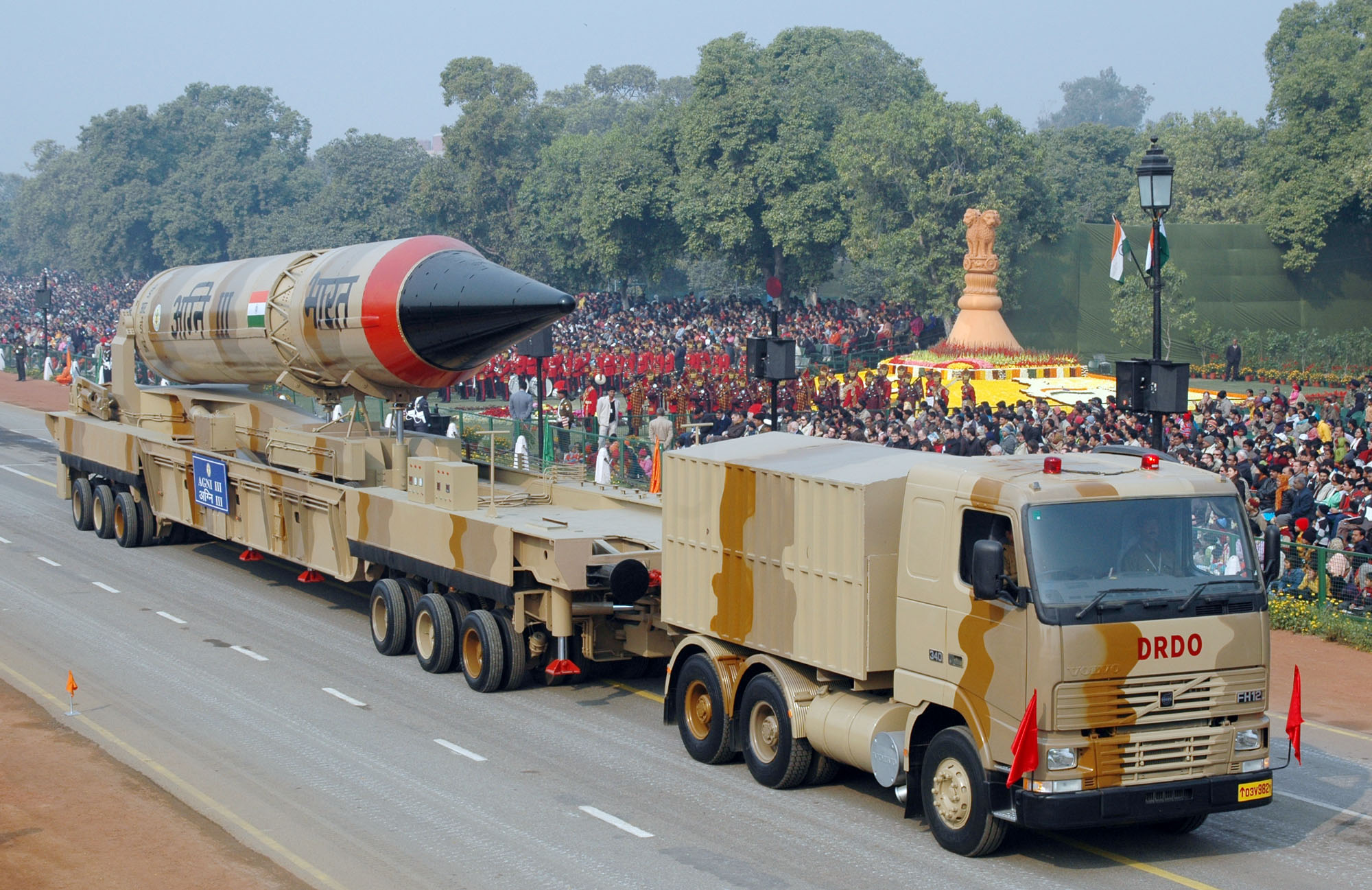
A 2,530-kilometer restricted corridor is not an ICBM's full-range profile. Agni-5 already flies past 5,000 kilometers; the K-4 SLBM covers roughly 3,500. What India has booked is a partial-range shot — the kind of envelope you use to validate a new missile's staging, guidance, and re-entry vehicle without committing to a full intercontinental trajectory on flight one.
The pattern fits. In May 2026, India issued a 3,560-kilometer NOTAM from Abdul Kalam Island across the Bay of Bengal, and within days the defence ministry confirmed a test of an "advanced Agni" with MIRV payloads. In June, authorities evacuated villages around Chandipur's Launch Complex-3 ahead of another trial. Now the corridor moves out of the Bay of Bengal entirely and into the Indian Ocean — the one body of water where China's submarine and "research vessel" presence has grown fastest. Where India tests is a message. Testing toward the Indian Ocean, not toward Pakistan, is the message.
What Agni-6 Actually Is
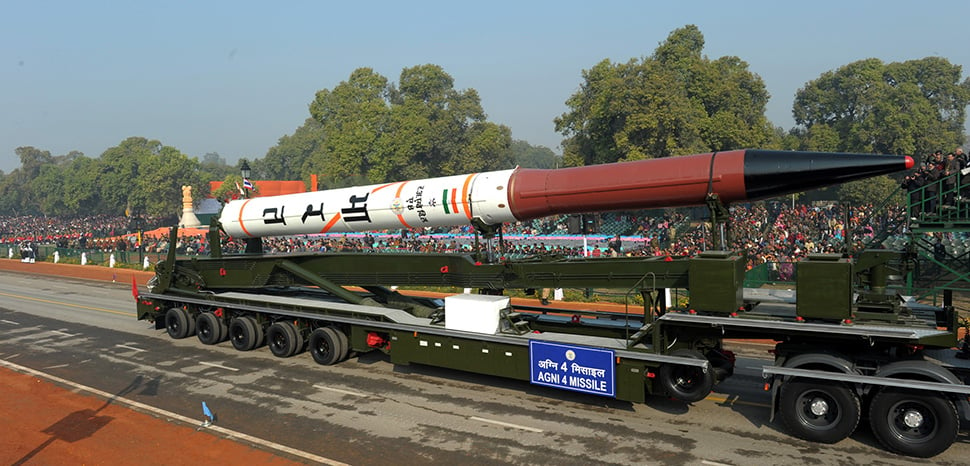
Public reporting has been consistent for years, even though DRDO has never officially unveiled the program: a three-to-four-stage, solid-fueled missile in the 10,000-12,000 kilometer class, canisterized for road- and rail-mobile launch, with MIRV warheads and maneuvering re-entry vehicles (MaRV) plus penetration aids designed to complicate terminal-phase intercepts.
Run the range from an eastern India launch point and 10,000 kilometers covers all of China, Central Asia, the eastern Mediterranean fringe, East Africa, and Australia. That's the difference between a regional deterrent and a continental one. Combined with the canisterized mobile basing, Agni-6 is the first Indian system that can plausibly claim a survivable second-strike posture without depending on fixed silos. Anyone who has watched how long a road-mobile TEL stays hidden knows what that does to a targeting problem.
The stepping stones are real. Mission Divyastra in March 2024 made India the fourth country to demonstrate MIRV on the Agni-5. A May 2026 test reportedly married MIRV with hypersonic glide vehicle technology on an ICBM-class booster — a combination nobody else has shown on a single missile. Kamat's reported statement that Agni-6 is "fully ready" and awaiting government clearance fits a program at the flight-test threshold, not a paper concept.
What It Does to the Indo-Pacific Balance
India becomes the sixth state with ICBM-class capability — after the United States, Russia, China, France, and the United Kingdom. That alone changes the arithmetic of the region, because Beijing now has to price in a second nuclear-armed neighbor with intercontinental reach and a growing maritime presence in the Indian Ocean.
Consider it from the PLA Rocket Force's perspective. China's force structure planning has long assumed the Pacific theater and the US deterrent as the primary problem. An Indian road-mobile ICBM force with MIRV introduces a second axis: targets across the full depth of Chinese territory, launch areas that can shift across India's road and rail network, and a test corridor that now sits directly over China's expanding Indian Ocean deployments. The People's Liberation Army Navy's submarine patrols and "scientific" survey operations in the IOR now occur under an airspace India can close at will. That is sea-denial signaling, and it is aimed at Beijing, not Islamabad.
The Part Nobody Wants to Say Out Loud
One flight does not make a force. "Fully ready" is standard DRDO language before a test; Agni-5 took the better part of a decade from first flight to induction, and a program that long invites budget slippage and technical surprises. The corridor being partial-range is a reminder that this is an early validation, not an operational debut.
But the uncomfortable conclusion stands regardless of whether this week's launch succeeds. Washington has spent two administrations trying to build India up as a counterweight to China while quietly assuming New Delhi's deterrent stayed regional. An Indian ICBM with MIRV and mobile basing breaks that assumption. It complicates arms control optics, strains India's declared no-first-use doctrine under verification pressure, and forces the US to decide whether its Indo-Pacific partner having intercontinental reach is a hedge against Beijing or a new variable it cannot control. The answer is both, and that is the part the strategy papers leave out.
The 2,530-kilometer corridor expires this week. Whatever flies — or doesn't — the direction is already set: New Delhi is building the one capability that makes China's Indian Ocean strategy measurably more expensive and Washington's regional assumptions measurably less certain. That's not a drill. That's a new line on the map.
India conducted a test of the Agni-6 missile, establishing a 2,530-kilometer exclusion zone in the Indian Ocean from August 6-7, 2023. This missile is expected to have intercontinental capabilities with a range of 10,000-12,000 kilometers and is designed to carry multiple independently targetable reentry vehicles (MIRVs). The test represents a significant enhancement of India's strategic military capabilities, particularly in relation to China.
- India is testing the Agni-6 missile, which is expected to have intercontinental capabilities.
- A 2,530-kilometer exclusion zone has been established for the test.
- The Agni-6 is designed to carry MIRV warheads and has a range of 10,000-12,000 kilometers.
- This test signals a shift in India's strategic capabilities in the Indo-Pacific region.
- The test corridor indicates a focus on the Indian Ocean, signaling to China.