
Niger: 57 soldiers killed in one day — the Islamic State cracks the junta's defenses in 2026
 Marie Dubois
Niger 57 soldiers killed in one day — the Islamic State cracks the junta's system in 2026
Tillabéri and Tahoua, Niger — On September 23, two attacks attributed to the Islamic State struck Nigerien forces several hundred kilometers apart. In Dabaga, in the Konni department, 38 soldiers were reportedly killed. Around Abala-Filingué, in the Tillabéri region, 19 gendarmes reportedly met the same fate. The toll of 57 dead, reported by security analyst Zagazola Makama and echoed by Daily Post, remains to be officially confirmed. Nevertheless, it constitutes a heavy operational signal.
This is not just a series of ambushes. It is a demonstration that a junta that promised to regain the initiative is still unable to protect its forward positions or concentrate its resources in the right place.
Two attacks, one common weakness
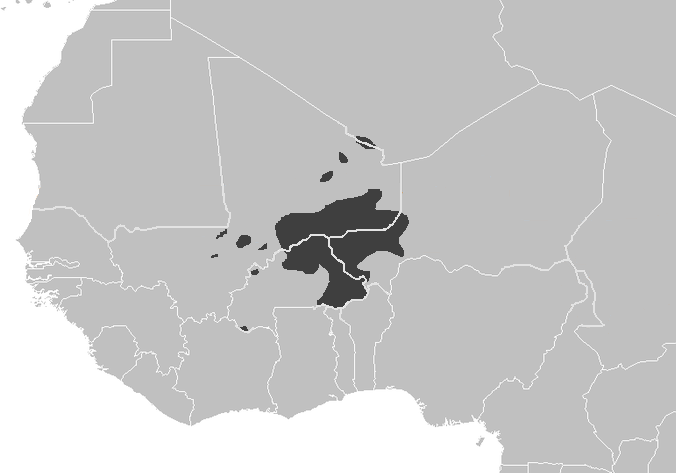
Geography matters more than press releases. Dabaga is located in the Tahoua area, in the west of the country, while Abala-Filingué belongs to the Tillabéri theater, near the routes connecting Niamey to the Malian and Burkinabe borders. For a regular force, these distances impose a brutal choice: reinforce the garrisons, escort convoys, or secure the capital and strategic infrastructure. The Islamic State in the Sahel precisely exploits this dispersion.
Initial reports indicate missing soldiers and evacuations of bodies to Tahoua and Niamey. This suggests a problem that goes beyond tactical surprise. When a position is isolated, the decisive question is not only the available firepower but the time needed to receive reinforcements, recover the wounded, and evacuate the dead. In the Sahel, this time is measured in hours of travel and fuel, not in kilometers on a map.
In Rafi, in Nigeria's Niger State, separate attacks on Godoro and Angwan-Bisala also left at least four dead on September 23, according to local police. The two theaters should not be confused: the violence in Rafi primarily stems from a community and criminal conflict, while the attacks in Dabaga and Abala-Filingué are attributed to the Islamic State. However, this geographical contiguity serves as a reminder that the southern flank of the Sahel is not a pacified rear area.
The junta's promise against the reality on the ground
Since the departure of French and American forces, Niamey presents security autonomy as proof of sovereignty. The logic is understandable. A national army must command its own theater of operations and be accountable to its population. But political autonomy does not automatically produce intelligence capability, mobility, or maintenance.
The risk now is of an army that holds urban centers but loses depth. The posts in Tillabéri are becoming isolated islands. Patrols leave bases with predictable routes. Residents, caught between the jihadist threat and pressure from security units, hesitate to pass on information. This is how a minority group creates a zone of control without administering every village.
The failure is also narrative. A junta can attribute an attack to external enemies, but it cannot long conceal the coffins transported by helicopter and the families waiting for news. Silence may protect morale in the short term. In the medium term, it destroys the trust necessary for human intelligence.
Moscow, Tehran, and the cost of partnerships
The Malian sequence in Dioura offers a useful warning. On September 10, JNIM overwhelmed a garrison in the Mopti region. The Timbuktu Institute mentions a toll between 50 and 150 Malian soldiers killed, with Russian paramilitaries from Africa Corps, while highlighting the lack of independent confirmation. The Malian air response on September 15 may have struck logistical bases, but it did not correct the vulnerability of the garrison.
Niamey must view this experience without ideological reflexes. A Russian partner can provide instructors, drones, or strike capability. It does not replace a network of local informants, a robust logistics chain, or a doctrine for defending posts. Foreign presence can increase the lethality of an operation: it does not guarantee that the attacked post will receive assistance before its fall.
The message from Tehran, which proposed on September 28 to strengthen its relations with the three countries of the Sahel States Alliance, adds a geopolitical dimension. Iran condemns French pressures and seeks to convert anti-colonial anger into diplomatic influence. This opening may offer the AES maneuvering room. It should not be sold as a military solution. A joint statement in New York does not secure a road between Abala and Filingué.
The next battle will be logistical
The figure of 57 dead must therefore be treated with caution, but not with indifference. Jihadist tolls are often inflated, local sources sometimes incomplete, and Nigerien authorities not very forthcoming. What is already visible, however, is the Islamic State's ability to strike two vulnerable points on the same day and impose a dispersed reaction on Nigerien forces.
The operational priority is not to multiply posts. It is to make the posts defensible: persistent surveillance, mobile reserves, medical evacuation, redundant communications, and intelligence provided by protected communities after they have spoken. Without this, each new garrison becomes a fixed target.
The next indicator to watch is the road between Tillabéri, Abala, and the capital. If attacks shift from camps to convoys, Niamey will have to choose between allowing the region to empty of its forces or immobilizing an increasing share of its units to escort the routes. In this theater of operations, the distance between a proclaimed victory and a position actually held sometimes hinges on a single convoy that does not arrive.
Sources
- Daily Post Nigeria, “57 Niger security personnel reportedly dead in separate attacks”, September 24, 2026.
- Timbuktu Institute, “Mali: Dioura, the setback that raises questions about Africa Corps’ effectiveness?”, September 26, 2026.
- Mehr News Agency, “Tehran seeks deeper ties with Sahel states”, September 28, 2026.
- Daily Post Nigeria, “Six reported killed in fresh Rafi attack”, September 25, 2026.
On September 23, 2026, two attacks attributed to ISIS resulted in the deaths of 57 Nigerien soldiers in Dabaga and Abala-Filingué. The attacks underscore the Nigerien military's vulnerabilities in protecting its forces and maintaining operational control. Reports indicate missing soldiers and the evacuation of bodies to Tahoua and Niamey, highlighting significant operational challenges for the Nigerien Armed Forces.
- 57 Nigerien soldiers killed in two separate attacks attributed to ISIS on September 23, 2026.
- 38 soldiers killed in Dabaga and 19 gendarmes in Abala-Filingué.
- The attacks highlight vulnerabilities in the Nigerien military's ability to protect its forces.
- There are reports of missing soldiers and evacuations of bodies to Tahoua and Niamey.
- The situation reflects a broader operational challenge for the Nigerien military.