

Air traffic controllers routinely provide pilots with ground speed checks. Usually, the numbers aren’t especially notable. It was a different story, however, when the SR-71 Blackbird would conduct laps around the continental United States. One flight in particular over the American Southwest included a ground speed check through Los Angeles Center, which reportedly clocked the aircraft at 1,842 knots—roughly 2,120 mph across the ground.
The pilot was Major Brian Shul, and according to his account, the speed check wasn’t necessary at all, but rather a little jab aimed at a Navy F/A-18 Hornet pilot attempting to assert dominance over civilian traffic.
The SR-71 Blackbird
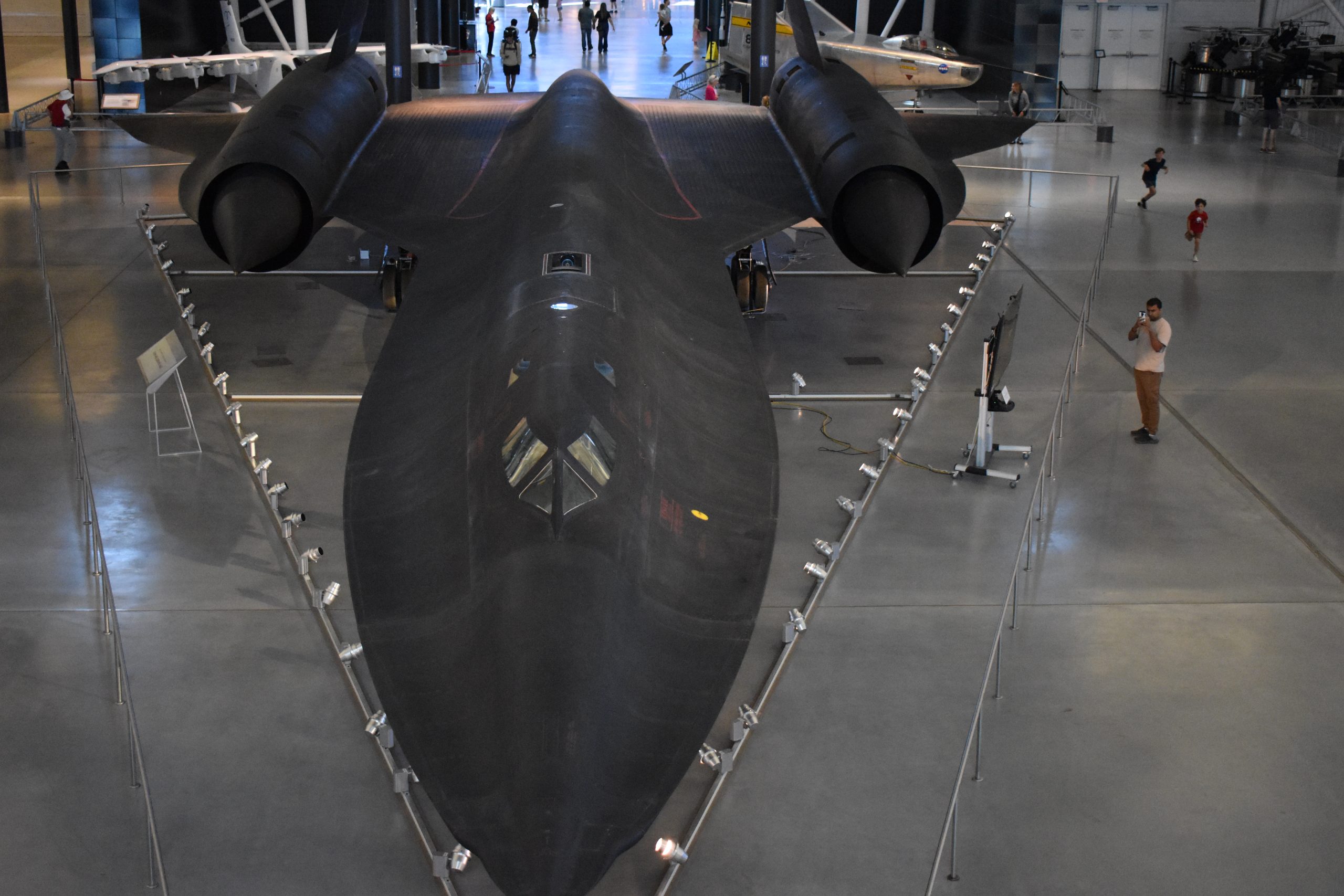
SR-71 at the Smithsonian. 19FortyFive Photo Archive Photo.
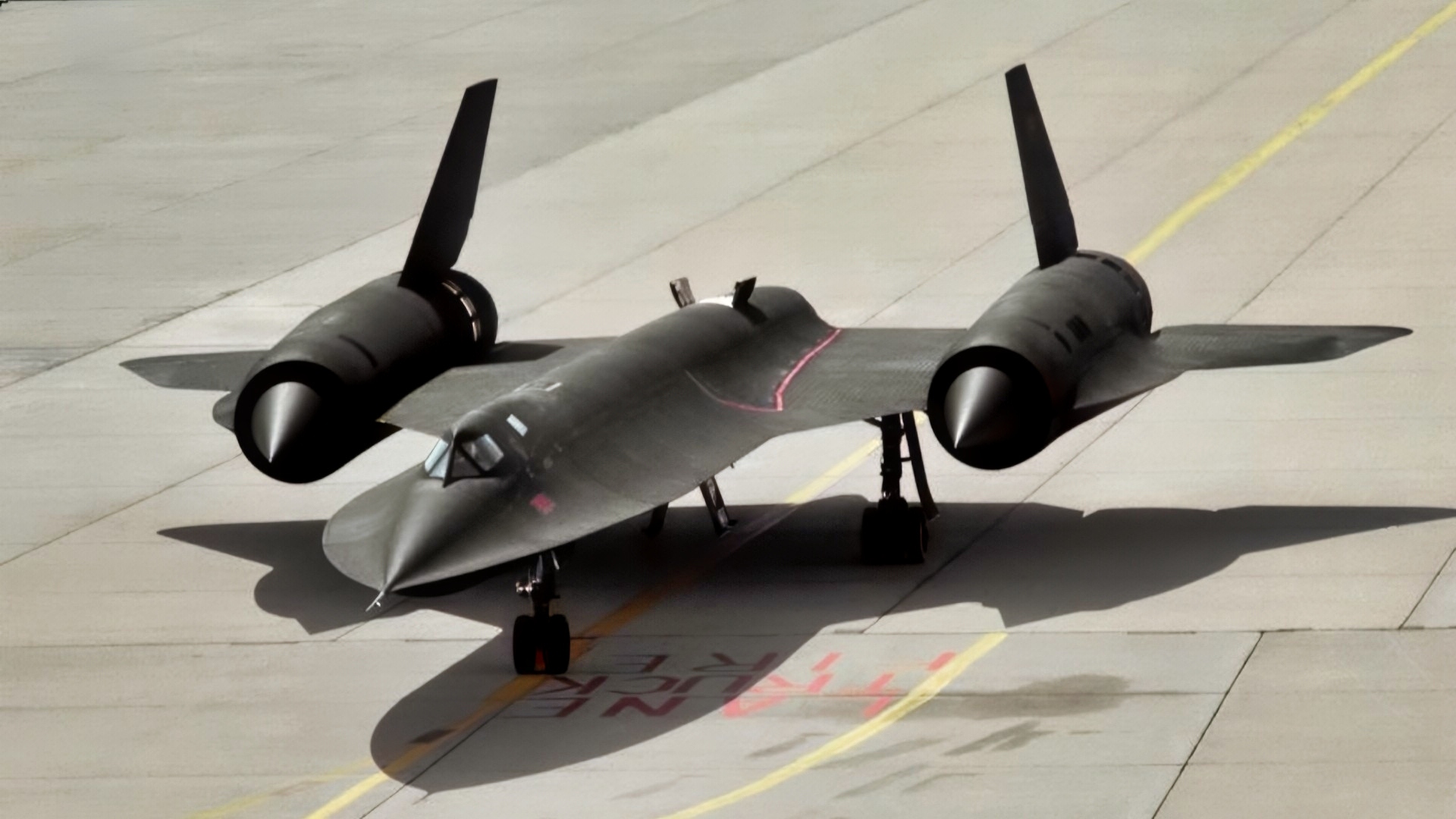
SR-71 Blackbird on the Tarmac NASA Photo
The SR-71 emerged from Lockheed’s secretive Skunk Works laboratory as a potent Cold War reconnaissance platform.
Designed to penetrate heavily defended environments, the SR-71 was a strategic asset with a purely kinetic philosophy: fly so fast and so high that interception became nearly impossible.
When it entered service with the US Air Force in 1966, the SR-71 carried a two-person crew: a pilot and a reconnaissance systems officer (RSO).
Powered by two Pratt & Whitney J58 engines, the SR-71 routinely sustained speeds above Mach 3 and operational altitudes above 80,000 feet.
The platform’s official speed record is 2,193.2 mph—approximately Mach 3.3.
At those speeds, aerodynamic heating becomes an engineering problem, so the airframe was built predominantly from titanium, which expanded substantially as it heated during flight.
The aircraft required specialized fuel, an unusual engine and inlet arrangement, and pressure suits for the pilots, all of which reflect the extremity of the operating environment.
Major Brian Shul
The pilot who conducted the infamous ground speed check was Brian Shul, who himself took an extraordinary route into the cockpit.
A US Air Force pilot and Vietnam veteran, he flew 212 combat missions.
His aircraft was shot down near the end of the war; he survived the crash but suffered devastating burns, and doctors reportedly gave him little expectation of returning to flight.
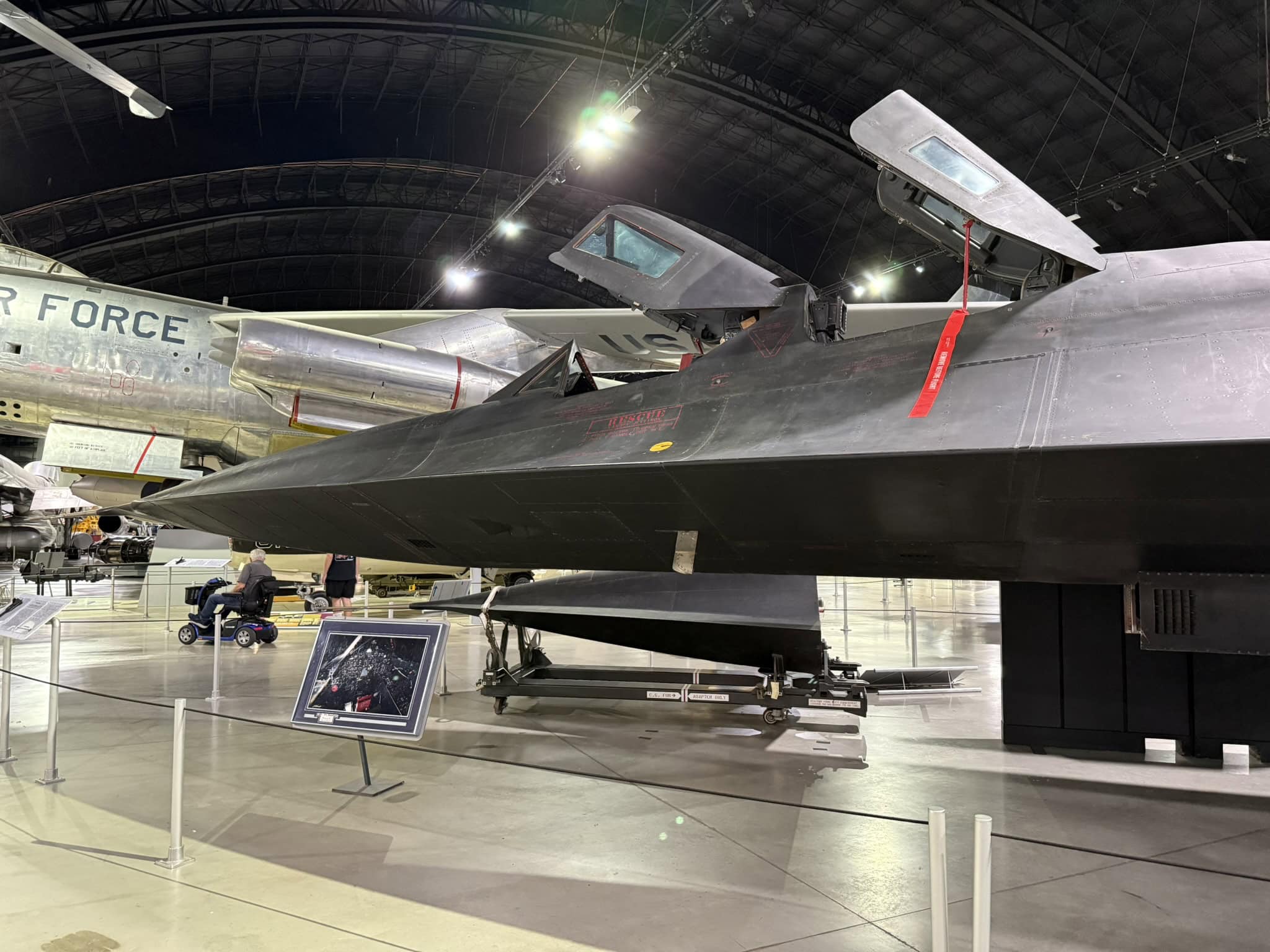
SR-71 at National Museum of the Air Force.
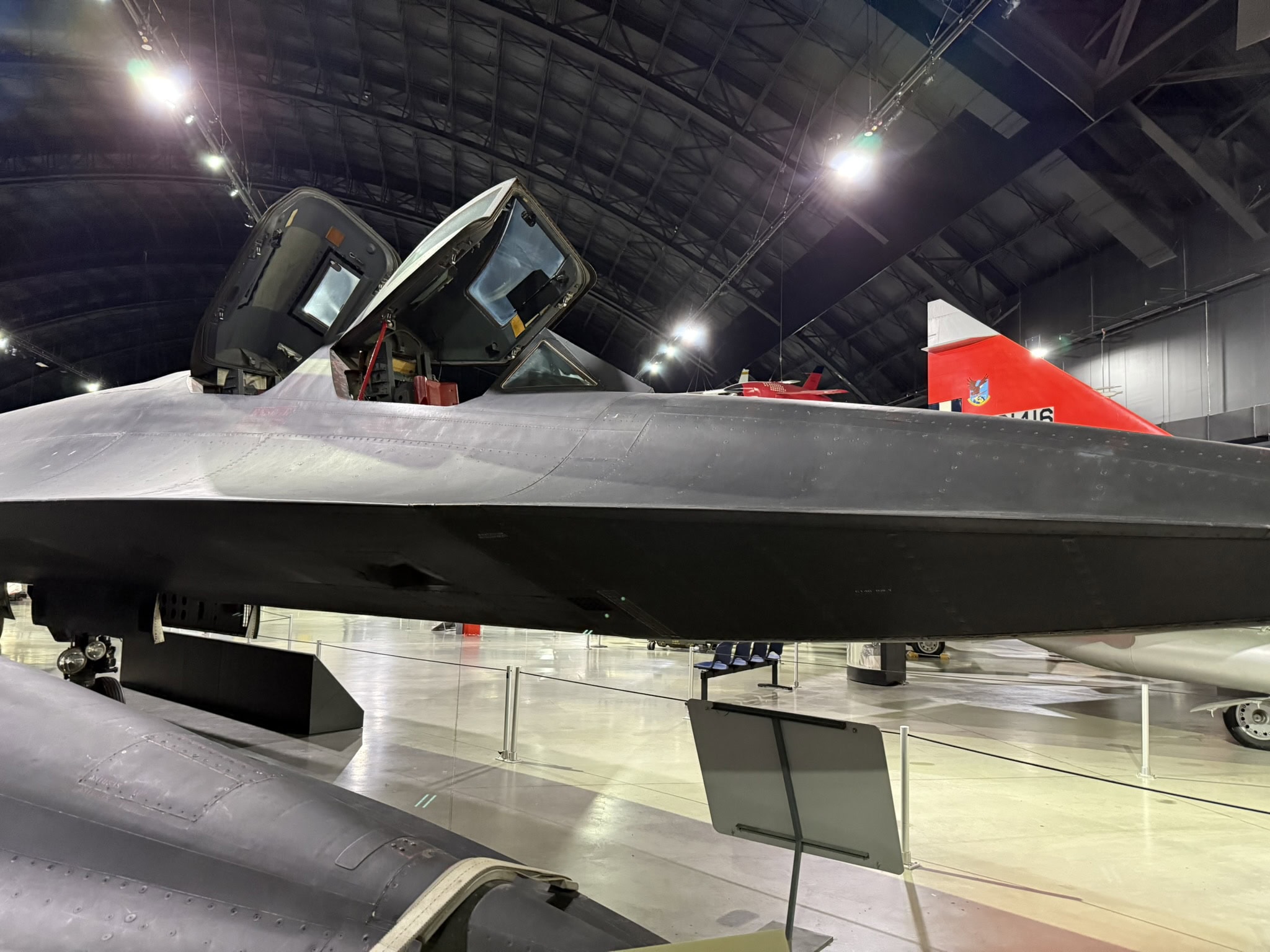
SR-71 at National Museum of the Air Force.
After undergoing extensive rehabilitation, he eventually returned to active flying and was ultimately selected to fly the SR-71. On the flight in question, Shul was flying with RSO Major Walter Watson.
According to Shul, the pair were completing final training to reach 100 flight hours and mission-ready status on a flight that took them over Colorado and Arizona and eventually across the Southwest.
Watson handled radio communications from the rear cockpit.
Shul was listening when a pointless but fantastic competition developed across the frequency.
Establishing the Hierarchy
First, a civilian Cessna pilot asked air traffic control for a ground speed check.
The controller answered approximately 90 knots.
Shortly thereafter, a Beechcraft checked in and was quoted at 125 knots.
These were innocuous and routine exchanges, but they established a rhythm of seeming one-upmanship. Enter the Navy.
According to Shul, a Navy F/A-18 Hornet pilot from NAS Lemoore came onto the frequency, swaggering and asking for a ground speed check.
The controller responded, “620 knots.” To the Cessna and Beechcraft pilots listening, this was an incredible flex. And on a normal day, the F/A-18 pilot would have been the fastest jet in the sky.
Fastest Jet in the Sky
In the back seat, Watson interjected. “Los Angeles Center, Aspen 20, can you give us a ground speed check?” The controller didn’t hesitate. “Aspen 20, I show you at 1,842 knots across the ground.”
That’s 2,120 miles per hour—nearly three times the F/A-18’s reported ground speed.
The exchange could have ended there, but Watson added a little extra on the back end: “Ah, Center, much thanks, we’re showing closer to 1,900 on the money.” As Shul put it, the Navy had been “flamed,” and the speed hierarchy had been established very publicly.
In the decades since, Shul’s telling of the story has become one of the most famous aviation anecdotes ever.
It perfectly captures the myth surrounding the SR-71 and puts a hard number on the aircraft’s blazing speed relative to the other aircraft in the sky.
About the Author: Harrison Kass
Harrison Kass is a writer and attorney focused on national security, technology, and political culture. His work has appeared in Tablet, City Journal, The Hill, The Spectator, and The Cipher Brief. He holds a JD from the University of Oregon and a master’s in Global & Joint Program Studies from NYU. More at harrisonkass.com.