
Niger hit in Niamey for the second time in 2026 — the airport showcases the AES
 Marie Dubois
Niger Struck in Niamey for the Second Time in 2026 — the Airport Exposes the AES
On June 18, at dawn, armed men attacked the Diori Hamani International Airport in Niamey. The first available accounts speak of gunfire exchanges, explosions, and a breach in the security apparatus before the reaction of Nigerien forces. The identity of the assailants had not yet been confirmed at the time of writing. It is precisely this uncertainty that matters: four months after the attack claimed by the Islamic State against the same airport complex, Niger's main air hub has once again become a reachable target.
Diori Hamani is not just a civilian runway. It is also the immediate environment of the Nigerien air base and a command point for the joint Niger-Burkina Faso-Mali force, the military architecture that the juntas of the Sahel States Alliance, the AES, present as the sovereign response to the void left by the French and American withdrawal. When an armed group can still trigger an alert at this location, even without holding the ground, it sends a very simple message: the nerve center can be hit.
A Target Too Visible to Be Secondary
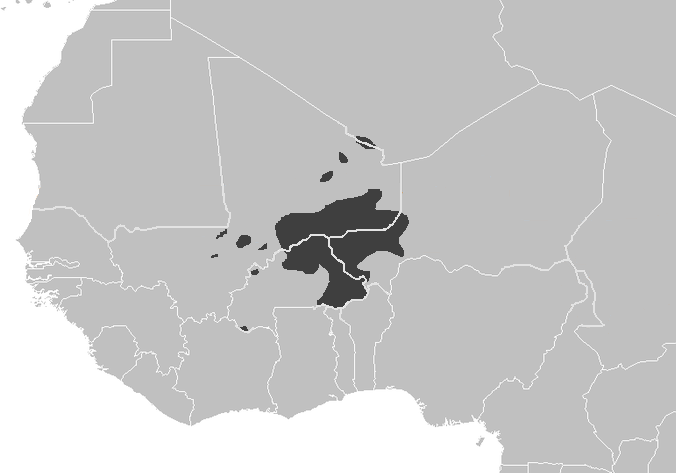
On a staff map, Niamey appears distant from the hardest-hit areas: Tillabéri to the west, Tahoua to the northwest, Diffa to the east. On the ground, this distance is less reassuring. The road to the airport runs alongside neighborhoods, service routes, uneven control zones, and access points that cannot be locked down like an isolated base in the desert. An airport is designed to allow vehicles, fuel, luggage, maintenance teams, and civilian personnel to enter. This is its utility, and thus its fragility.
The Associated Press reports that soldiers were searching people on the road to the airport after the attack. This detail is important. It suggests that the threat was not treated merely as a one-time intrusion, but as a possible chain of support, caches, or retreats in the immediate urban environment. In a capital, the security cordon is not measured only in meters of fencing. It is measured in proximity intelligence, control of motorcycles, and the ability to identify who has been observing the base for weeks.
The January attack had already highlighted the problem. The Islamic State had claimed a coordinated operation against the entire airport-base complex, and Nigerien authorities announced 20 assailants killed and 11 captured, with soldiers injured. Other accounts reported damage to aircraft and a role of Russian military personnel present on site. In March, another attack targeted the Tahoua drone base, a site built around aerial surveillance. The line is clear: armed groups are seeking the eyes and nerves of the apparatus, not just the forward positions.
The Drone Battle Has Become a Hangar Battle
For two years, the Sahelian juntas have spoken a lot about air sovereignty. Niger has bet on its drones and on non-Western partners to compensate for the American withdrawal from Agadez and the end of French cooperation. On paper, this makes sense. In the Liptako-Gourma, a drone provides depth, spots a convoy, tracks a column of motorcycles, and sometimes avoids sending a section blindly onto a mined path.
But a drone is only useful if the runway, fuel, control stations, operators, and hangars hold. The insurgents have understood this. The attack on Tahoua against base 401, reported in March by Africanews and specialized sources, targeted air infrastructure rather than a village. The one in Niamey in January targeted the capital and its air assets. The one on June 18, if preliminary information is confirmed, fits into the same logic of attrition: strike close enough to force the army to immobilize units around its own bases.
This is not as spectacular as taking a city. It is colder. Each platoon assigned to the permanent protection of a gate, a fuel depot, or a radar is missing elsewhere, on the road to Téra, in the villages of Gorouol, or on the paths leading up to the Malian border. From experience, a force that begins to defend all its nodes at once loses initiative. It keeps its tools instead of using them.
The AES Discovers the Harshness of an Exposed Headquarters
The AES needs Niamey for both political and operational reasons. The headquarters of the joint force provides a showcase for the idea that Mali, Niger, and Burkina Faso can coordinate their efforts without Paris, Washington, or ECOWAS. The Institute for Security Studies reminded in the spring that the unified force aimed to consolidate the capabilities of the three states in the face of jihadist violence, but that its effectiveness would also depend on rebuilt relations with neighbors. However, Niamey has become the opposite symbol: a regional command center in a diplomatically closed country, surrounded by suspicions, and forced to protect its own airport.
The junta's temptation will be known: to attribute the attack to an outside hand, harden the rhetoric against France, Benin, or Côte d'Ivoire, and then announce a retaliation. This reflex had already followed the January attack, without convincing public evidence. It can produce a short-term domestic effect. It does not repair a breach in a fence, does not create a network of informants in the peripheral neighborhoods, and does not replace night patrols.
Jihadist groups, on the other hand, do not need to prove much. If they fail to penetrate deeply into the base, they still achieve the image of a capital on alert. If they destroy a vehicle, damage an aircraft, or temporarily block air traffic, the psychological effect widens. If they force the authorities to multiply checks around Niamey, they shift part of the war to the capital without having to occupy it.
The Next Risk Lies in Access Points, Not Just on the Runway
One must remain cautious: the toll from the June 18 attack was not stabilized, no group had officially claimed the operation in the early hours, and Nigerien authorities tightly control security information. But the repetition is already enough to draw an operational conclusion. Diori Hamani has become a recurring target because it concentrates too many functions: civil aviation, military aviation, regional command, presence of foreign partners, and political symbol of the AES.
The response cannot therefore be just more soldiers at the main gate. It will be necessary to address secondary access points, suppliers, parking lots, neighboring districts, motorcycle movements, and escape routes. It will also be necessary to accept an unpleasant truth for Niamey: an airport secured by barriers but blind to its urban environment remains vulnerable.
The next test may not be a large attack. It could be an explosive device against a fuel convoy, an infiltration into a service team, or a simultaneous diversion between the city and the base. In the Sahel, armed groups do not always seek to win the battle. Often, they seek to force the state to protect its own breathing. In Niamey, this breathing passes through a runway.
Sources
- Associated Press, June 18, 2026, armed attack against Diori Hamani airport in Niamey.
- Al Jazeera and AP, January 2026, claim by the Islamic State and official toll after the first attack in Niamey.
- Africanews, March 2026, attack against the Tahoua drone base.
- Institute for Security Studies, March 2026, analysis of the Unified Force of the AES.
- ACLED, February 2026, commentary on the reported use of drones during the Niamey attack.
Armed men attacked the Diori Hamani International Airport in Niamey on June 18, 2026, resulting in gunfire and explosions. This incident marks the second attack on the airport this year, following a previous assault claimed by ISIS. The airport serves as both a civilian and military facility, raising concerns about security vulnerabilities in urban areas. Nigerien Armed Forces responded to the attack, which underscores the ongoing threat from armed groups in the region.
- Armed men attacked the Diori Hamani International Airport in Niamey on June 18, 2026.
- The attack involved gunfire and explosions, breaching security measures.
- This is the second attack on the airport in 2026, following an earlier attack claimed by ISIS.
- The airport serves as a military base and a command point for joint forces in the region.
- The attack highlights vulnerabilities in urban security and military operations.