
Niger loses 16 soldiers in Téra in 2026 — JNIM and EIS test the Three Borders axis
 Marie Dubois
Niger loses 16 soldiers in Téra in 2026 — JNIM and EIS test the Three Borders axis
On July 17, around 4 PM, near Doungouro, a mission of the Nigerien Defense and Security Forces was engaged on the Bankilaré-Téra axis. This is not a secondary line. It is one of those dusty roads that determine, in the Tillabéri region, whether the state still holds the villages or merely passes through under escort.
The Nigerien Ministry of Defense announced 16 soldiers killed, 23 wounded, including nine serious cases evacuated to the Military Hospital Center in Niamey. It also states that 15 assailants were neutralized, five motorcycles recovered, and four others destroyed. The attack is described as "complex." In Sahelian military vocabulary, this often means more than just a gunfight: fixing the convoy, maneuvering on the flanks, prepared withdrawal, sometimes using the terrain or villages to disrupt the response.
An ambush on a road, not just a toll
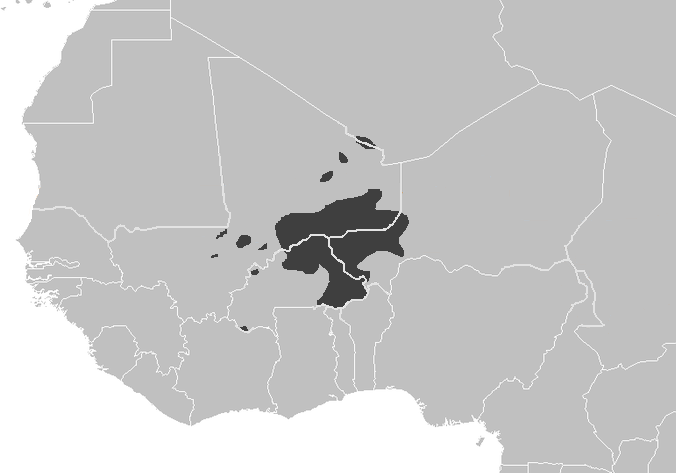
Bankilaré and Téra are located in the so-called Three Borders area, between Niger, Mali, and Burkina Faso. On an administrative map, the line seems clear. On the ground, it is much less so. Armed groups move from one pasture to another, use seasonal tracks, test isolated posts, and force regular units to protect too many kilometers with too few resources.
The Doungouro area is important because it is located in the useful depth of Téra, not in an empty desert. A so-called administrative liaison mission often transports men, orders, equipment, and sometimes civilian and military files that the forward posts are waiting for. Hitting it means telling the detachments that their immediate rear is no longer safe. This is the most dangerous message in a counter-insurgency war.
According to ActuNiger, which cites the Ministry of Defense's statement, reinforcements from Téra and air assets forced the assailants to break contact. This detail matters. It shows that the army still has a capacity to react in the sector. But it also reveals the limit of the system: if aviation or reinforcements must intervene to clear a mission on a known axis, then the enemy is already choosing part of the tempo.
JNIM, EIS, and armed competition around Tillabéri
The precise attribution remains incomplete. Authorities speak of armed terrorist groups. In this region, the two plausible signatures are JNIM, or GSIM in French, affiliated with Al-Qaeda, and the Islamic State in the Sahel, heir to EIGS. The two do not always operate in the same way, but they share a method in Tillabéri: undermining traffic, taxing movements, exhausting posts, and then forcing authorities to defend major axes instead of governing rural areas.
The choice of an ambush at the end of the afternoon is not trivial. At 4 PM, the light quickly fades on a dusty track. Drivers see poorly through clouds of laterite, communications become more confused, and medical evacuations are done under pressure. From experience, this is exactly the moment when a medium unit, neither fully on the offensive nor really established in a defensive position, becomes vulnerable.
The announced toll on the assailants' side, 15 dead, should be read with caution. The armies in the region often publish figures after contact, sometimes accurate, sometimes difficult to verify without body recovery or reliable human intelligence. The most solid figure, because it has immediate administrative and family consequences, remains that of Nigerien losses: 16 dead and 23 wounded. For a local detachment, this is a company that is bleeding.
Operation Niyya under pressure
The attack comes as Niamey emphasizes the intensification of Operation Niyya. A few days earlier, the Integrated Operations Coordination Center had announced successes in Tillabéri, notably 19 terrorists neutralized in the Tinfagatt area, near Tabaraybarey, with the destruction of camps and recovery of equipment. The army had also communicated about the arrests of logistics personnel and alleged accomplices in several localities.
This sequence is classic: an army strikes logistical bases, the adversary responds on a movement axis. It is not necessarily a spectacular revenge. It is colder than that. Armed groups seek to prove that every sweep operation creates a cost elsewhere. They know that Sahelian juntas have built their legitimacy on a simple promise: to restore security after the departure of Western partners. Every ambush that affects soldiers undermines this promise.
Niger is not isolated in this logic. The same weekend, in Mali, a coalition mixing Tuareg independence fighters from the FLA and jihadists from JNIM inflicted very heavy losses on a convoy leaving Anéfis for Gao, according to sources reported by AFP. The contexts are not identical, but the mechanics are similar: cities or bases are no longer just taken or defended; they are isolated, resupplied, abandoned, and then struck on the road.
The strategic trap for Niamey
Since the coup d'état of 2023, General Abdourahamane Tchiani's regime has presented military sovereignty as a response to the failures of the former Franco-American system. Part of this criticism was understandable. Barkhane, like American intelligence missions, did not prevent jihadist entrenchment in Liptako-Gourma. But replacing an imperfect architecture with an under-equipped national chain is not enough to regain the initiative.
The danger for Niamey is to confuse political control with operational control. One can expel foreign bases, rename partnerships, proclaim a sovereign doctrine. However, one does not secure the Bankilaré-Téra axis if neighboring villages serve as relays, if enemy motorcyclists spot the convoys, and if seriously wounded must be brought back to Niamey after every serious contact.
The decisive question is therefore not whether 15 assailants were actually killed. It is whether the FDS can return on the same road tomorrow, and the day after, without turning every administrative liaison into a combat operation. In a Sahelian war, holding a capital is not enough. One must hold the hours, the tracks, the weekly markets, the water points, and the makeshift bridges.
Sources and signals to watch
The main information comes from ActuNiger, which cites the Nigerien Ministry of Defense, and from dispatches reported by Punch and 20 Minutes with AFP. The United Nations Security Council briefing on July 21 confirms the broader context: jihadist groups in the Sahel are coordinating their attacks better, relying on criminal economies, and increasingly targeting roads and infrastructure.
The next signal to watch will be the reaction around Téra: temporary closure of the axis, prolonged sweeps, arrests of logistics personnel, or on the contrary, a quick return to escorted traffic. If the Nigerien army can no longer carry out its administrative missions without air support in this sector, then Doungouro will not only be the site of an ambush. It will be a marker of operational retreat in the Three Borders area.
On July 17, 2026, Nigerien Defense and Security Forces were ambushed near Téra, resulting in 16 soldiers killed and 23 wounded. The attack, described as complex, involved tactical maneuvers by armed groups, with 15 attackers reportedly neutralized. This incident underscores the ongoing security challenges in the Tillabéri region, where armed groups are testing military responses.
- 16 Nigerien soldiers killed and 23 wounded in an ambush near Téra.
- 15 attackers neutralized, with 5 motorcycles recovered and 4 destroyed.
- The attack was described as complex, involving tactical maneuvers.
- The incident highlights the ongoing threat from armed groups in the region.
- The Nigerien military's response included reinforcements and air support.